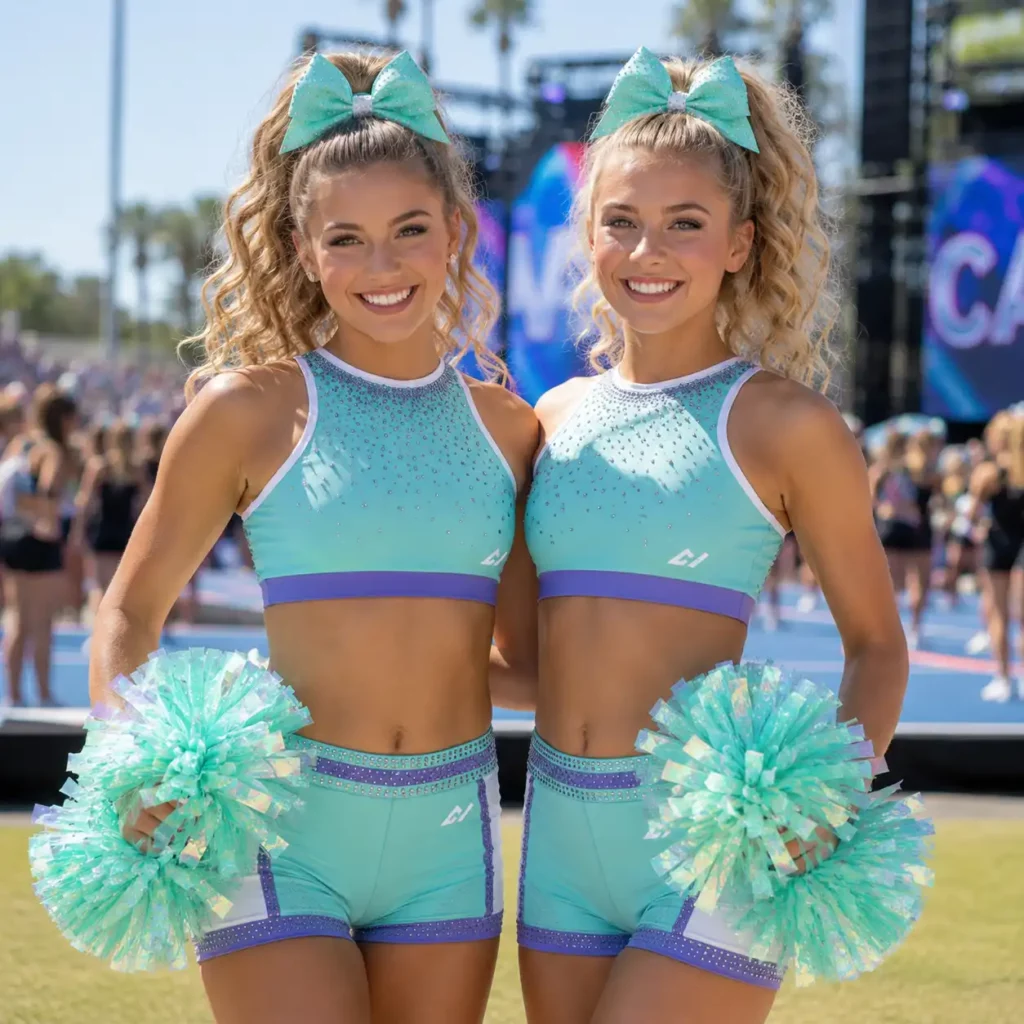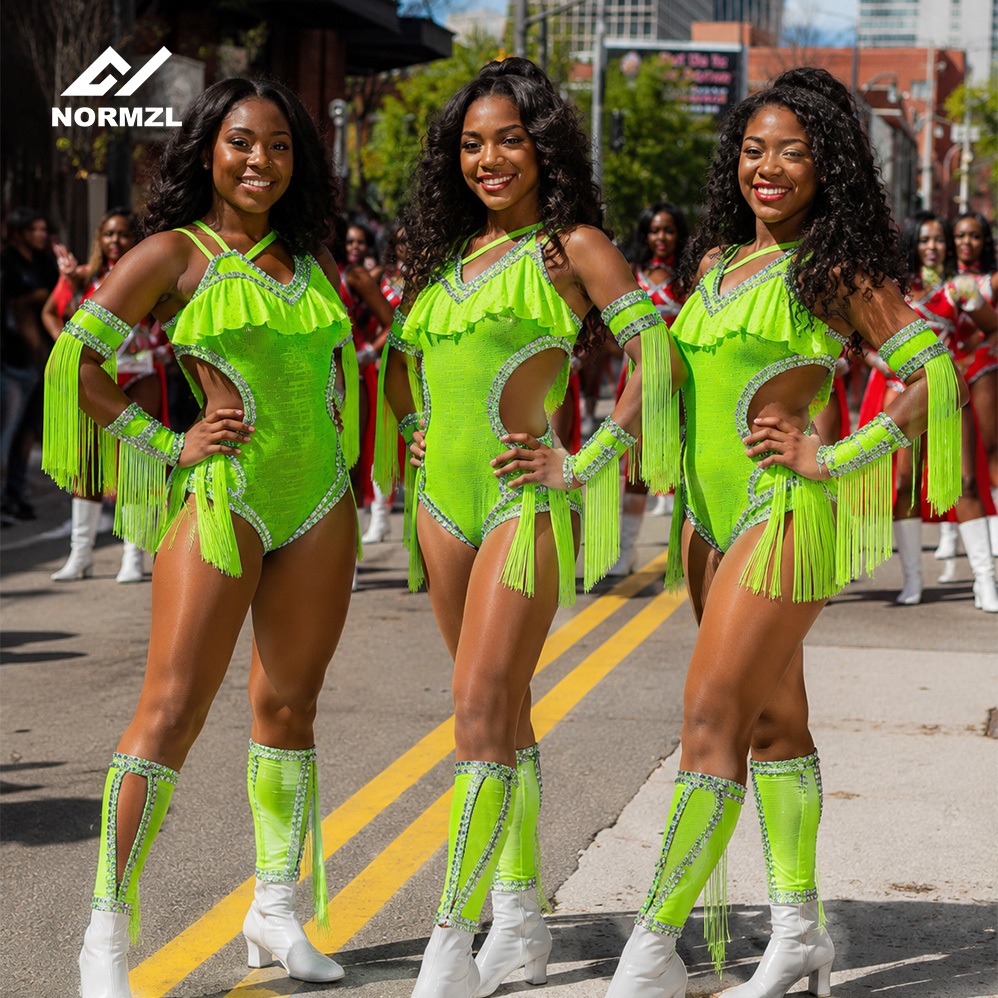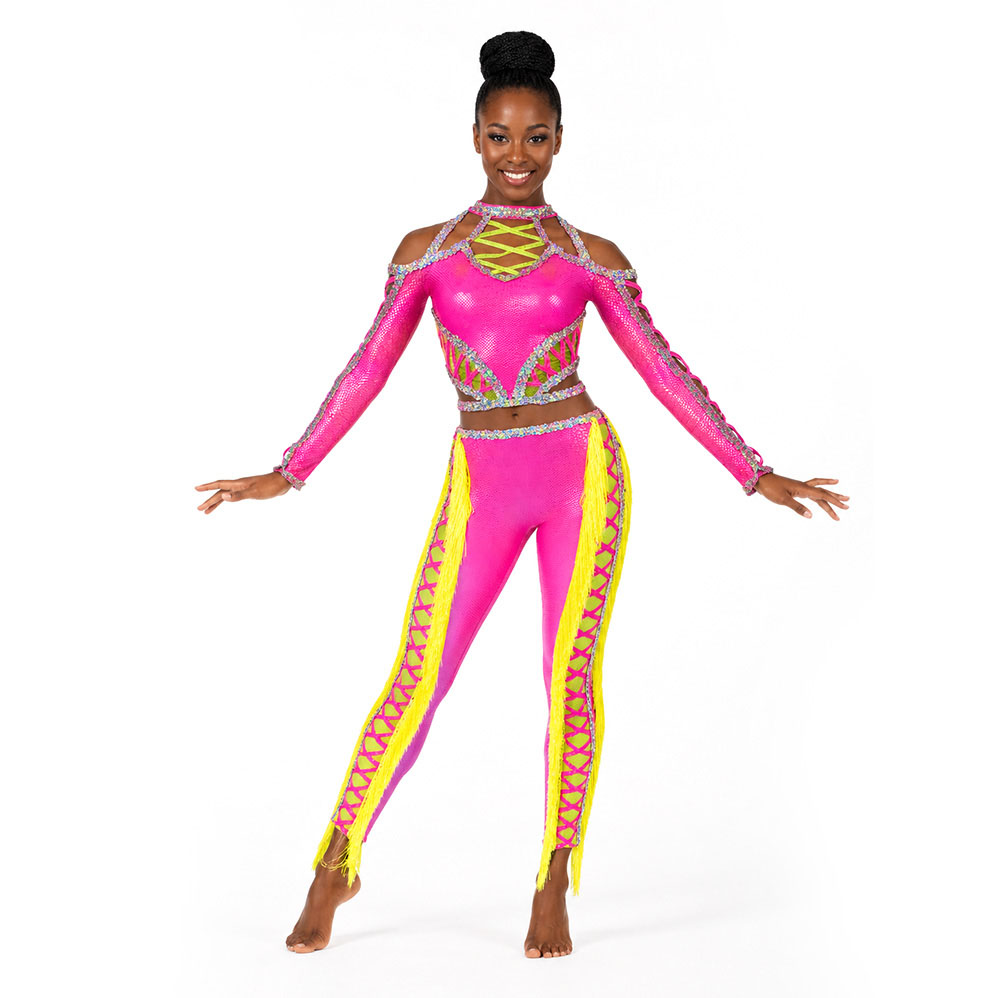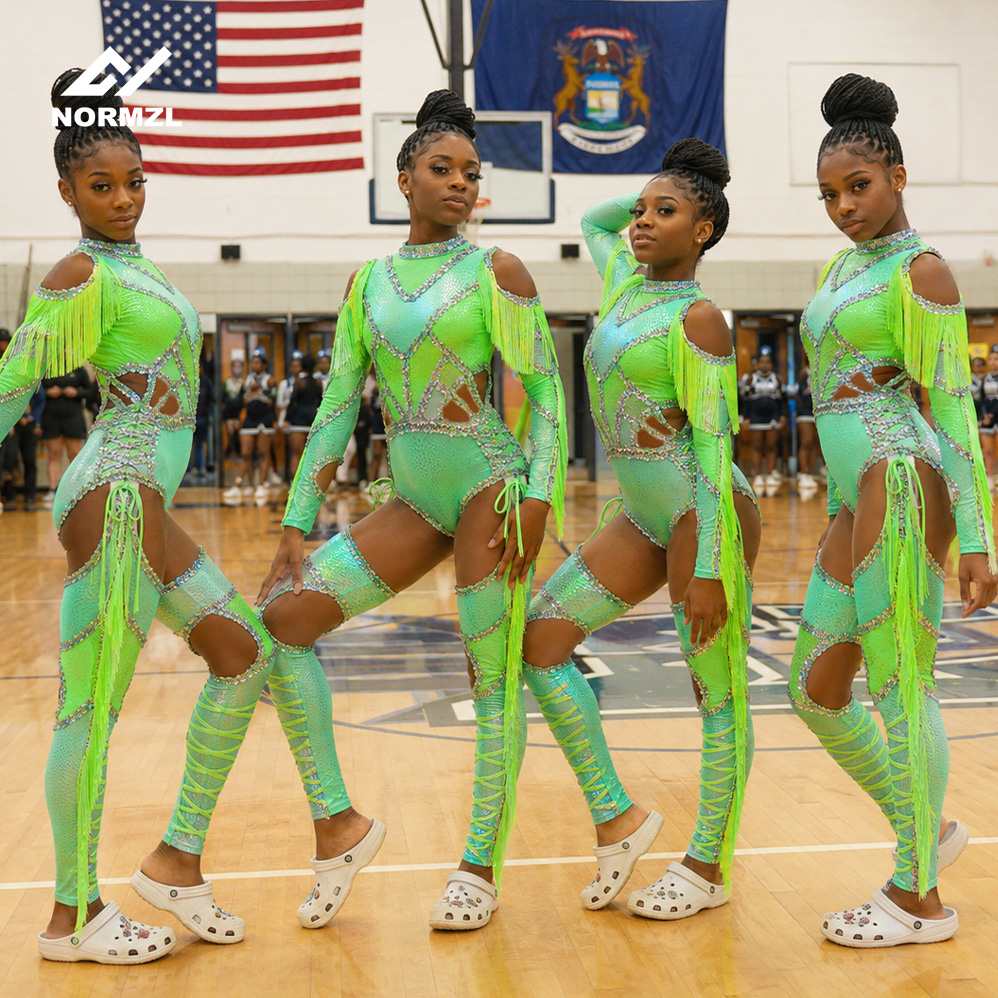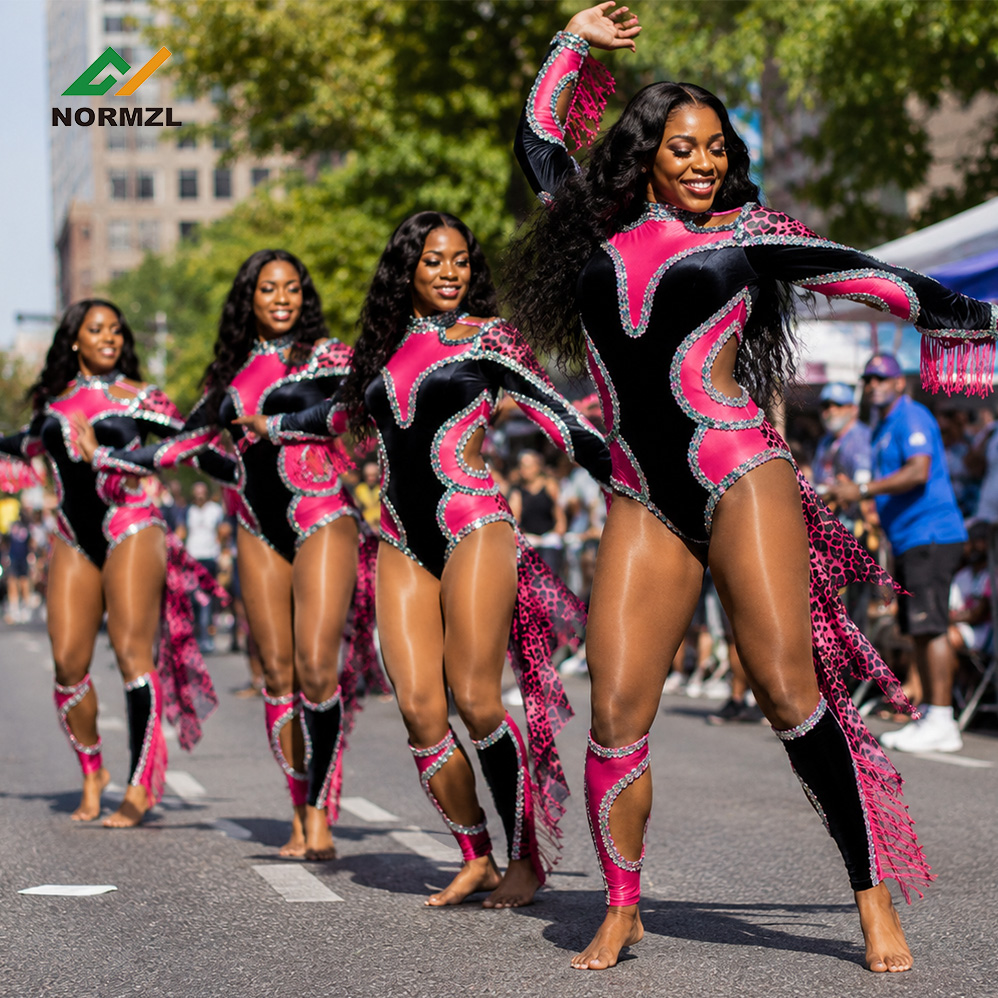
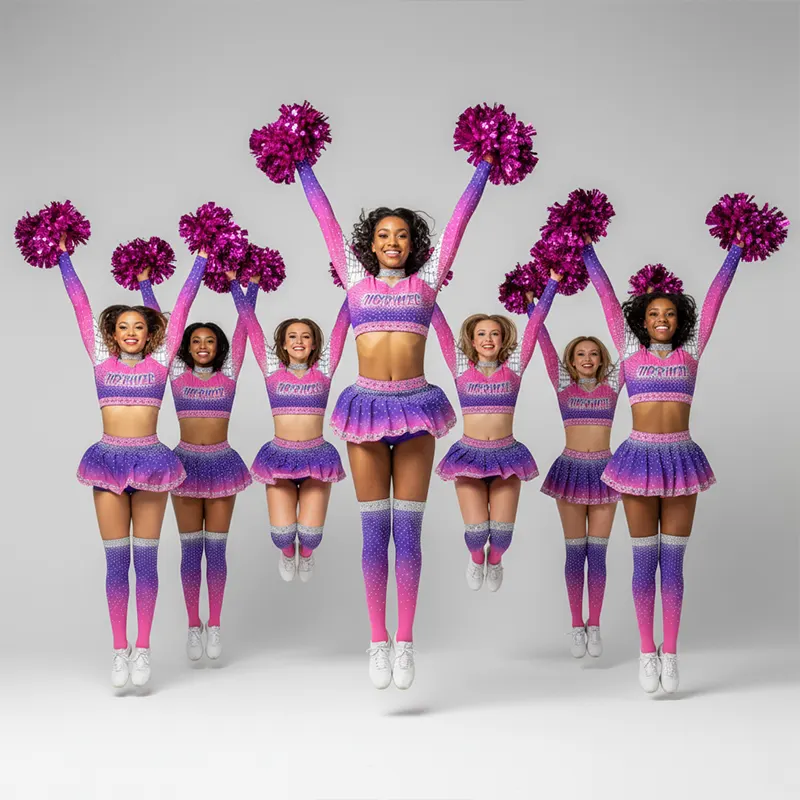
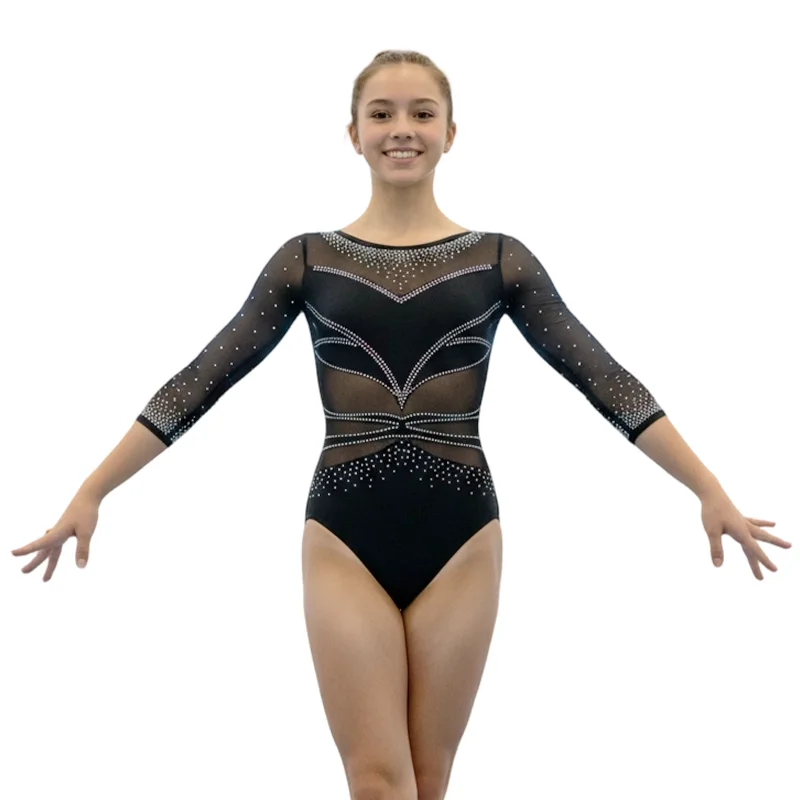
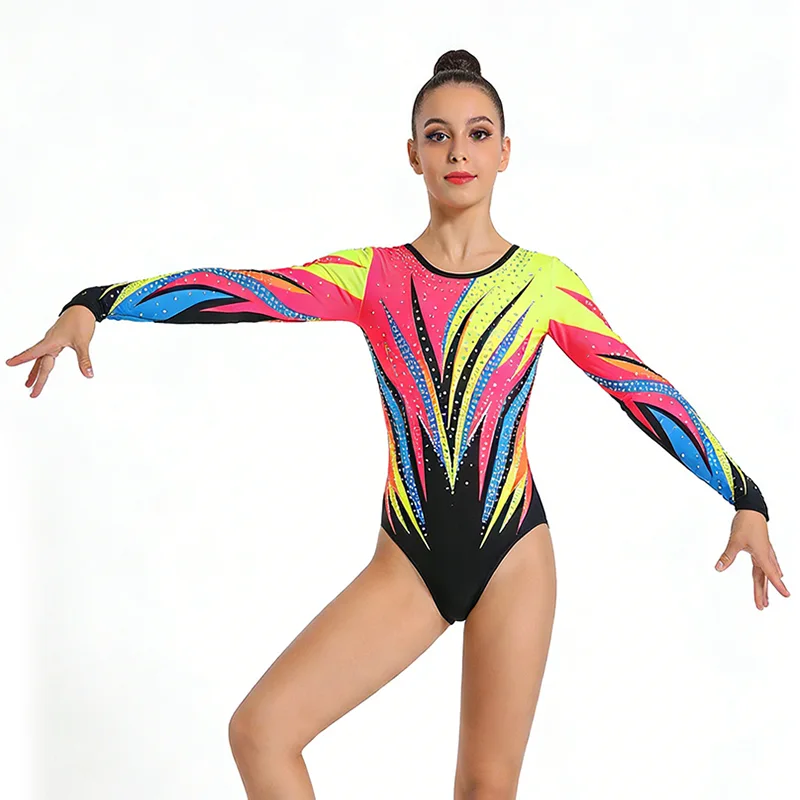




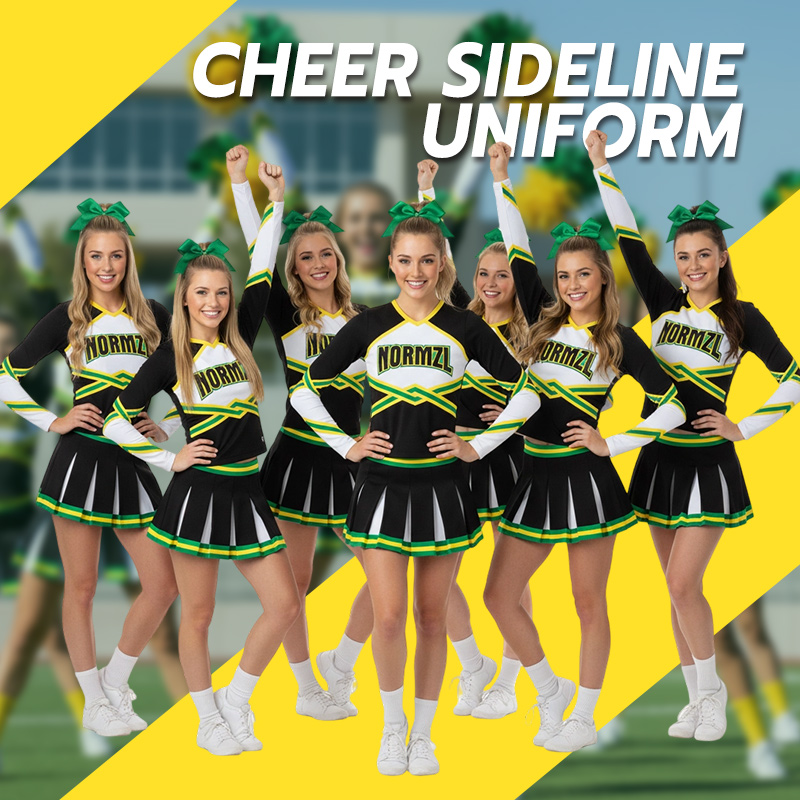
Cheer uniform fabric directly affects the appearance, conforto, durabilidade, and performance of cheerleading uniforms. Whether for all-star competitions, equipes escolares, or sideline activities, different uniform applications require different fabric features, including stretch, respirabilidade, compression, and customization compatibility.
This guide explains the characteristics of common cheerleading fabrics, compares polyester, nylon, spandex, LYCRA, and mesh materials, and helps teams and brands determine which fabric options best match their uniform requirements.
What Makes the Best Fabric for Cheer Uniforms?
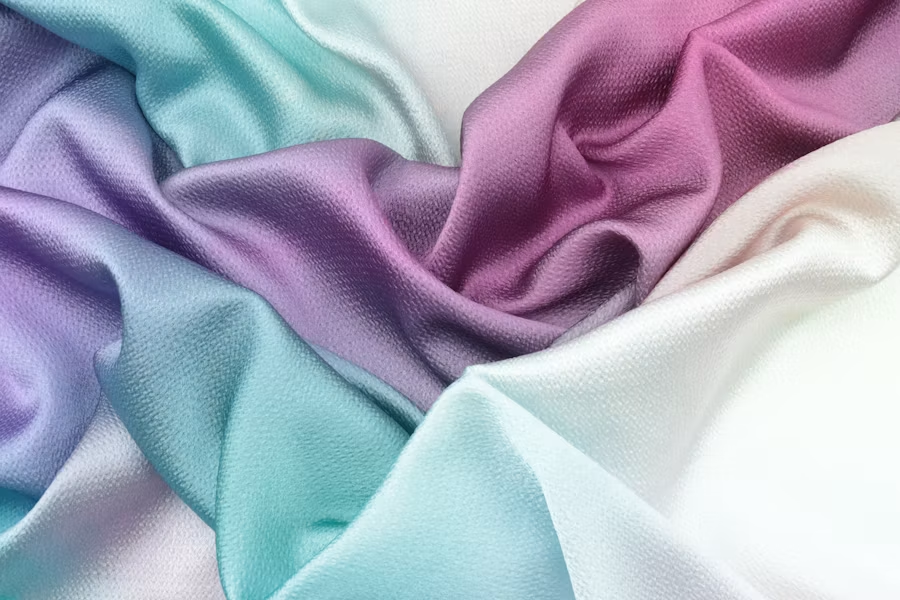
O melhor tecido para uniforme de torcida should provide a balance of stretch, durabilidade, conforto, aparência, and customization performance. Different teams require different fabric features, but high-quality materials should support movement, maintain shape, and keep the uniform looking professional after repeated use.
Four-Way Stretch and Flexibility
Cheerleading involves jumps, acrobacias, caindo, and dynamic movements, making stretch performance essential for uniforms. Fabrics with four-way stretch allow athletes to move freely while maintaining a comfortable fit and shape recovery.
Spandex and LYCRA are commonly blended with polyester or nylon to improve:
- Flexibility during high-impact movements
- Body fit and comfort
- Shape retention after stretching
Durability and Shape Retention
Cheer uniforms are exposed to frequent movement, washing, and physical activity. Durable fabrics help maintain the uniform’s structure and appearance over time.
Important durability features include:
- Resistência à abrasão
- Shape recovery
- Resistance to pilling
- Long-lasting color performance
Polyester is widely used in cheer uniforms because it offers strong durability and supports long-term use, while nylon blends provide a softer feel with excellent wear resistance.
Moisture Wicking and Breathability
Comfort is especially important during competitions and training sessions. Moisture-wicking fabrics help move sweat away from the skin, while breathable materials improve airflow and reduce heat buildup.
Mesh panels are often added to areas such as the back, mangas, or underarms to improve ventilation while maintaining the overall design.
Color Retention and Customization Compatibility
Cheer uniforms often include team colors, logotipos, sublimation prints, strass, and other decorative elements. Therefore, fabrics should support both visual quality and customization requirements.
Polyester fabrics are commonly used for sublimation because they provide vibrant colors and excellent print durability. Smooth and stable fabric surfaces also help achieve high-quality decorative finishes.
Common Types of Fabrics Used in Cheer Uniforms
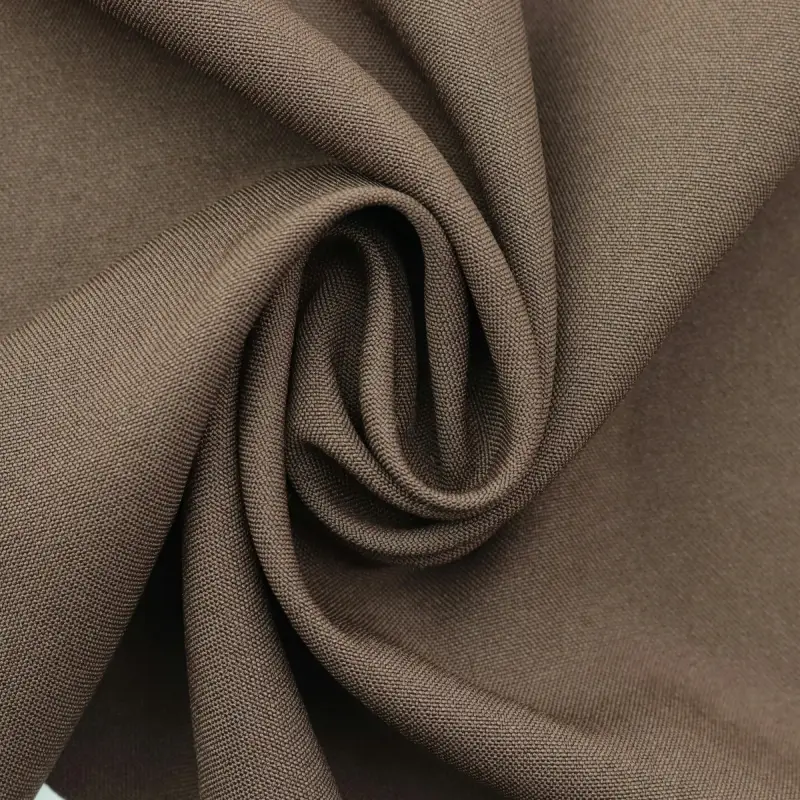
No single fabric can meet every cheer team’s needs. Performance level, uniform design, método de personalização, and usage frequency all influence which material works best for a specific application. Common options include polyester, nylon, spandex, LYCRA, malha, and cotton.
Polyester Cheer Uniform Fabric
Teams that need reliable durability, vibrant colors, and flexible customization often choose polyester-based fabrics. Polyester provides stable performance for frequent use and works especially well with sublimation printing.
Key benefits include:
- Color retention: Keeps team colors and graphics vibrant after repeated washing.
- Durabilidade: Handles regular wear while maintaining fabric structure.
- Sublimation compatibility: Supports detailed patterns, gradientes, e projetos personalizados.
- Easy maintenance: Resists wrinkles and shrinkage.
Polyester cheer uniforms are widely used for competition teams, school squads, and custom uniform programs. For higher flexibility, polyester is often blended with spandex to improve stretch and comfort.
Nylon Cheer Uniform Fabric
Teams looking for a softer feel and greater flexibility often consider nylon blends for performance-focused uniforms. Nylon provides a smooth texture and strong recovery, making it suitable for athletes who need freedom of movement.
Key benefits include:
- Sensação de mão macia: Provides a more comfortable wearing experience.
- High elasticity: Supports dynamic movements and active routines.
- Resistência à abrasão: Helps uniforms withstand frequent use.
- Shape recovery: Maintains fit after stretching.
Nylon-spandex blends are commonly used for high-performance cheerwear, especially when comfort and movement support are major priorities.
Spandex / LYCRA Cheer Uniform Fabric
Uniforms designed for advanced movements often rely on spandex or LYCRA blends to achieve a close fit and maximum flexibility. These stretch fibers are usually combined with polyester or nylon to balance elasticity with durability.
Cheerleading spandex fabrics provide:
- Alongamento em quatro direções: Allows unrestricted movement during routines.
- Strong recovery: Helps uniforms return to their original shape.
- Body-contouring fit: Creates a secure and streamlined appearance.
- Comfort during performance: Reduces restriction during jumps and stunts.
Spandex cheer uniforms are commonly selected for competition-level teams that require both performance support and visual appeal.
Mesh Fabric for Cheer Uniforms
Additional ventilation is often needed for uniforms used in warm environments or high-intensity activities. Mesh panels provide an effective way to improve airflow without changing the overall structure and appearance of the uniform.
Aplicações comuns incluem:
- Painéis traseiros: Improve airflow during intense activities.
- Mangas: Add breathability while enhancing design details.
- Side sections: Provide ventilation without affecting fit.
- Áreas das axilas: Help reduce heat buildup during movement.
Mesh cheer uniforms and mesh design elements are especially suitable for warm climates, desgaste de treino de torcida, and performance styles that require better breathability.
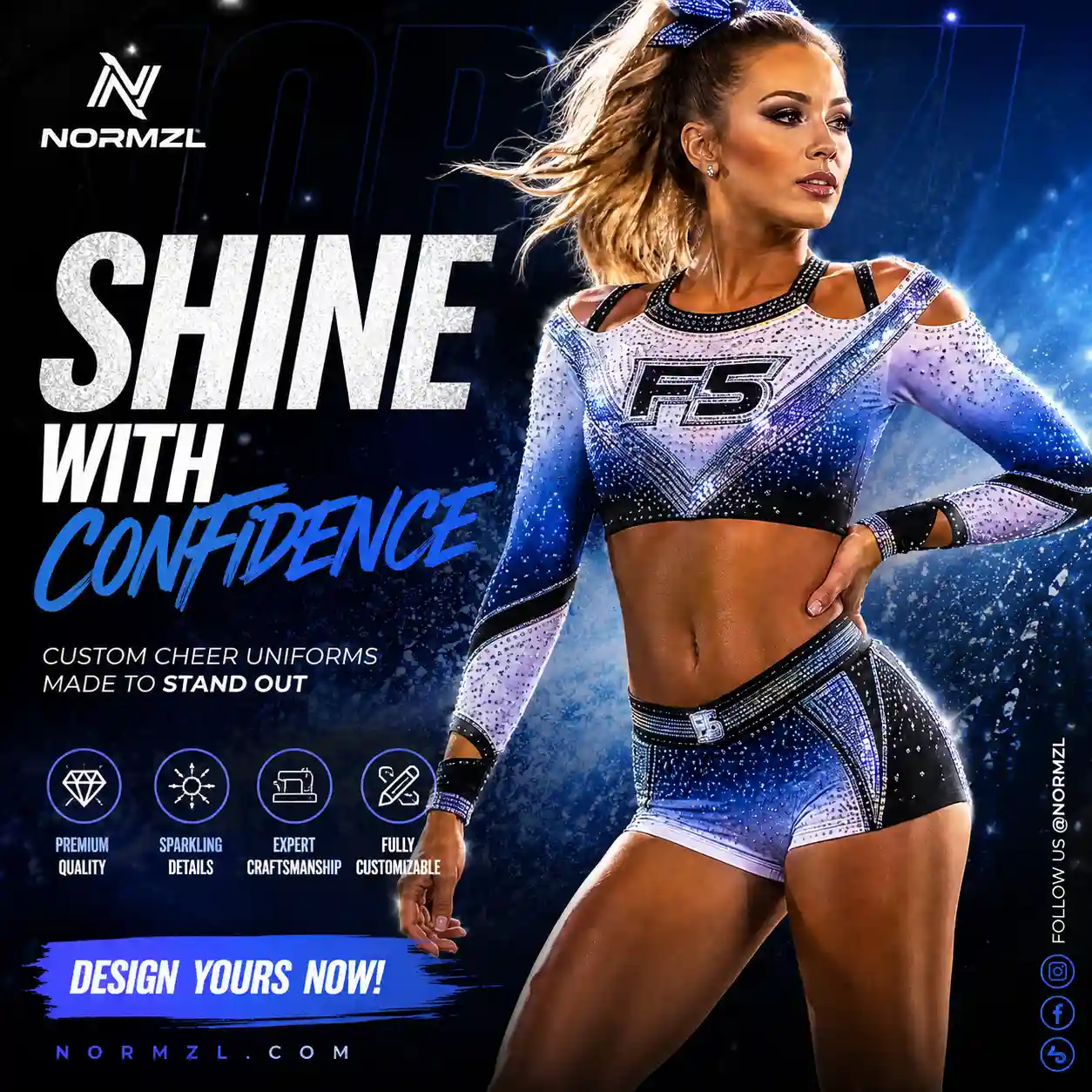
Create Custom Cheer Uniforms with Performance Fabrics
How to Choose the Right Fabric for Your Cheer Team
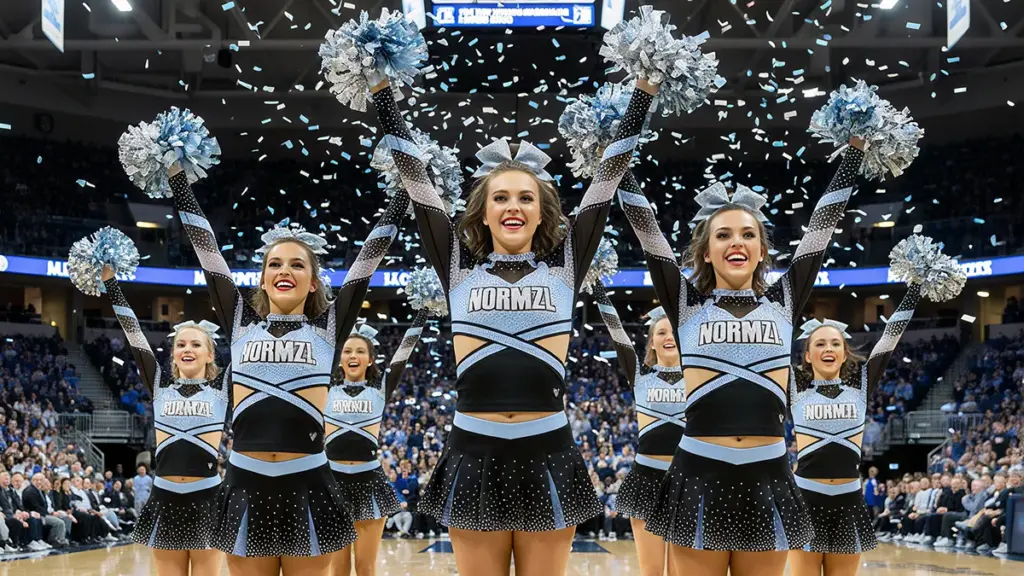
Cheer uniform fabric should match the team’s activity level, design goals, e necessidades de desempenho. Different applications require different material features.
Choose Fabric Based on Different Cheer Uniform Applications
Different cheer activities create different demands on fabric performance. A competition uniform needs maximum flexibility and visual impact, while practice and school uniforms require durability and comfort for frequent use.
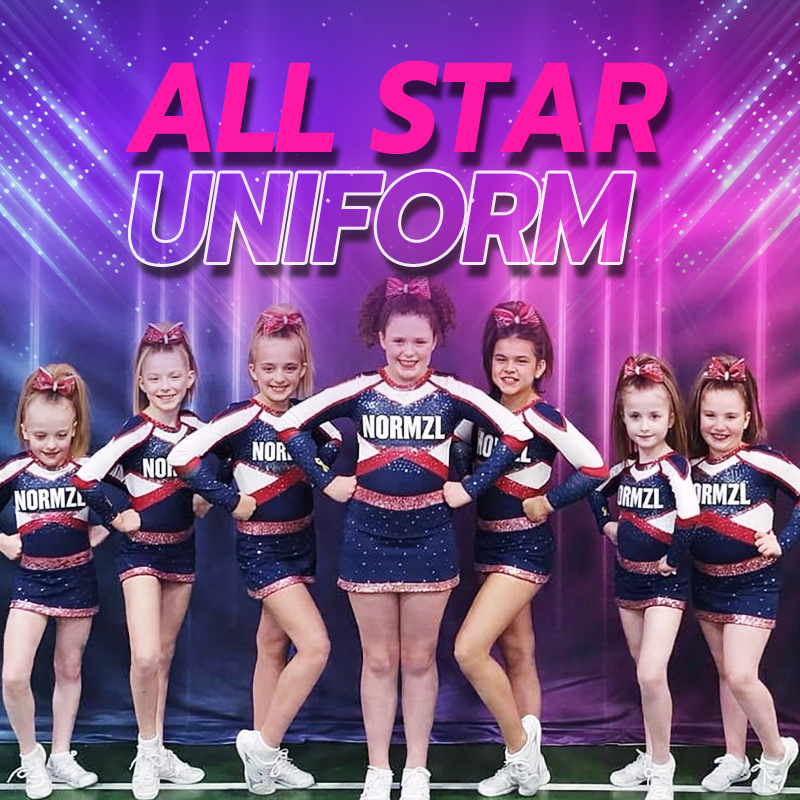
Uniformes de torcida All-Star
Athletes performing advanced stunts, caindo, and jumps need uniforms that provide reliable support and freedom of movement. Uniformes de torcida de todas as estrelas usually use performance fabrics with strong stretch recovery and a secure fit to help athletes move confidently throughout intense routines.
Recommended fabrics:
- Polyester-spandex blends
- Nylon-spandex blends
These fabrics provide flexibility for complex movements while supporting custom details such as sublimation prints, strass, and detailed team graphics.
Uniformes de torcida lateral
Regular games, school events, and public performances require uniforms that can maintain their appearance through frequent use. Sideline cheer uniforms often focus on durability, fácil manutenção, and a structured look while still providing enough comfort for daily activities.
Recommended fabrics:
- Structured polyester
- Polyester-spandex blends
These materials offer a classic cheer style, reliable durability, and long-term wear performance for school and event-based teams.
Competition and Showcase Cheer Uniforms
Teams that perform on stage need uniforms that combine athletic function with strong visual impact. Competition cheer uniforms and showcase styles often require fabrics that support dynamic movements while providing a smooth surface for customization, incluindo sublimação, metallic effects, e elementos decorativos.
Recommended fabrics:
- Polyester-spandex blends
- Nylon-spandex blends
These fabrics help create eye-catching designs while maintaining flexibility, conforto, and a polished appearance under competition lighting.
Escola, Youth and Practice Cheer Uniforms
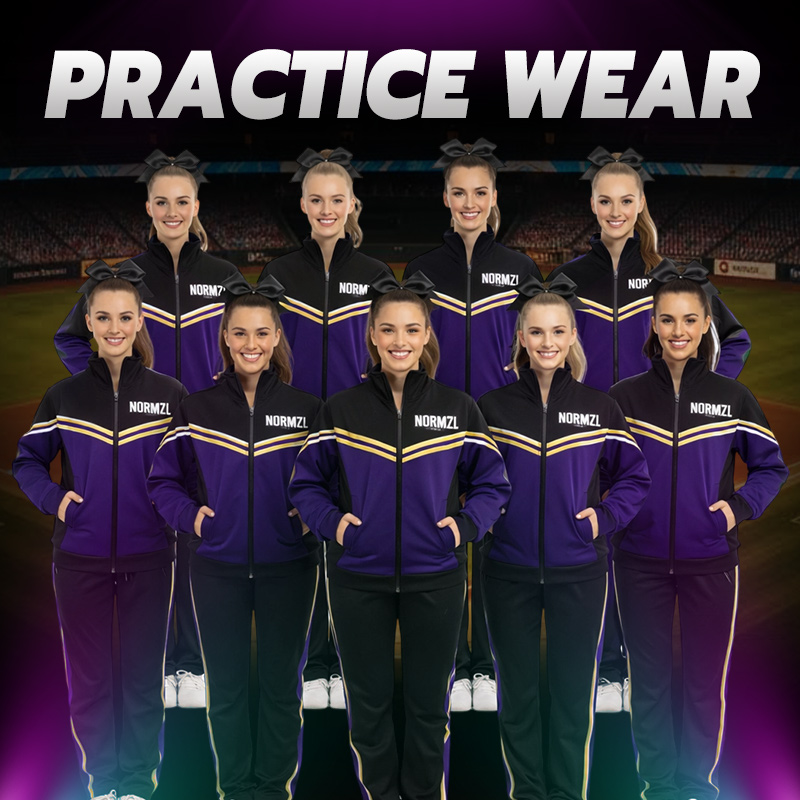
Frequent training and regular activities require fabrics that balance comfort, durabilidade, and cost efficiency. Youth cheer uniforms, school team apparel, e desgaste de treino de torcida need materials that can handle repeated movement, washing, and everyday use.
Recommended fabrics:
- Polyester-spandex blends
- Tecidos elásticos leves
These materials provide comfortable movement and reliable performance for training sessions, school activities, and youth cheer programs.
Compare Fabric Performance: Respirabilidade, Stretch and Compression
Different cheer teams prioritize different fabric performance features. Competition teams may focus more on stretch and support, while practice or warm-weather uniforms often require better breathability and comfort.
| Tecido | Key Performance | Strengths | Common Application |
|---|---|---|---|
| Poliéster | Balanced durability and customization | Good color retention, reliable structure, and excellent sublimation compatibility | Uniformes de competição, uniformes laterais, e projetos personalizados |
| Nylon | Stretch and support | Soft feel, high flexibility, and strong recovery for dynamic movements | All-Star cheer uniforms and performance-focused cheerwear |
| Spandex / LYCRA | Maximum stretch and compression | Provides close fit, unrestricted movement, and shape retention | Stunt-focused uniforms and stretch performance designs |
| Malha | Respirabilidade e ventilação | Improves airflow and helps manage heat during intense activities | Painéis de ventilação, desgaste de prática, and warm-weather designs |
High-performance routines often require fabrics with strong stretch and support, while practice wear and warm-weather uniforms benefit from breathable materials and mesh panels. Many custom cheer uniforms combine different fabrics to balance flexibility, durabilidade, ventilation, e projeto.
Você pode aprender mais sobre How to Design Custom Cheer Uniforms em nosso artigo dedicado.
Consider Competition Environment and Climate
The competition environment can influence fabric performance and comfort. Teams performing in warm and humid conditions may prefer lightweight, breathable materials or mesh panels, while cooler environments may require more structured fabrics for better coverage.
Outdoor teams should also consider durability and color retention, as regular exposure to sunlight and changing conditions can affect fabric appearance over time.
Balance Fabric Quality, Performance and Budget
The best fabric choice should match the team’s actual usage, necessidades de desempenho, e orçamento. Higher-quality materials usually provide better stretch recovery, longer service life, and more consistent appearance after repeated use.
For teams with occasional performances or limited budgets, cost-effective fabrics can still deliver reliable results when matched with the right application.
Trabalhando com um experiente fabricante de uniforme de torcida personalizado can help teams select fabrics that balance performance expectations and production costs.
How to Care for Cheer Uniforms and Extend Fabric Life
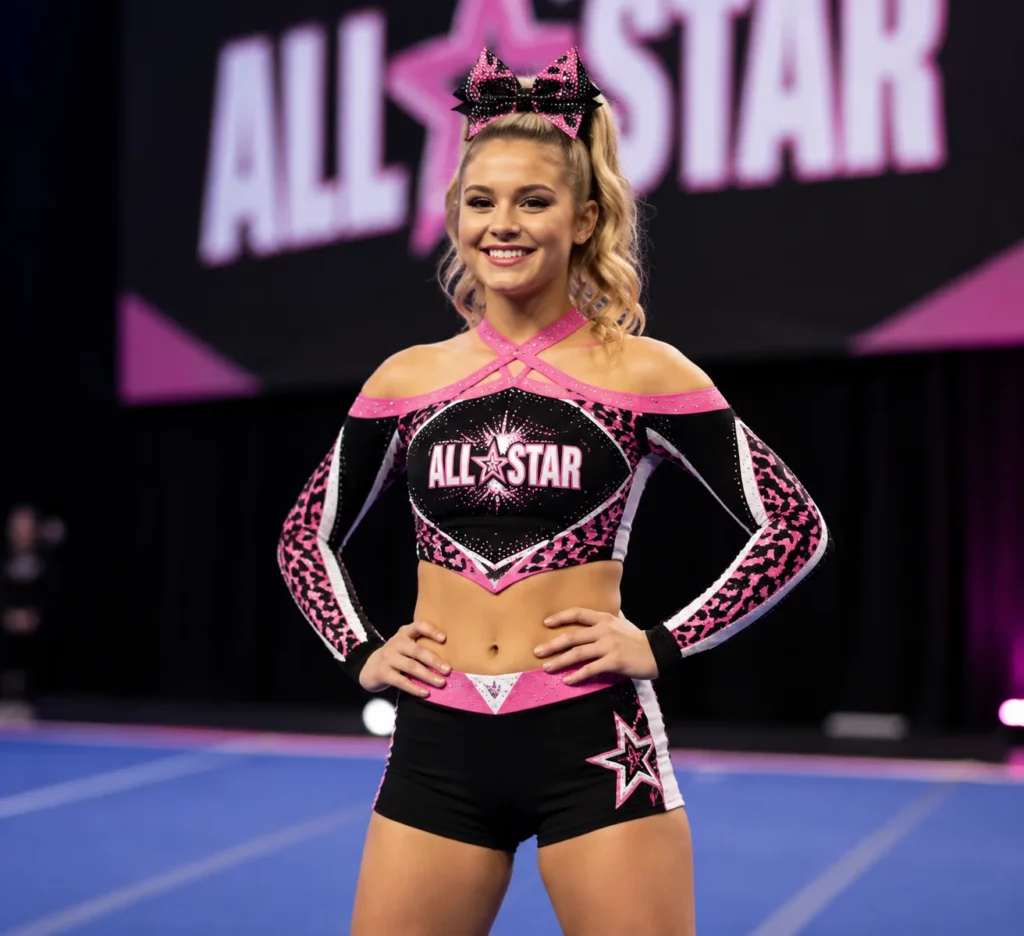
The right fabric can provide better performance and durability, but proper maintenance is essential to extend the service life of cheer uniforms. Based on our experience with custom cheerwear production, correct care methods help protect stretch, cor, and overall appearance through repeated use.
Washing Tips to Protect Cheer Uniform Fabrics
Cheer uniforms should be cleaned based on how frequently they are worn. Practice uniforms used several times a week may require washing after each use, while competition uniforms should be cleaned after performances to remove sweat and maintain fabric quality.
Recommended care steps:
- Use cold water: Helps protect stretch fibers and color stability.
- Escolha detergente neutro: Prevents damage to performance materials.
- Wash inside out: Protects prints, strass, and decorative details.
- Avoid bleach and harsh chemicals: Reduces fabric wear over time.
Para uma explicação mais profunda How to Wash a Cheer Uniform, nós cobrimos isso em um artigo separado.
Drying and Storage Tips to Maintain Fabric Performance
Heat and improper storage can affect elasticity, shape, and decorative details. Para manter a qualidade uniforme:
- Air dry when possible: Protects elastic fibers from heat damage.
- Avoid high-temperature dryers: Helps maintain fit and stretch recovery.
- Store in a dry place: Prevents moisture-related issues.
- Protect decorated areas: Reduces damage to rhinestones and custom elements.
Proper maintenance allows custom cheer uniforms to maintain their appearance and performance throughout regular training, competições, and events.
How Normzl Selects Performance Fabrics for Custom Cheer Uniforms
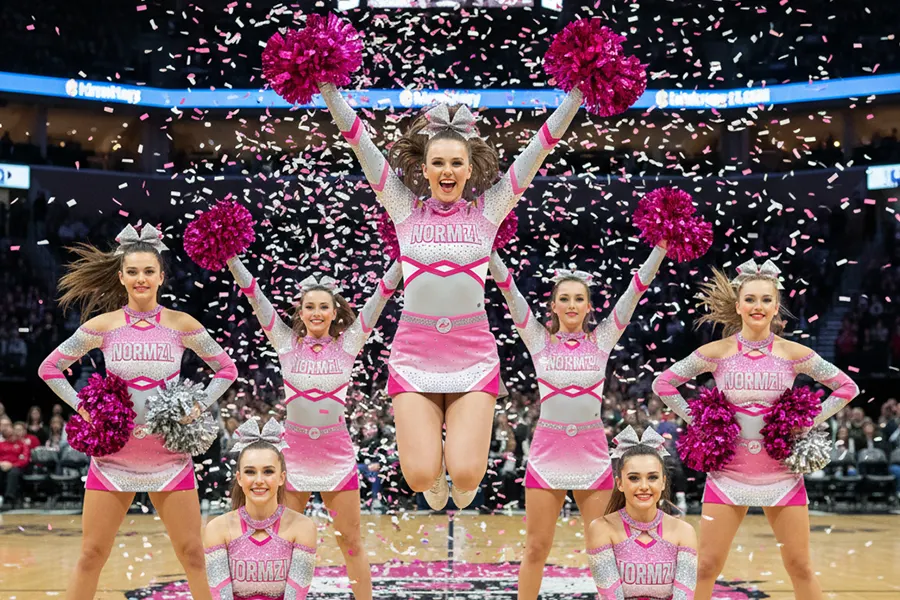
High-quality cheer uniforms start with carefully selected performance fabrics. No Normzl, fabric selection begins during the pre-production stage, where we evaluate material quality, requisitos de desempenho, and customization needs before production starts.
We work with premium sourced materials, including high-performance fabrics such as Lycra®, to ensure the right balance of stretch, conforto, durabilidade, e aparência. Each fabric is inspected carefully to confirm consistency in texture, cor, and performance before being used for custom cheer uniforms.
Fabric selection also needs to match the final design requirements. Factors such as sublimation printing, decorative details, ajustar, and construction methods are considered to ensure the material can support both creative designs and long-term wear.
With professional manufacturing experience and strict material control, Normzl helps teams and brands create uniformes de torcida personalizados that deliver reliable performance, quality finishes, and lasting visual appeal.
Considerações Finais
A well-designed cheer uniform requires more than attractive colors and creative details. Desempenho do tecido, requisitos de personalização, and manufacturing quality all play an important role in creating uniforms that meet athletes’ needs and team expectations.
With experience in custom cheer uniform manufacturing, Normzl supports teams and brands with performance fabric solutions, professional customization, and reliable production processes. Contact Normzl to develop custom cheer uniforms that deliver lasting quality, conforto, and competitive performance.
Perguntas frequentes
What are cheerleader outfits made of?
Cheerleader outfits are typically made from performance fabrics such as polyester, nylon, spandex, and LYCRA blends. These materials provide the stretch, durabilidade, conforto, and shape retention needed for stunts, caindo, and regular activities. Some custom cheer uniforms also include mesh panels or specialty fabrics to improve breathability and support unique designs.
Qual o melhor tecido para uniformes de torcida?
The best fabric for cheerleading uniforms depends on the team’s performance needs, usage frequency, e requisitos de projeto. Polyester-spandex and nylon-spandex blends are popular choices because they provide stretch, durabilidade, and shape retention. For custom cheer uniforms, teams often combine performance fabrics with options such as mesh panels or sublimation-friendly materials to achieve the right balance of comfort, flexibilidade, e impacto visual.
What are the most common fabrics used for school uniforms?
School cheer uniforms commonly use durable performance fabrics such as polyester, misturas de poliéster-elastano, and structured knit materials. These fabrics provide easy maintenance, retenção de cor, and enough flexibility for regular practices, jogos, e eventos escolares. For custom school cheer uniforms, fabric selection often focuses on balancing comfort, durabilidade, and cost.
What should teams consider before ordering custom cheer uniforms?
Teams should consider the uniform application, expected usage frequency, design requirements, necessidades de desempenho, and budget before ordering custom cheer uniforms. Working with an experienced manufacturer helps teams identify suitable fabric options and develop uniforms that meet both athletic requirements and visual expectations.
Can cheer uniform fabrics support sublimation printing and custom designs?
Sim. Many performance fabrics used for custom cheer uniforms support customization methods such as sublimation printing, strass, and other decorative details. Polyester-based fabrics are commonly used for sublimation because they provide vibrant colors, detailed patterns, and long-lasting designs.