





Three variables determine whether a majorette cape looks striking on stage or becomes a liability mid-routine: length, closure method, and fabric weight. Get the balance right, and the cape adds drama without slowing the performer down. Get it wrong, and even a beautifully designed uniform loses its effect.
This guide walks through each variable in order — cape style, length by performance type, ファブリックの動作, closure options, safety risks, uniform coordination, and sample testing — so that teams ordering majorette capes can make informed decisions before production begins.
Choose a Cape Style
The shoulder configuration and overall cut define how a cape sits on the body and how it moves during performance.
Single-shoulder cape. Draped from one shoulder, typically secured at the opposite hip or left open. Creates an asymmetrical silhouette associated with traditional majorette and drum major uniforms. Works well for parade and ceremony where the performer faces forward much of the time.
Double-shoulder cape. Attached at both shoulders like a yoke, hanging evenly on each side. Produces a symmetrical, formal appearance. Commonly used in competition settings where balanced lines matter to judges.
Short cape. Ends at or above the waist. Allows full arm range of motion and reduces the risk of the cape catching on props or other performers. Suitable for high-energy dance routines with fast arm work.
Full-length cape. Extends to the ankle or floor. Maximum visual impact, particularly effective in parade and stadium settings where the audience views from a distance. Requires more management during transitions and movement.
Detachable cape. Connected by snaps, フック, or a quick-release mechanism that allows removal mid-performance or during transitions. Practical for routines that include a costume reveal or require the performer to switch between cape and no-cape sections.
Reversible cape. Constructed with two fabric faces, each showing a different color or finish. The performer can flip the cape during a routine for a visual change without a full costume swap. Adds versatility but also adds weight compared to single-layer construction.
Teams browsing ダンス & マジョレットチーム uniform collections can reference how different cape styles pair with specific uniform silhouettes before requesting samples.
Choose Cape Length by Performance Type
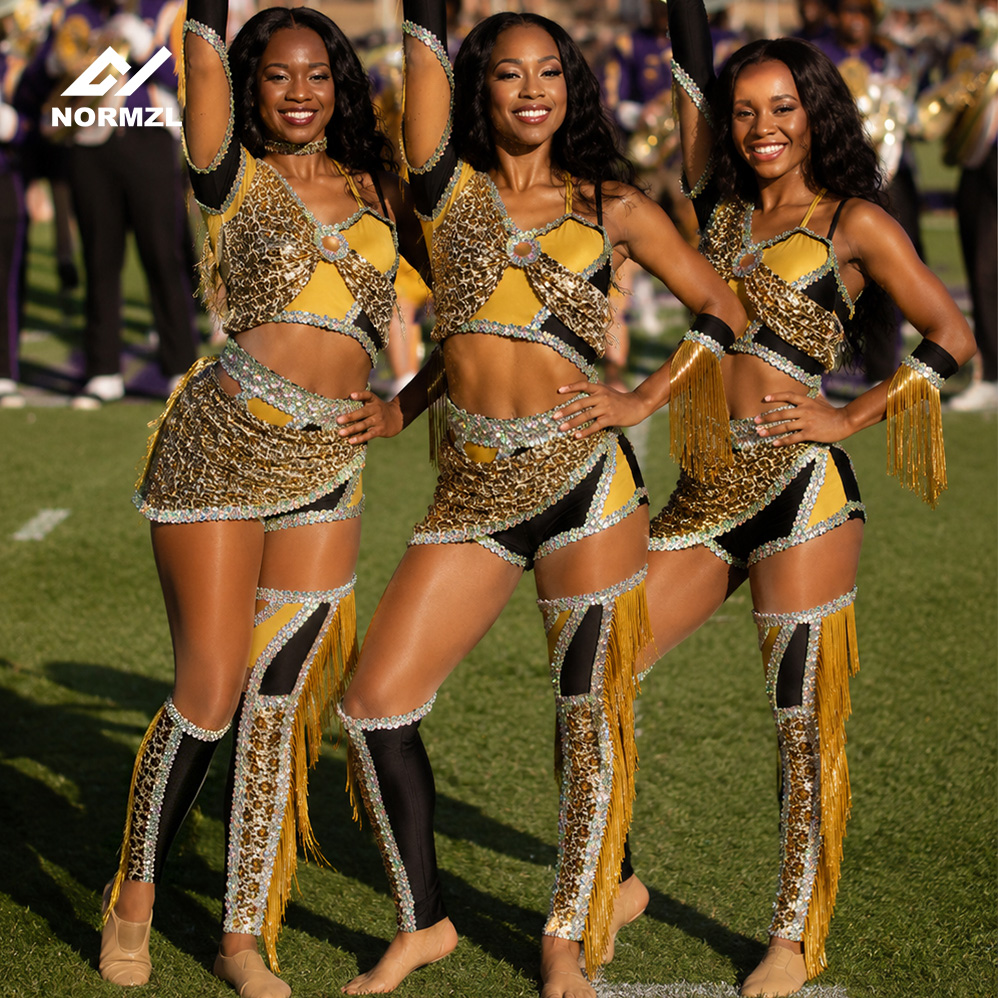
Cape length should respond to the performance environment, not just the designer’s preference. Each setting places different demands on the garment.
Indoor dance. Waist-length to hip-length capes typically work well. Shorter lengths keep the cape from interfering with arm movements, turns, and partner work. Indoor venues have no wind, so the cape’s behavior is mostly determined by the dancer’s own momentum.
Marching band. Mid-calf length is a common choice. Long enough to create visible motion during marching, short enough to avoid stepping on the hem during formation changes. The cape moves primarily with the stride, so excess length can bunch at the legs.
Parade. Knee-length to ankle-length capes suit parade routes. The performer is primarily walking forward, which means a longer cape drapes cleanly without the multi-directional movement of dance. Audience lines are close, so hem detail and fabric sheen are visible at short range.
Stadium performance. Ankle-length or floor-length capes read well from upper seating sections. The large venue rewards maximum fabric area. しかし, performers should be prepared to manage the hem when moving through tunnel areas or onto the field.
Competition stage. Length depends on the routine’s choreography. Judges need to see clean body lines, and a cape that is too long can obscure them. Mid-calf to knee-length is a practical starting point for most competition routines, adjusted based on the specific choreography.
Children vs. adult members. Younger performers generally need shorter capes relative to their height. A cape that falls at mid-calf on an adult may reach the floor on a child, creating a tripping hazard. Proportion matters more than a fixed measurement. Confirm cape length against each performer’s body measurements at the ordering stage.
Best Fabrics for Majorette Capes
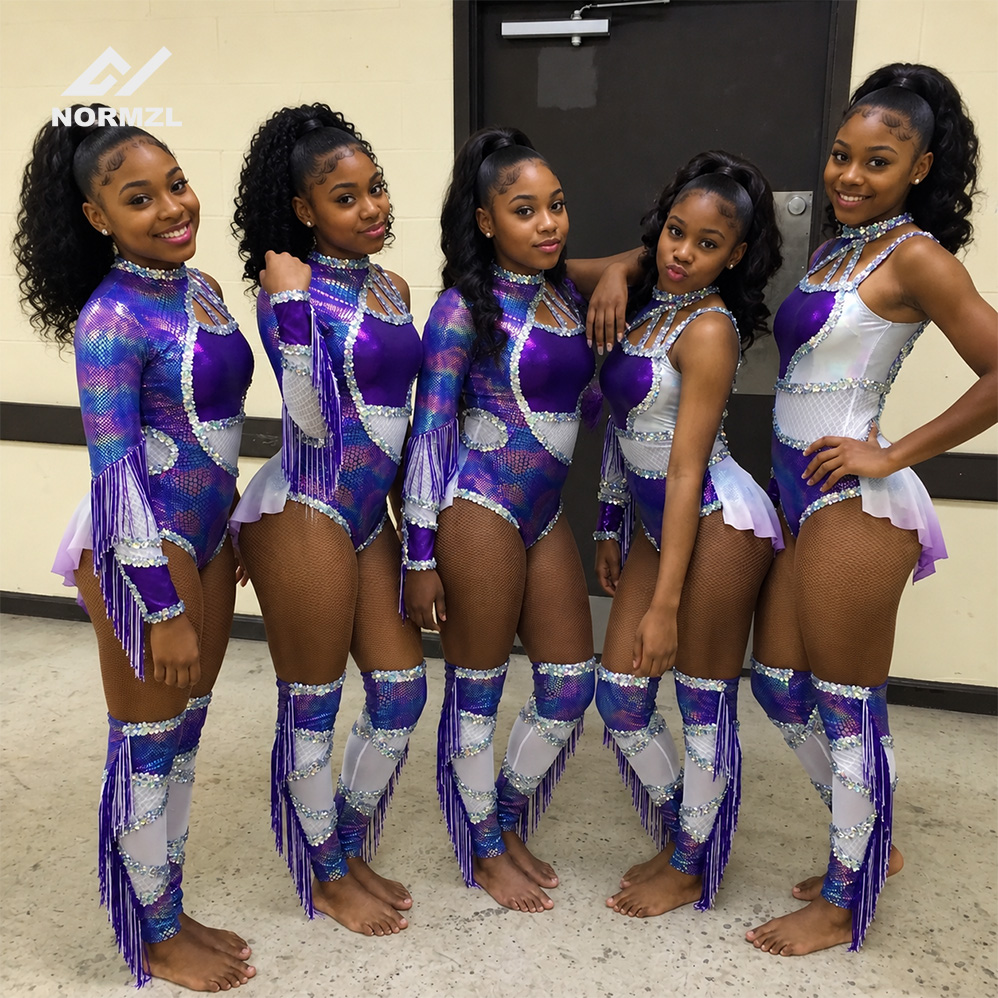
Fabric choice affects how the cape looks in motion, how it handles under stage lighting, and how much it weighs on the performer’s shoulders.
| ファブリック | Drape | Light Reflection | 重さ | Wrinkle Resistance | Wind Behavior |
|---|---|---|---|---|---|
| Lightweight polyester | Good | Moderate | Light | 高い | Moderate flutter |
| Satin | Smooth, fluid | High sheen | Medium–Heavy | 低い | Catches wind |
| メタリック生地 | Stiff to semi-fluid | Very high | 中くらい | Moderate | Reflects light in motion |
| メッシュ | Airy, open | Low–Moderate | Very light | 高い | Passes through, minimal catch |
| スパンコール生地 | Stiff, テクスチャーのある | Very high (point-source) | Heavy | 高い (surface) | Heavy, catches wind |
| Double-layer fabric | 満杯, 構造化された | Depends on face fabric | Heavy | Moderate | Reduced flutter vs. single layer |
Lightweight polyester is a practical all-rounder. It holds color well, resists wrinkling between performances, and keeps weight low — important for routines that run several minutes. Satin delivers the sheen that reads well under arena lighting, though it wrinkles more easily and may need steaming before each performance. Metallic fabric catches and reflects light at different angles, adding visual interest, but can feel heavier and may crease along fold lines during storage.
Mesh panels are sometimes incorporated into cape designs for breathability or layered over a base fabric for a floating effect. Sequin fabric delivers maximum sparkle but adds noticeable weight; teams should consider whether performers can sustain that weight through a full routine. Double-layer construction gives a fuller drape and allows color contrast between the outer face and the lining, though it increases both weight and cost.
In most cases, teams start with a polyester or satin sample and move to metallic or sequin options for featured competition pieces. Your manufacturer can provide fabric swatches for hands-on comparison before bulk orders.
Cape Closure Options
The closure method affects how quickly a performer can put on or remove the cape, how securely it stays in place during movement, and what happens if it needs to come off in a hurry.
Snap closure. Metal or plastic snaps sewn at the neckline or along the shoulder seam. 安全な, relatively easy to replace if damaged, and allows quick removal. Common in competition capes where performers may need to shed the cape between routine segments. Snap hardware should be covered or positioned so it does not press against the neck during extended wear.
Hook-and-loop (Velcro). 軽量, low-profile, and quiet during removal. Less durable than snaps over repeated use — the hook side can degrade and lose grip. May catch on mesh or sequined under-layers. Suitable for capes used in controlled settings where extreme security is not the primary concern.
Hidden zipper. A zipper concealed along the neckline or shoulder seam gives a clean exterior appearance. Secure and smooth, but slower to remove than snaps and may require a pull tab accessible from the outside. If the zipper fails, replacement is more involved than swapping a snap.
Shoulder tab. A decorative tab — often matching the uniform trim — that fastens over the shoulder point using a snap or button. Provides a finished look and allows some adjustment in drape position. May not hold as firmly during high-intensity movement as a multi-point snap system.
Magnetic closure. An emerging option for quick-release applications. Magnets sewn into the seam allow the cape to detach with a firm pull. Useful where rapid costume changes are choreographed. May not provide sufficient hold for high-impact routines and can interfere with sensitive electronic devices if strong enough.
Each closure type involves trade-offs between security, speed of removal, そして耐久性. Most manufacturers recommend testing the chosen closure under performance conditions — not just in static fitting — before committing to a bulk order. How securely that hardware is sewn in is part of overall build quality, covered in our majorette dance uniform craftsmanship and care guide.
Performance Safety Risks
Capes add visual impact, but they also introduce hazards that should be addressed during design rather than discovered during rehearsal.
Neck strain. The cape’s weight concentrates at the neck or shoulder attachment points. Heavier fabrics and longer lengths increase the load. Performers repeating the same routine through multiple rehearsals can develop neck and shoulder fatigue. Keeping the cape at the lightest weight the visual design allows, and distributing weight across both shoulders with a double-shoulder style when possible, reduces this risk.
Tangling with arms or props. Loose capes can catch on batons, ポンポン, rifles, or other performers during fast choreography. Cape length and attachment method both affect this risk. Shorter capes and secure closure systems reduce the chance of entanglement.
Long capes dragging on the ground. Floor-length capes can pick up dirt, moisture, and debris when the performer moves between staging areas. In parade settings, a dragging hem can also become a tripping hazard if the performer steps on it. Training performers to manage the cape hem during transitions, or adding a clear or dark hem that shows less dirt, addresses this practically.
Outdoor wind. Capes act as sails in gusty conditions. A full-length satin cape in a sudden breeze can pull a performer off balance or obscure their vision. Lighter fabrics and shorter lengths reduce wind catch. Testing the cape in outdoor conditions before the performance helps identify how it behaves in wind.
Closure hardware scratching skin. Metal snaps, hook-and-loop edges, and zipper pulls can press against the performer’s neck, jaw, or collarbone during movement. Padding behind snap points, covering hardware with fabric tabs, and rounding sharp edges on metal components reduce scratching risk.
Cape blocking vision. A cape that shifts during performance can slide across the face or limit peripheral vision. This is particularly relevant for single-shoulder capes that may rotate during turns. Securing the cape at multiple points and testing the full range of motion during rehearsal helps identify vision-obstruction issues before they become problems on stage.
Majorette and twirling performance, as documented in the overview of Baton twirling, involves coordinated movement with props, making cape safety an integral part of routine planning rather than an afterthought.
Coordinate the Cape With the Uniform
A cape should look like part of the uniform, not an addition to it. Several design elements need to work together.
Main color and lining contrast. The cape’s outer face typically matches or complements the uniform’s primary color. The lining — visible when the cape opens during movement — can carry a contrasting color or metallic finish for visual interest. This contrast adds depth without additional costume changes.
ロゴの配置. Team logos or emblems can be applied to the cape’s back panel, either centered on the upper back or positioned lower near the hem. Consider how the logo reads when the cape is in motion versus stationary. Embroidered logos hold up well; printed logos may crack along fold lines over time.
Rhinestone and sequin density. If the uniform already features heavy rhinestone or sequin work, the cape may need a lighter application to avoid visual competition. Conversely, a relatively plain uniform can pair with a heavily embellished cape as the focal point. Balance matters — too much sparkle across both uniform and cape can look overwhelming under stage lighting.
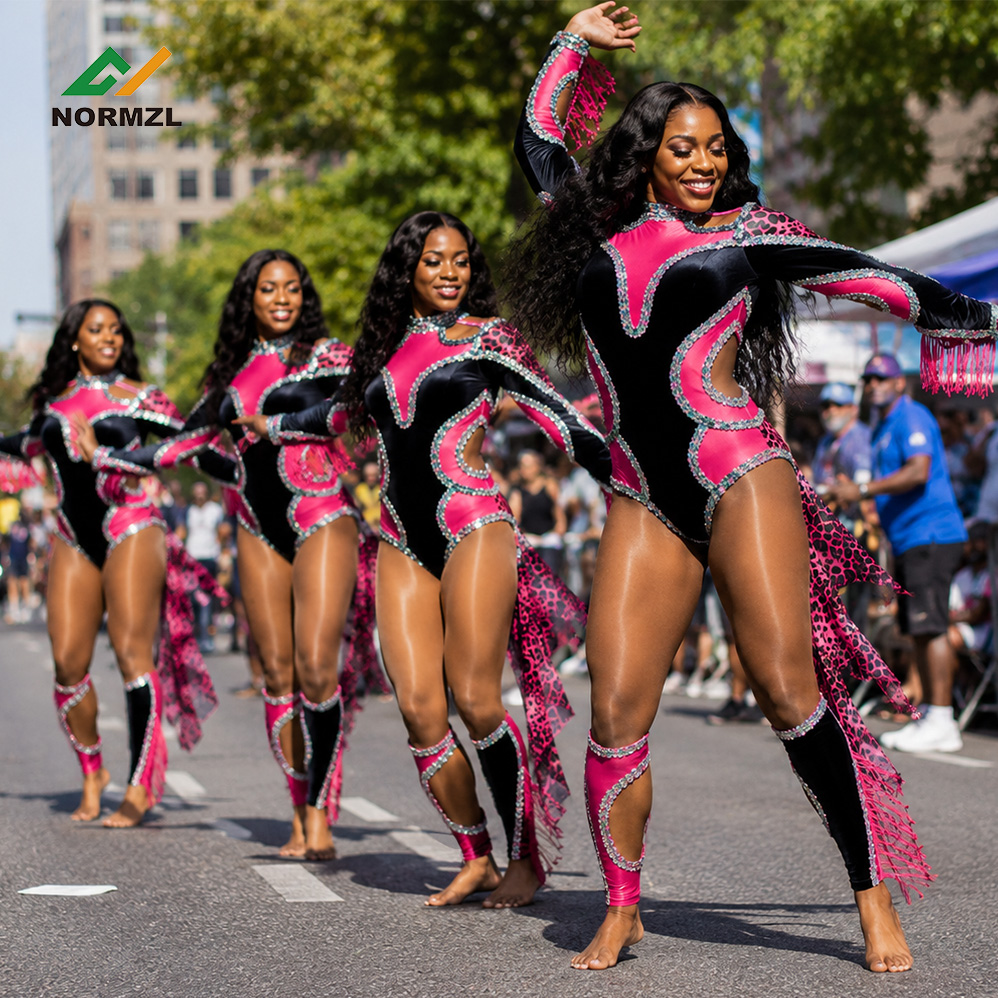
Relationship with fringe, gloves, and boots. The cape’s hem treatment should coordinate with any fringe on the uniform’s sleeves or skirt. If the cape has fringe trim, its color and length should align with the rest of the costume. Glove color and material should be checked against the cape’s edge color, since the hands frequently move near the cape’s opening. Boot height affects where the cape hem falls relative to the footwear line — final measurements should be taken with the actual boots the performer will wear. For overall styling direction across the uniform, see our majorette uniform design ideas guide.
Teams ordering capes as part of complete ダンス & マジョレットチーム uniform sets can ensure color and trim consistency across all pieces from a single production run.
Cape Sample Test
大量注文の前に, run a standardized test sequence with sample capes to identify issues that static fitting cannot reveal. Our guide on how to approve a majorette uniform sample covers the same sign-off process for the full uniform.
Fast walk. Walk at a brisk pace for 30 seconds. Check whether the cape swings into the legs or requires constant hand adjustment.
Marching. Execute a set of forward marches with high knee action. Observe how the cape behaves at the hem — does it tangle with the stride or flow cleanly behind?
Turn. Execute a series of pivot turns at performance speed. Check whether the cape wraps around the body or fans out cleanly. Single-shoulder capes are more likely to wrap during turns.
Arm raise. Raise both arms overhead and hold for five seconds. Check whether the cape pulls at the neck closure or slides off the shoulder.
High kick. Execute a high kick with the dominant leg. Check whether the cape’s front edge catches on the leg or boot.
Quick removal. If the routine requires the performer to remove the cape mid-performance, time the removal using the chosen closure. Three seconds or less is a practical target for snap and magnetic closures.
Fan test for outdoor wind simulation. Have an assistant open and close a large board or panel near the performer to simulate gusts. Observe how the cape responds — does it lift over the head, pull the performer sideways, or settle quickly? This test is particularly important for parade and stadium performances where wind conditions are unpredictable.
Document each test with video so that the team director and the manufacturer can review specific issues together. Small adjustments — moving a snap point by a centimeter, trimming an inch from the hem, switching to a lighter fabric — often resolve problems that seem major in rehearsal.
よくある質問
How long should a majorette cape be?
Cape length depends on the performance type. Indoor dance routines typically use waist- to hip-length capes. Marching band and competition stages often work with mid-calf lengths. Parade and stadium performances can accommodate knee- to floor-length capes for maximum visual effect. Children’s capes should be proportionally shorter than adult capes to reduce tripping risk. Confirm exact length against each performer’s measurements during the ordering process.
What fabric is best for a majorette cape?
The fabric depends on the performance context and visual goals. Lightweight polyester offers a practical balance of drape, 重さ, and wrinkle resistance for regular use. Satin provides high sheen for competition and stage. Metallic and sequin fabrics deliver maximum visual effect for featured pieces but add weight. Mesh is useful for breathability or layered effects. Double-layer construction adds fullness at the cost of additional weight.
Are detachable capes safer?
Detachable capes can reduce certain risks — they allow quick removal if the cape becomes tangled or if the performer needs to switch to unrestricted movement during a routine. しかし, the detachment mechanism must be tested under performance conditions. A closure that releases too easily can come off unintentionally, while one that is too difficult to open defeats the purpose of a quick-release design. Snap closures generally offer a reliable balance of security and removability.
How should majorette capes be stored?
Hang capes on padded hangers in a ventilated area to prevent wrinkles and allow moisture to evaporate after performance. Avoid wire hangers, which can crease the shoulder points. For transport, use garment bags that allow airflow rather than sealed plastic, which can trap humidity. Store in a dry environment to protect metallic and sequin surfaces from tarnishing. Fold only as a last resort, since creases in satin and metallic fabrics can be difficult to remove.
最終的な考え
Designing majorette capes that perform as well as they look requires working through fabric, closure, length, and safety considerations together — not in isolation. Our production team can help you evaluate options based on your specific routine requirements, performance venue, and uniform design.
Create Your Team’s Championship Look