





When team directors and coaches plan custom majorette uniforms with fringe, the decorative details often receive attention late in the design process. Yet the length, peso, and placement of fringe determine how a uniform moves under stage lights, how it feels through a two-minute routine, and how it reads from the judges’ table. Choosing the right combination of these three factors — rather than simply adding fringe wherever space allows — separates a uniform that supports the performance from one that works against it.
This guide walks through the practical decisions behind fringe selection: how different materials behave, what length suits each placement area, and how choreography style should inform every choice. It draws on production experience with competition dancewear to help teams order with confidence.
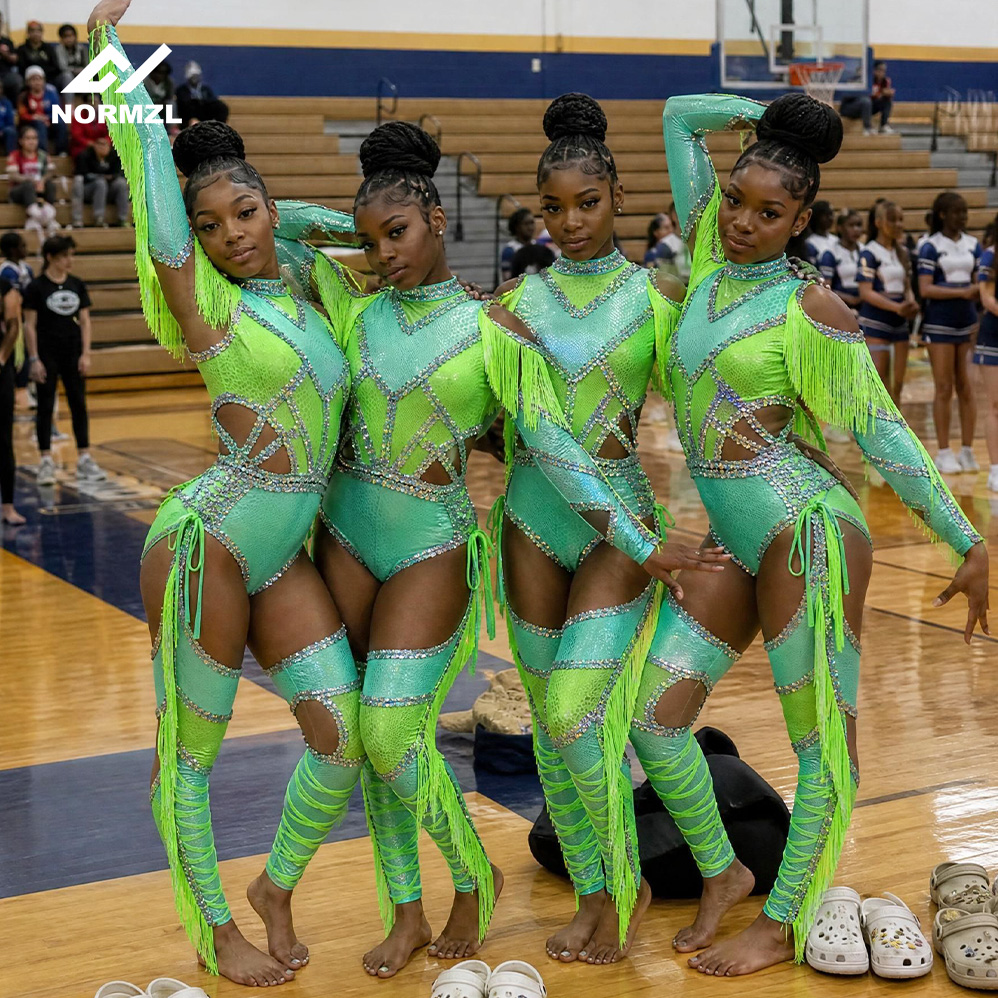
How Fringe Changes the Look of a Majorette Uniform
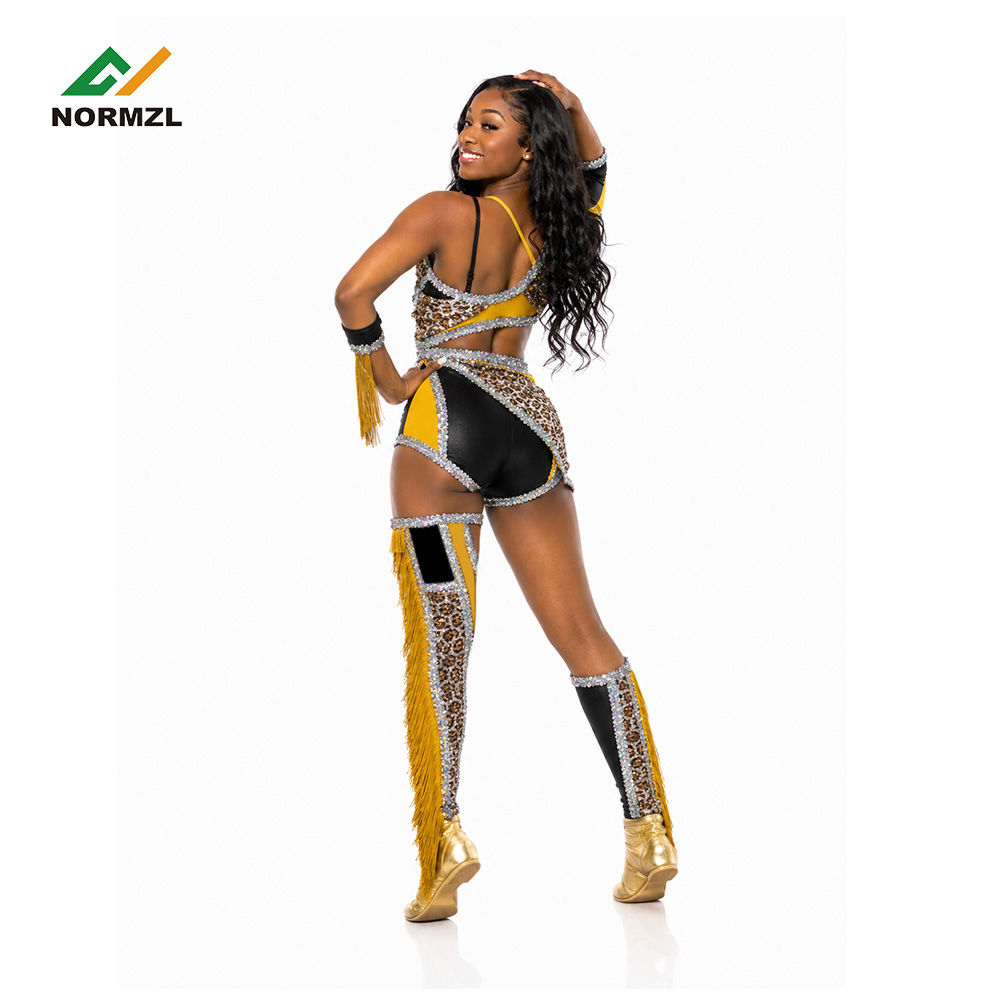
Fringe redirects attention toward motion. On a majorette uniform, it emphasizes shoulder movement, amplifies spin effects, and adds a dynamic quality to kicks and directional changes that flat fabric cannot produce on its own.
At the shoulder, fringe draws the eye to every arm movement. A well-placed shoulder fringe creates a visual echo that follows the dancer’s motion, making arm waves and rolls appear larger to spectators and judges seated at a distance. The fringe extends the visible range of motion beyond the dancer’s actual physical movement. Short enough lengths — typically in the 3–5 inch range at the shoulder — keep the effect clean without obscuring the uniform’s lines during static poses.
During spins, fringe produces a flaring effect. As the dancer rotates, centrifugal force pulls the fringe strands outward, creating a visible halo. The weight and length of the fringe determine how pronounced this flare becomes. Heavier fringe generates more dramatic flare but requires additional momentum to initiate, which can matter in routines that include rapid direction changes.
For kicks, fringe placed at the hem or hip extends the visual line of the leg. A well-timed kick sends the fringe traveling in the same direction, making the movement appear higher and more dynamic. The fringe continues its arc briefly after the dancer has stopped, adding a polished finishing quality to each movement.
Fringe also changes the perceived proportions of the body on stage. Vertical fringe lines running along the bust or waist create a lengthening effect, while horizontal fringe bands at the hips can widen the visual silhouette. Designers typically balance these effects — pairing a horizontal hip fringe with vertical bust lines, for example, to maintain proportion.
In large venues, fringe increases visibility. The additional movement and light reflection make performers stand out in outdoor arenas and gymnasiums where detail can be lost at a distance. Metallic and sequin fringe varieties catch overhead lighting particularly well, which is why they remain popular for competition uniforms intended for large audiences. For context on how majorette performance has evolved in visibility and presentation, the Wikipedia entry on majorettes covers the tradition’s development from marching band auxiliaries to independent competition teams.
Compare Fringe Materials
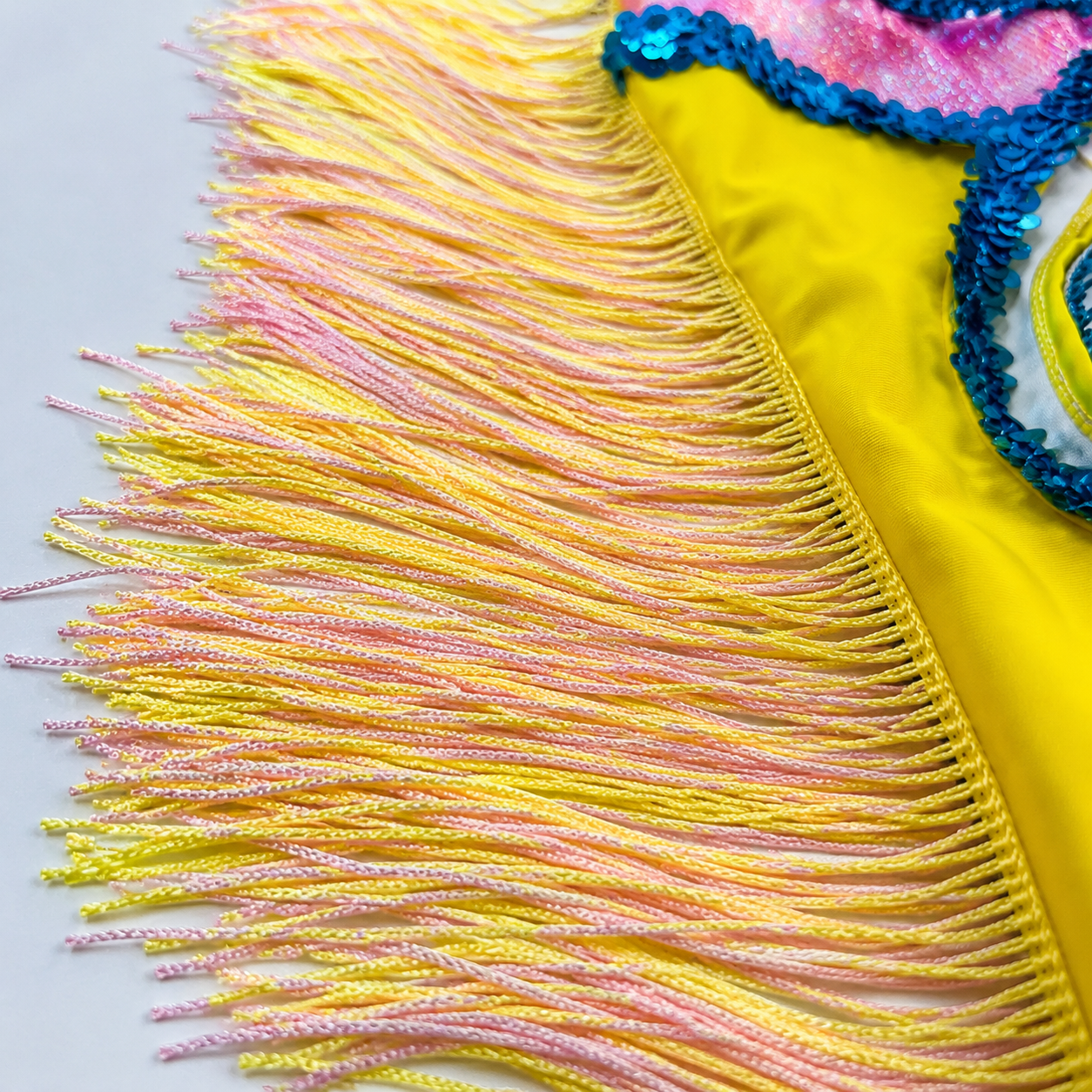
The material you choose affects nearly every aspect of how the fringe performs. Here is how the five most common types compare across weight, light reflection, sound, tangling risk, and maintenance.
| Fringe material | Weight | Look and sound | Tangling and care | Works best for |
|---|---|---|---|---|
| Thread | Lightest | Subtle; impact comes from movement, little sparkle or sound | Tangles less; low maintenance | Routines with heavy arm choreography where weight matters |
| Metálico | Lighter than beaded | High shimmer under stage light | Can tangle in quick changes; needs care | Teams wanting a classic majorette shine |
| Sequin | Mid-weight | Intense sparkle; rustles on fast moves | Discs can shed with heavy use | Long seasons where high shine is wanted |
| Beaded | Heaviest common type | Dramatic swing; distinct clicking sound | Tangles between strands; store carefully | Looks worth the added shoulder weight on long days |
| Diamante de imitación | Heavy in long runs | Maximum sparkle | Keep to short strands to limit weight | Accent highlights paired with lighter fringe |
Choose Fringe Length by Placement
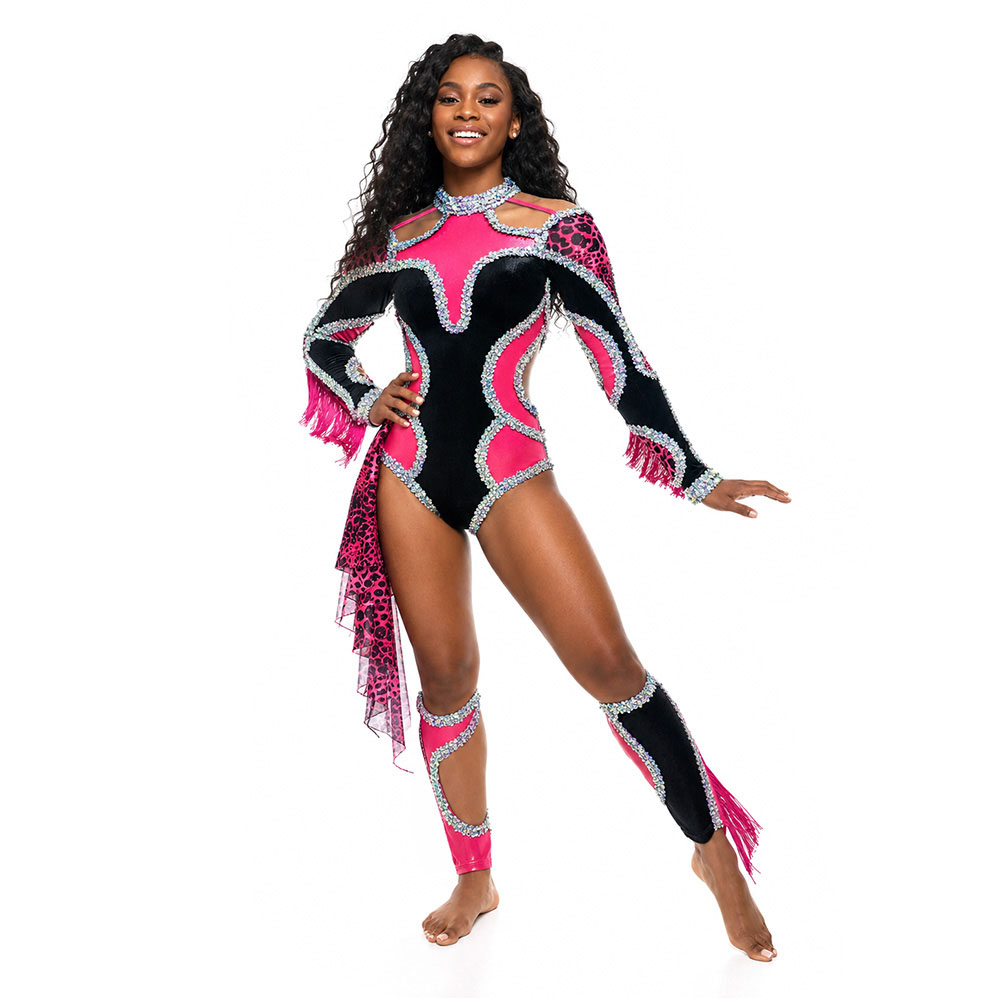
Each placement area on a fringe majorette uniform has a length range that typically works well for movement and visual balance. These ranges serve as starting points — your factory contact will confirm the exact measurements that suit your specific design.
| Placement | Typical length | Placement notes |
|---|---|---|
| Shoulder | 3–6 in | Frames the neckline and shoulder cap; shorter suits narrower frames, longer suits broader builds |
| Sleeve | 4–8 in | Near the shoulder cap emphasizes raises and waves; near the elbow gives a trailing effect |
| Busto | 2–4 or 5–7 in | Shorter for subtle shimmer, longer for impact; keep it clear of the front closure |
| Cintura | 4–8 in | Shorter keeps a clean break, longer adds motion; balance it against the skirt |
| Hip | 5–9 in | Draws the eye on kicks and hip hits; go shorter for fast combinations |
| Falda | 2–3 to 8–12 in | Short accents add texture; longer pieces extend the line on spins, matched to skirt fullness |
For broader design context beyond fringe selection, the majorette uniform design ideas guide covers overall styling approaches for school and dance teams.
Match Fringe Placement to Choreography
The type of movement your routine emphasizes should guide where fringe goes and how much of it the uniform carries.
High kicks call for lighter fringe at the leg and hip areas. Heavy or long fringe near the knee can interfere with movement range and, in close formations, may catch on neighboring dancers. Short hip fringe (4–5 inches) provides visual accent without physical interference.
Fast turns benefit from medium-weight fringe at 4–6 inches that can flare and recover quickly. Very long fringe creates excessive drag during rapid multi-revolution turns and may slow the dancer’s recovery between rotations.
Arm combinations with intricate hand positions and crosses work better with shorter shoulder and sleeve fringe (3–5 inches). Longer fringe in these areas can obscure the precision of arm work from the judges’ perspective.
Floor work requires fringe that lies flat without poking or catching when the dancer is on the ground. Beaded fringe may not suit routines with extensive floor contact, as beads can press uncomfortably against the body during rolls and slides.
Marching performances benefit from longer fringe at the skirt and hip areas, where the fringe emphasizes the rhythmic pulse of the step. The visual effect of uniform fringe moving in sync across a full marching unit creates a strong impression from the stands.
Formation changes with close-proximity positioning require fringe that does not catch on neighboring dancers. Thread or metallic fringe tends to perform better in tight formations than beaded varieties, which can hook on adjacent costume elements during quick transitions.
Avoid Excess Weight and Imbalance
A uniform that looks striking on the hanger can feel unbalanced during performance if fringe weight is not distributed thoughtfully across the design.
Asymmetric fringe designs — where one shoulder or sleeve carries more fringe than the other — can create visual interest, but they also shift the uniform’s center of gravity. If one side carries significantly more weight, the difference becomes noticeable during fast combinations and may affect the dancer’s comfort over a full routine. en la mayoría de los casos, balancing decorative elements across the entire uniform produces a more comfortable result.
Heavy decoration should not concentrate in a single active area. A uniform with dense beaded fringe at both shoulders and the hips, for example, places significant weight across multiple high-movement zones simultaneously. Distributing heavier elements across different areas — beaded fringe at the shoulders with lighter thread fringe at the hips — maintains visual impact while reducing fatigue.
Long fringe affects fast spins differently depending on total weight. A 10-inch thread fringe spins with less resistance than a 6-inch beaded fringe, because the bead weight creates more centrifugal pull. Teams planning routines with multiple spin sequences should discuss fringe weight limits with their production team before finalizing the design.
Children’s teams need lighter designs in general. Younger dancers have smaller frames and less developed upper body strength, so heavy beaded fringe can cause discomfort more quickly. Thread or light metallic fringe typically serves children’s majorette dance uniforms with fringe better, with shorter lengths across all placement areas.
Construction and Durability
How fringe attaches to the uniform determines how well it holds up through rehearsals, competiciones, lavado, and transport.
Attachment methods vary. Double-stitched or serged seams hold fringe securely through repeated wear and washing. Single-row stitching can pull apart under stress, particularly at high-movement areas like the shoulders. Bar-tack reinforcement at stress points — where fringe strands meet the seam under tension — prevents individual strands from tearing away during performance.
Preventing shedding depends on how securely each strand is anchored. Fringe that is secured at both the top and bottom of each strand sheds less than fringe anchored at the top only. Thread fringe that is cut rather than folded at the bottom edge can fray over time, so finished edges matter for long-term appearance.
Preventing tangling with zippers and rhinestones requires strategic placement. Fringe positioned near zipper lines can catch during quick costume changes. Similarly, rhinestone clusters placed adjacent to fringe can snag strands during folding or storage. Designers should leave clear space between fringe attachment lines and hardware elements.
Transport and storage affect fringe condition between performances. Uniforms transported on hangers with fringe hanging freely maintain their appearance better than folded uniforms. Compressed storage can crush fringe and create creases that are difficult to remove before the next performance. Some teams use individual garment bags with a clip at the top to hold the fringe section separately. For a fuller maintenance routine that covers fringe alongside the rest of the uniform, see our majorette dance uniform care guide.
Sample Movement Test
Before approving a fringe design for full production, request a sample and run through a structured movement test that covers the range of motions your routine requires. The same sign-off steps apply across a whole uniform, as our guide on how to approve a majorette uniform sample explains.
Paso 1 — Walk and march. The fringe should move rhythmically with the body, not lag behind or whip ahead. Watch for any strands that catch on adjacent uniform elements during normal marching stride.
Paso 2 — Arm routine. Run through the full arm sequence. Shoulder fringe should not tangle with sleeve fringe during crosses, and arm fringe should not obscure hand positions during holds.
Paso 3 — High kick. Execute kicks at full height. The fringe should extend the visual line without wrapping around the leg or catching on neighboring uniform components.
Paso 4 — Spin. Complete spins at performance speed. The fringe should flare evenly and recover cleanly when the dancer stops, without wrapping around the body or taking multiple beats to settle.
Paso 5 — Jump. Perform the routine’s jump elements. Fringe should land correctly after the jump without catching on shoes, other costume elements, or the dancer’s own limbs.
Paso 6 — Full choreography. Run the complete routine at performance intensity. Issues that do not appear in isolated movements often surface when combinations bring multiple elements together.
Record the test in slow-motion video if possible. Reviewing fringe movement frame by frame reveals timing issues — such as fringe that moves a beat late or does not recover quickly enough for the next transition — that are difficult to see at normal speed.
Preguntas frecuentes
What length fringe is best for majorette uniforms?
The right length depends on placement and choreography demands. Shoulder fringe typically works well at 3–5 inches, sleeve fringe at 4–8 inches, and skirt fringe can extend longer depending on the desired visual effect. Shorter fringe responds faster during quick routines, while longer fringe creates more dramatic movement but requires more energy to control. Your factory contact can recommend specific lengths based on your routine’s movement profile.
Is metallic fringe heavy?
Metallic fringe typically weighs more than plain thread fringe but less than beaded options. The total weight depends on coverage area and strand density. For teams that prioritize lightweight uniforms, metallic thread fringe offers a compromise between shimmer and weight. Confirm exact weight specifications with your production team at the quoting stage, as metallic coatings vary by supplier.
Where should fringe be placed on a dance uniform?
Common placement areas include the shoulders, mangas, bust line, cintura, caderas, and skirt hem. The specific placement depends on the uniform design and the choreography’s emphasis. Routines featuring extensive arm work benefit from shoulder and sleeve fringe, while marching routines may prioritize hip and skirt fringe. A uniform can carry fringe at multiple placement points, but total weight should be balanced across the design.
How do you stop fringe from tangling?
Different fringe types carry different tangling risk — beaded fringe tangles most easily, while thread fringe tangles least. Store uniforms on wide, padded hangers with fringe hanging freely, and avoid compressing fringe sections against other costume elements in transport. Before each performance, a light finger-comb through the fringe can separate any strands that have shifted during storage. Choosing the right fringe type for the choreography’s movement demands remains the most effective long-term approach to minimizing tangling.
Pensamientos finales
Our design team works with team directors and coaches to plan fringe placement, material selection, and weight distribution for competition uniforms. Share your routine requirements and color scheme, and we will develop a design that supports your team’s performance from every seat in the venue.
Create Your Team’s Championship Look