





A cheerleader’s training day rarely involves just one kind of movement. A single practice session can include tumbling passes on a spring floor, partner stunting drills, a conditioning circuit, and then a dance routine cleanup — and each of those activities places different demands on what the athlete is wearing. A top that stays put during a back handspring can ride up during a partner stretch, and shorts that work for running may bunch under a flyer during a lib. Treating “practice clothes” as a single category is where most ordering mistakes start.
This article breaks cheer practice wear down by training activity rather than by garment type. It covers what each activity requires from the clothing, which fits and fabrics suit which drills, and what to check before a bulk order goes to production. It is written for coaches, athletic directors, and booster club purchasers who buy for a roster — not for an individual shopper picking one outfit.
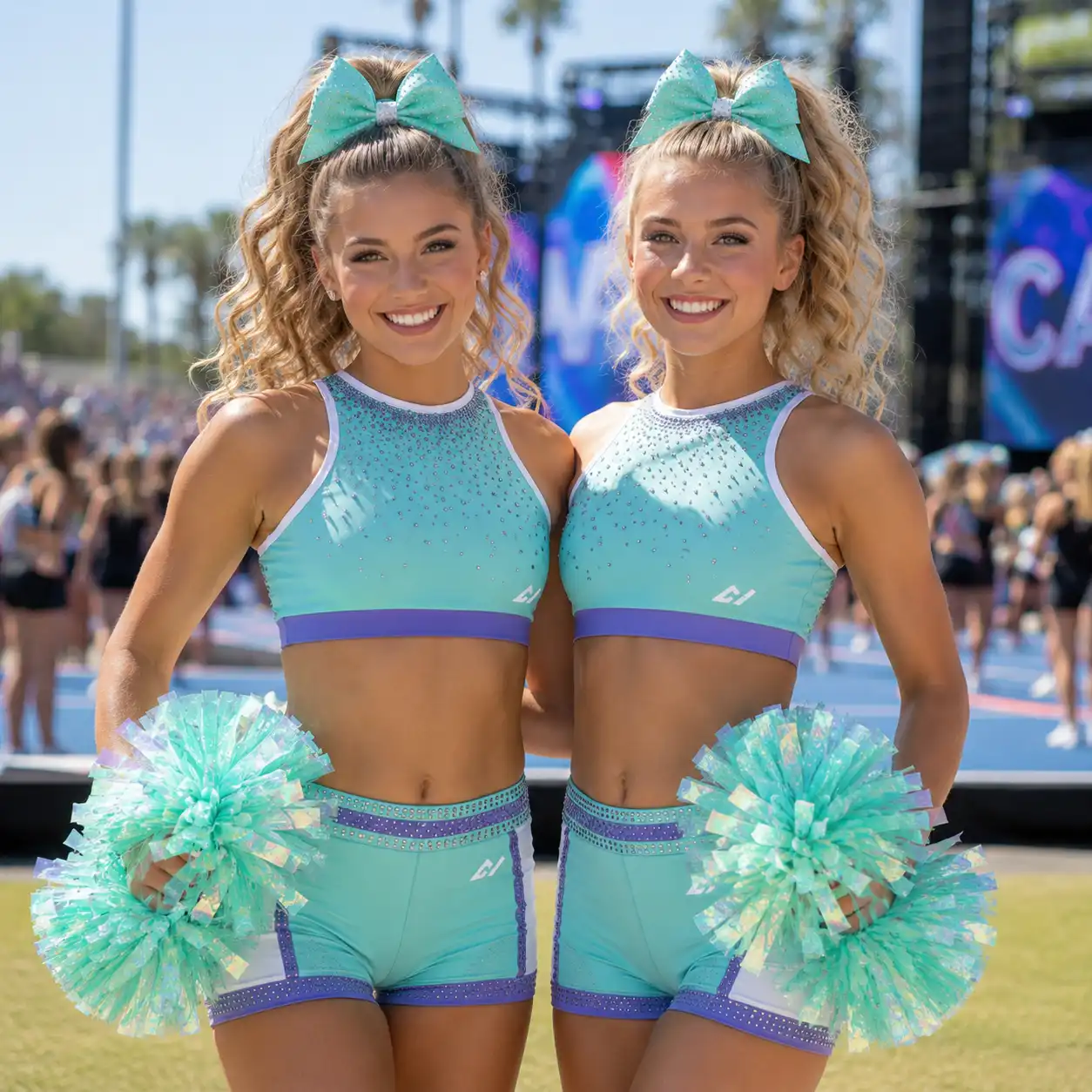
Quick Selection Table by Training Type
Before the detailed sections, here is a quick reference for what each training activity typically calls for.
| Training Type | Recommended Top | Recommended Bottom | Core Requirement |
|---|---|---|---|
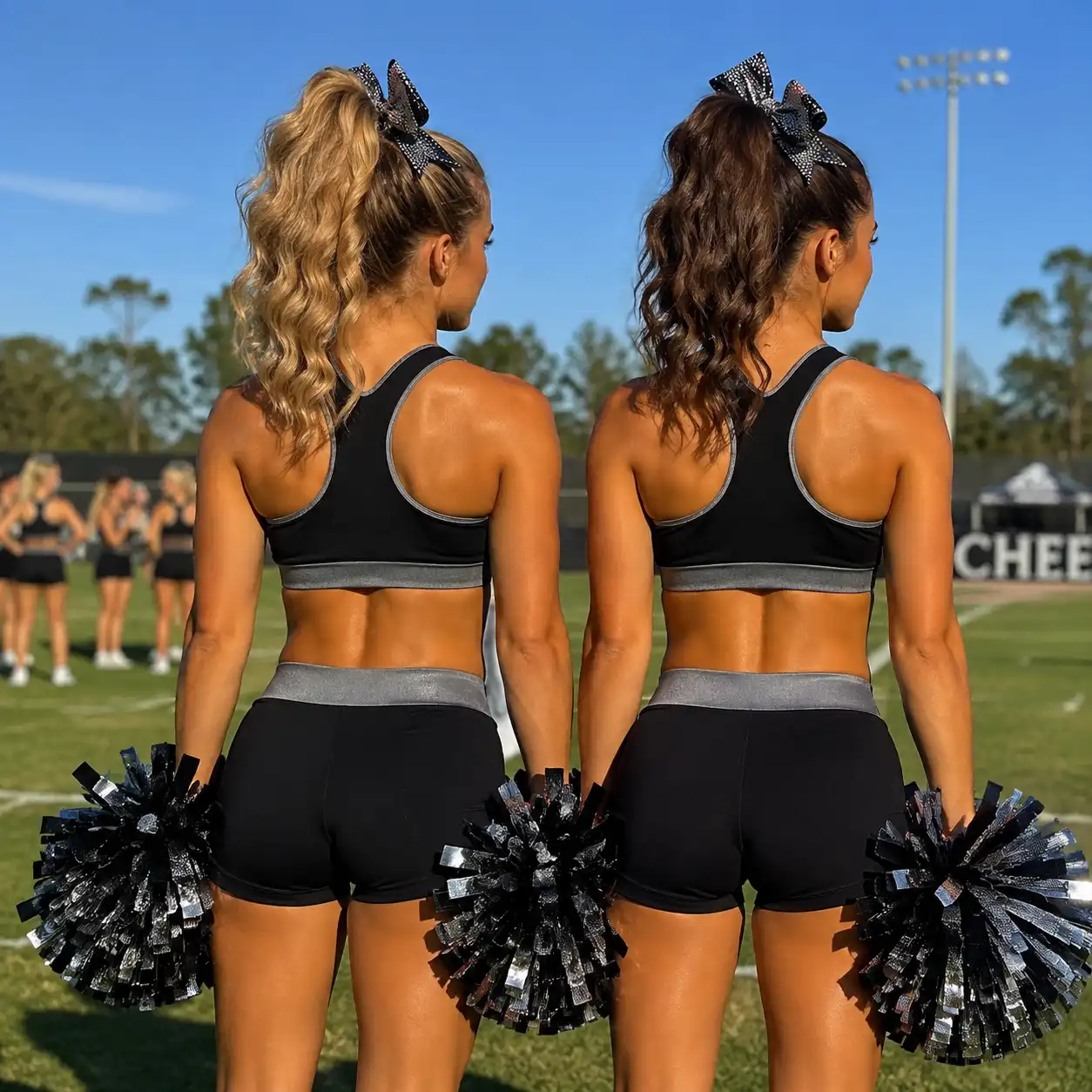
| акробатика | Fitted tank or crop top, no zippers or hard trim | Mid-thigh shorts or fitted leggings with stable waistband | Garment must not shift during rolls and handsprings; coach must see body alignment |
| Задержка роста | Fitted tee or tank, tucked or hip-length | Compression shorts or snug mid-thigh shorts | No loose fabric or surface decorations that can scratch a teammate; top and bottom stay in place during lifts |
| Conditioning | Lightweight moisture-wicking tee or tank | Shorts or leggings with secure pocket if needed | Moves sweat away from skin, dries fast, allows full range for running and strength work |
| Танец | Fitted crop top or leotard-style top | Briefs over leggings or dance shorts with clean hem | Allows the coach to read body lines; cuffs and legs do not interfere with footwork |
| Лагерь | Matching team set — tank and shorts or bike shorts | Coordinated shorts or bike shorts | Identifies team members quickly; holds up through all-day, multi-activity wear |
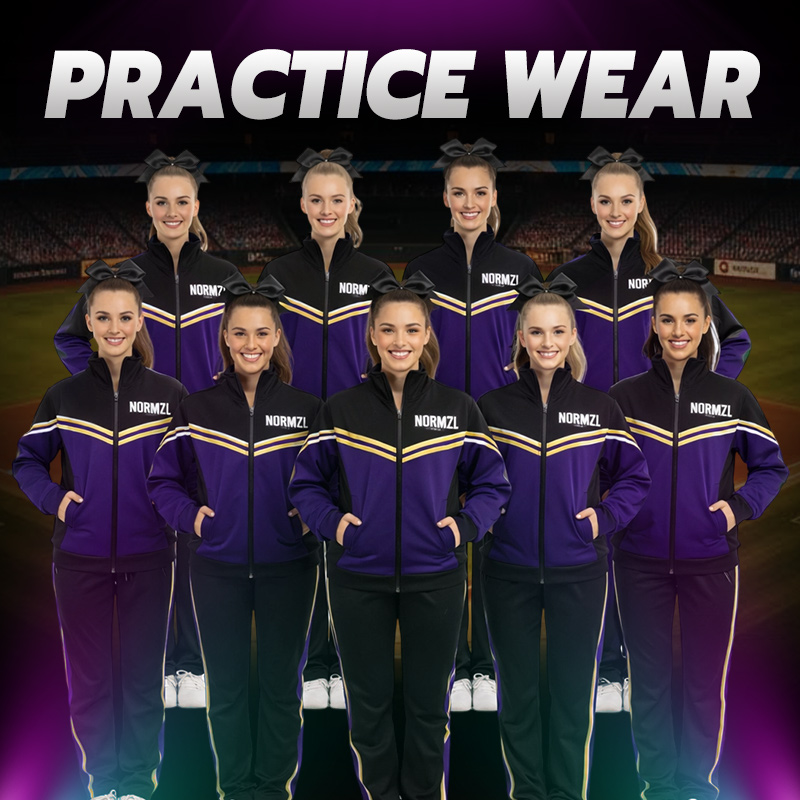
The Упражняться & Лагерная одежда category at Normzl covers builds across all five of these use cases; the rest of this article explains how to match the garment to the drill.
Best Practice Wear for Tumbling
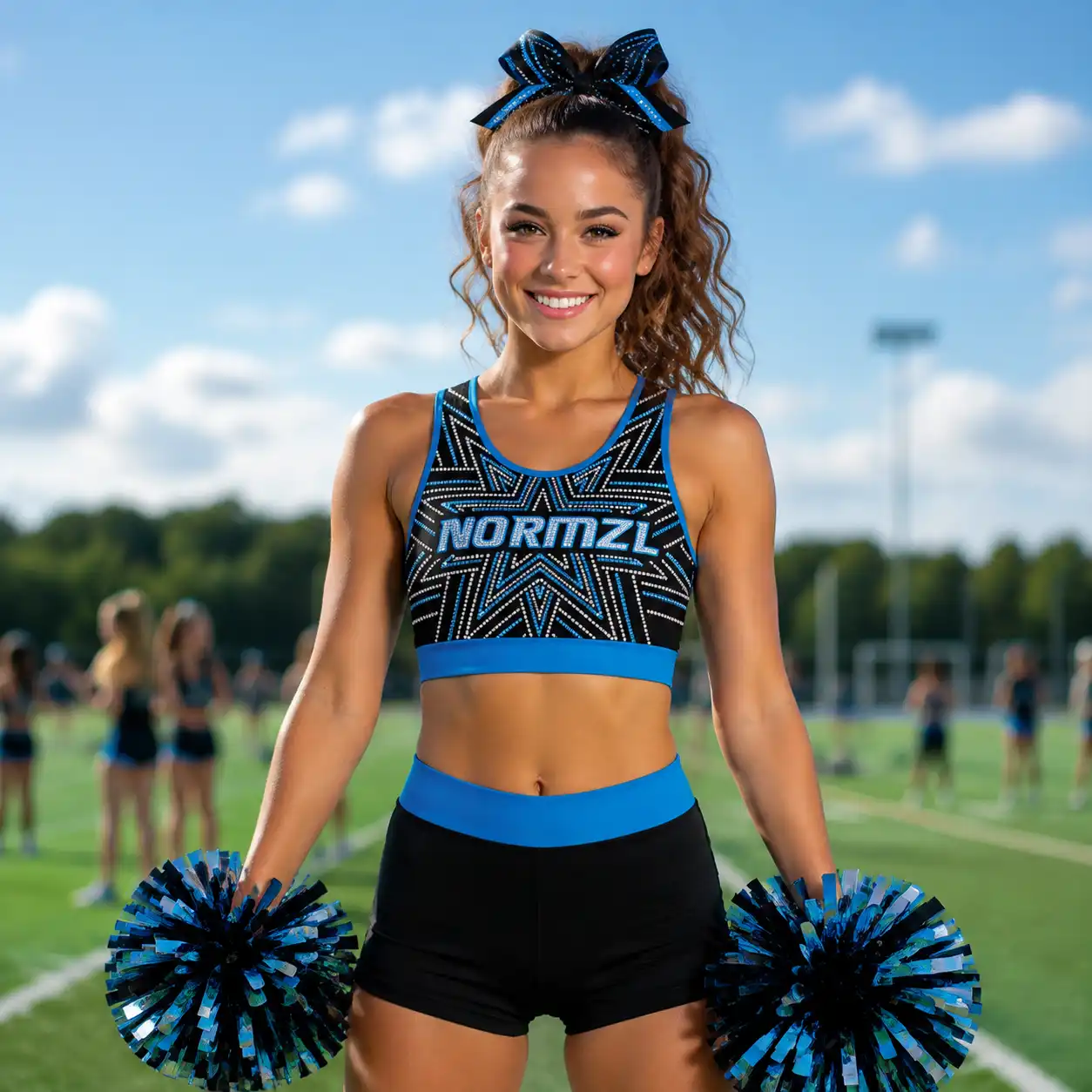
Tumbling is where garment fit most directly affects coaching. When a cheerleader throws a back handspring, the coach needs to see the spine line, hip angle, and knee position. A top that rides up or a waistband that twists makes those signals harder to read, and the athlete ends up adjusting clothing mid-pass instead of focusing on the skill.
The working rule: the top should be fitted enough that it does not shift during a roll, and the waistband should stay put through inverted movement. A fitted tank or crop top with a clean edge typically works better than a loose tee, which can flip up during a back walkover. Zippers, snap buttons, and protruding embellishments should be avoided — a metal zipper pull pressing into the ribs during a tuck is a bruise risk.
On the bottom, mid-thigh shorts with a stable, wide waistband are standard. Leggings also work, provided they are fitted and allow a full split without pulling at the knee. If the athlete has to pull up her shorts after every landing, the cut is wrong for the activity.
Для командных заказов, spec a fitted tank and a mid-thigh short as the tumbling kit. Your factory contact can confirm fabric weight and stretch percentage against your drills and athlete level.
Best Practice Wear for Stunting
Stunting practice wear has constraints that come from the clothing being in direct physical contact with other people. A base wearing rhinestone trim across the shoulder can leave marks on a flyer’s thigh during a thigh stand. A spotter in a loose tee gives the flyer’s hand fabric to grab when the intended grip is on the body itself. USA Cheer’s safety guidelines note that proper attire reduces injury risk during stunting activities (Safety Guidelines, USA Cheer).
The first rule: avoid anything with surface decorations that can scratch or snag a teammate. Flat seams, bonded edges, and smooth fabric surfaces are the standard. If the team wants decoration, sublimation printing adds no texture to the fabric surface, unlike rhinestones or raised embroidery.
The second rule: the top and shorts should both stay in place during lifts, catches, and partner stretches. A top that rides up when a base raises their arms overhead creates a gap the flyer’s bare foot can catch on. Shorts that are too loose can bunch under a standing flyer and reduce the friction the base relies on. The typical choice is a fitted tee or tank with enough length to stay below the waist through overhead movement, paired with compression shorts that do not slide during a wide stance.
Do bases, flyers, and spotters need different clothing? В большинстве случаев, the same fitted tank and compression short works across all positions. Flyers may want a slightly longer top for coverage when inverted, and the short’s ankle hem should not have a loose edge a foot can tangle in. Bases benefit from a slightly thicker waistband under the load of standing flyers. Наш Одежда для поднятия настроения на заказ line covers these fitted practice builds; seam type and hem width are confirmed at sampling.
Best Practice Wear for Conditioning
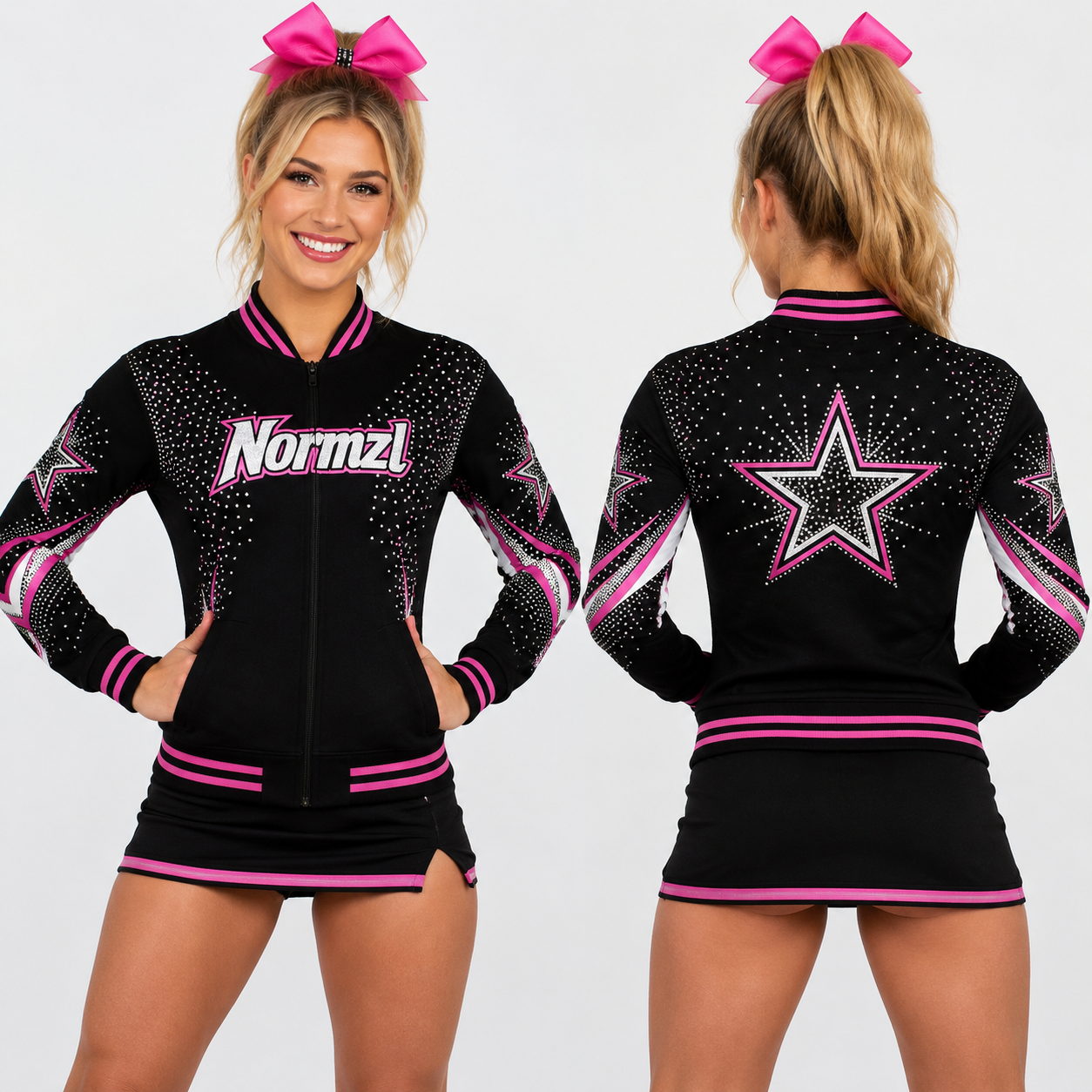
Cheer conditioning sessions typically combine running, plyometrics, core work, and strength training in the same practice block. The fabric choices matter more than the cut: the garment needs to move sweat away from the skin, dry quickly between drills, and not become heavy when wet.
Легкий, moisture-wicking fabrics are the standard for cheer workout clothes. A breathable tee or tank in a polyester blend that pulls moisture to the outer surface for evaporation is the typical build. Cotton is generally avoided because it holds moisture, gets heavy, and chafes during repetitive movement. The bottom can be shorts or leggings depending on preference and temperature — the functional requirement is that the fabric dries fast and does not restrict a deep squat or a box jump.
In cooler conditions, layering becomes the approach. A lightweight long-sleeve over a tank, both in moisture-wicking fabric, lets the athlete warm up and then peel the outer layer when the circuit intensifies. The garment’s performance under sweat should be confirmed against the fabric specification — fabric weight, wicking treatment, and drying rate are items your factory contact confirms at quote.
For teams ordering across activities, the cost-efficient approach is to spec the same fitted tank and differentiate only on the bottom: a compression short for stunting, a looser short or legging for conditioning.
Best Practice Wear for Dance and Routine Cleanup
Dance portions of cheer practice — routine cleanup, choreography, and competition dance blocks — have their own clothing logic. The priority is that the coach can read the athlete’s body lines clearly, and the garment does not hide foot placement or hip angle.
A fitted crop top or leotard-style top works well because it stays in place through repetitive counts and shows the line from shoulder through hip. The bottom should have a clean hem that does not flap during quick directional changes. Dance shorts, briefs over leggings, or fitted bike shorts are common choices. The pant leg should end where intended and stay there through repeated kicks and turns.
One detail coaches raise: dance cleanup is when athletes should practice in their competition shoes. The garment’s hem and fit should be checked against the competition shoe’s profile so the athlete’s line reads the same in practice as on the floor.
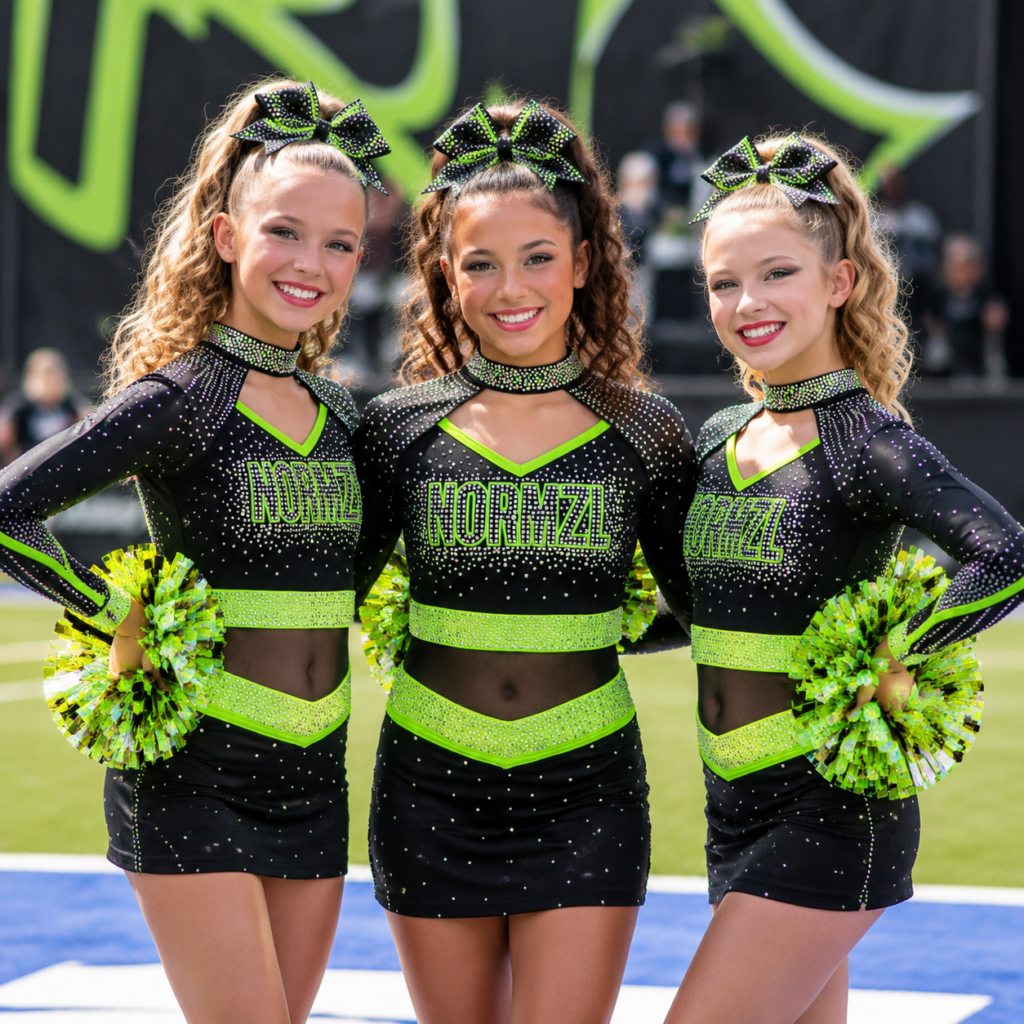
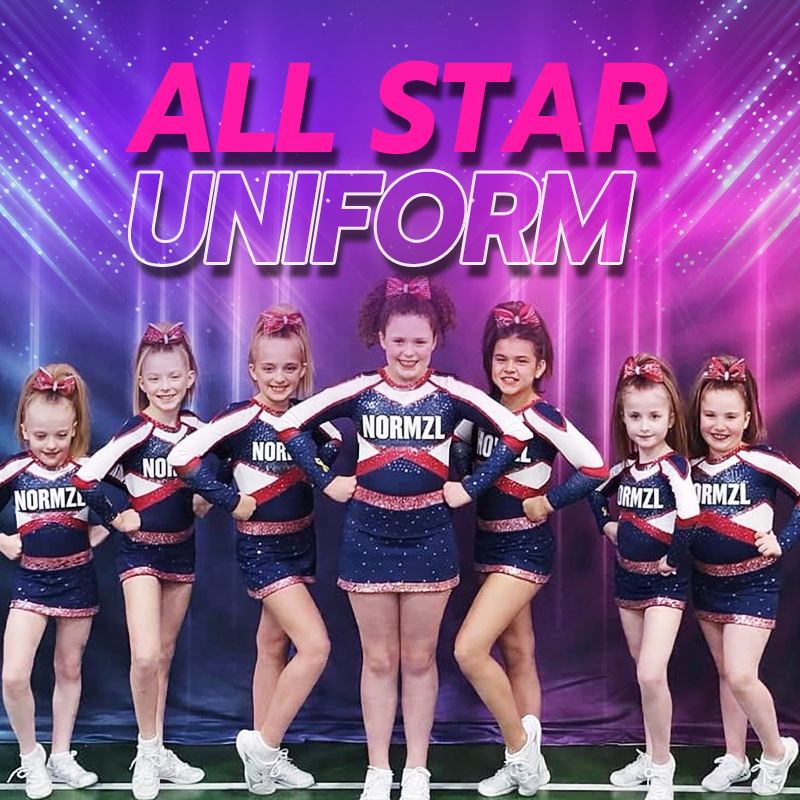
For teams ordering through the All-Star Cheer программа, coordinating the dance practice top with the competition uniform’s color palette keeps the visual transition clean between training and performance.
Sports Bras, Tanks, T-Shirts, Shorts or Leggings?
Rather than listing each garment as a product, here is how each piece functions across the activities above.
Спортивные бюстгальтеры sit underneath every top. For tumbling and stunting, a bra with a smooth back — no hooks, no bulky clasp — prevents pressure points when the athlete is on her back or when a flyer’s hand presses against a base’s shoulder.
Tanks are the most versatile top across all five training types. A fitted tank with a clean armhole works for tumbling, задержка роста, кондиционирование, танцевать, and camp. The armhole depth and neckline should be checked in the fit tests below.
T-shirts have a narrower use case. A loose tee works for conditioning or casual camp sessions but is not suited to tumbling or stunting because it shifts during inverted movement. If the team prefers a tee, a slightly fitted cut with a hem below the hip is a better choice than a boxy silhouette.
Шорты are standard for stunting, кувыркаясь, and camp. Key specs: a stable waistband, a leg opening that does not ride up or flare, and a length the athlete can move through without adjusting. Compression shorts are preferred for stunting; a slightly looser cut works for tumbling and camp.
Леггинсы suit conditioning and dance when the coach wants to see the full leg line. For tumbling, leggings work if fitted and unrestricted through a split. For stunting, leggings are less common because the smooth surface can reduce friction under a standing flyer’s foot — though this depends on the fabric and the coach’s preference.
Five Fit Tests Before Buying
Before finalizing a practice wear order, run these five movement checks on the fit sample.
1. Arm raise. Arms straight overhead. The top should not ride up above the ribcage. If it does, the hem is too short or the armhole is cut too high. This matters most for stunting, where a lifted top exposes the midsection to a flyer’s foot.
2. Deep squat. Full squat. The waistband should stay at the natural waist without gaping at the back, and the top should not pull out if meant to be tucked.
3. Forward bend. Bend at the waist with legs straight. The back of the top should provide coverage — a neckline that gaps or a hem that rides high is a problem for tumbling and stunting, where inverted positions are constant.
4. Jump. A standing tuck jump or toe-touch. The entire outfit should land in the same position it started. If the shorts shift or the waistband rolls, the garment will need constant adjustment during practice.
5. Roll or handstand. A forward roll or handstand against the wall. The top should stay in place, the waistband should not twist, and no hardware should press into the body. This is the tumbling-specific check that catches zipper pulls, seam bulk, and fit issues the other four tests miss.
If the sample passes all five, the cut is ready to spec for a team order. If it fails any one, the issue belongs in the sampling notes before production begins. When ordering across a roster, cross-check each athlete’s measurements against the Таблица размеров формы развеселить before the fit sample is cut.
Часто задаваемые вопросы
What should you wear to cheer practice?
It depends on the training activity. Tumbling calls for a fitted top and stable-waistband shorts with no protruding trim. Stunting requires smooth, snag-free fabrics. Conditioning needs moisture-wicking, quick-dry material. Dance benefits from fitted pieces that let the coach read body lines. Most teams rotate between two or three kits across a practice week.
Can you wear leggings to cheer practice?
Leggings work for tumbling, кондиционирование, and dance, provided they are fitted and allow a full range of motion. For stunting, leggings are less common because the smooth surface can reduce friction under a standing flyer’s foot, though this depends on the fabric and the coach’s preference.
What should flyers wear for stunting practice?
Flyers typically wear the same fitted tank and compression short as bases and spotters. The main difference is at the foot: чистый, non-marking soles or bare feet, and a short hem with no loose edge a foot can catch on. Some flyers prefer a slightly longer top for coverage when inverted.
How tight should cheer practice wear be?
Fitted, not compressed. The garment should sit close enough to the body that it does not shift during movement, but not so tight that it restricts a deep squat, a full arm circle, or a split. If the athlete can complete the five fit tests without adjusting clothing between movements, the fit is in the right range.
Заключительные мысли
Choosing cheer practice wear by training activity — rather than buying one generic kit for everything — reduces the number of times athletes adjust their clothing during a drill, gives coaches a clearer view of body position, and lowers the risk of snag or scratch injuries during stunting. Before you request a quote, map your weekly practice schedule to the five training types in the table above, run the five fit tests on a sample, and confirm fabric specs against your most demanding activity.
Create Your Team’s Championship Look