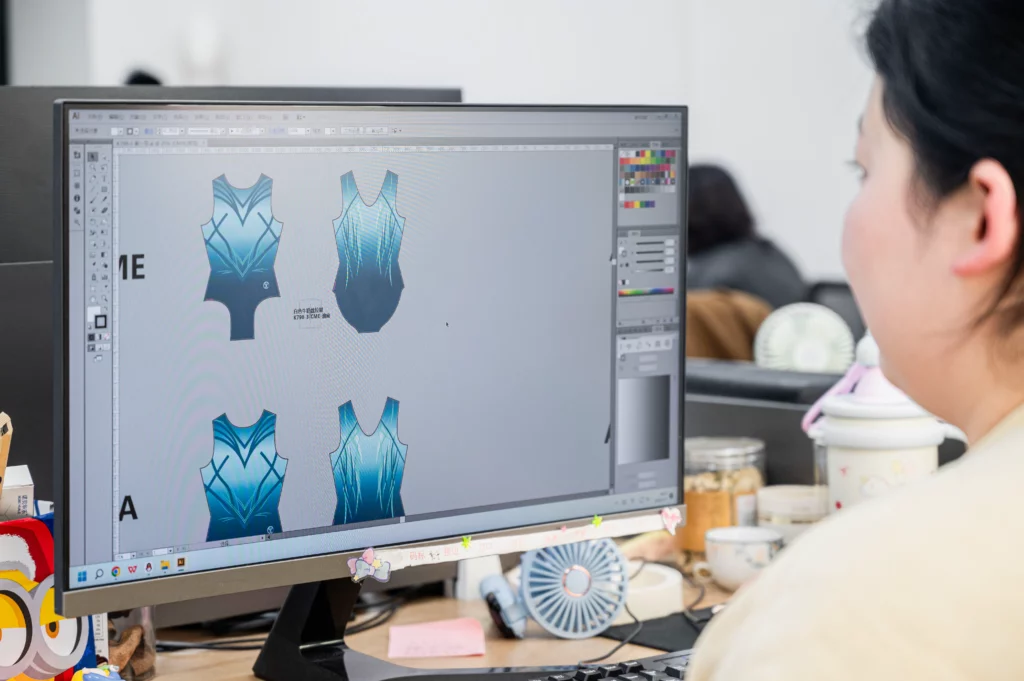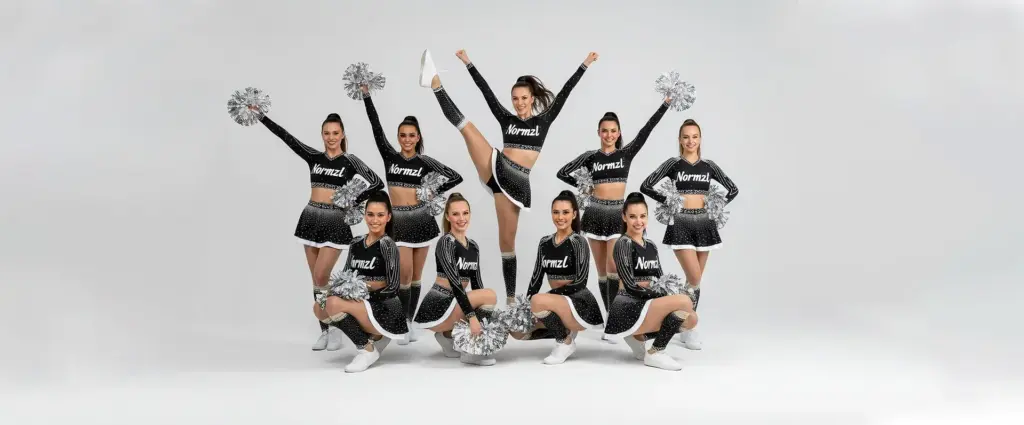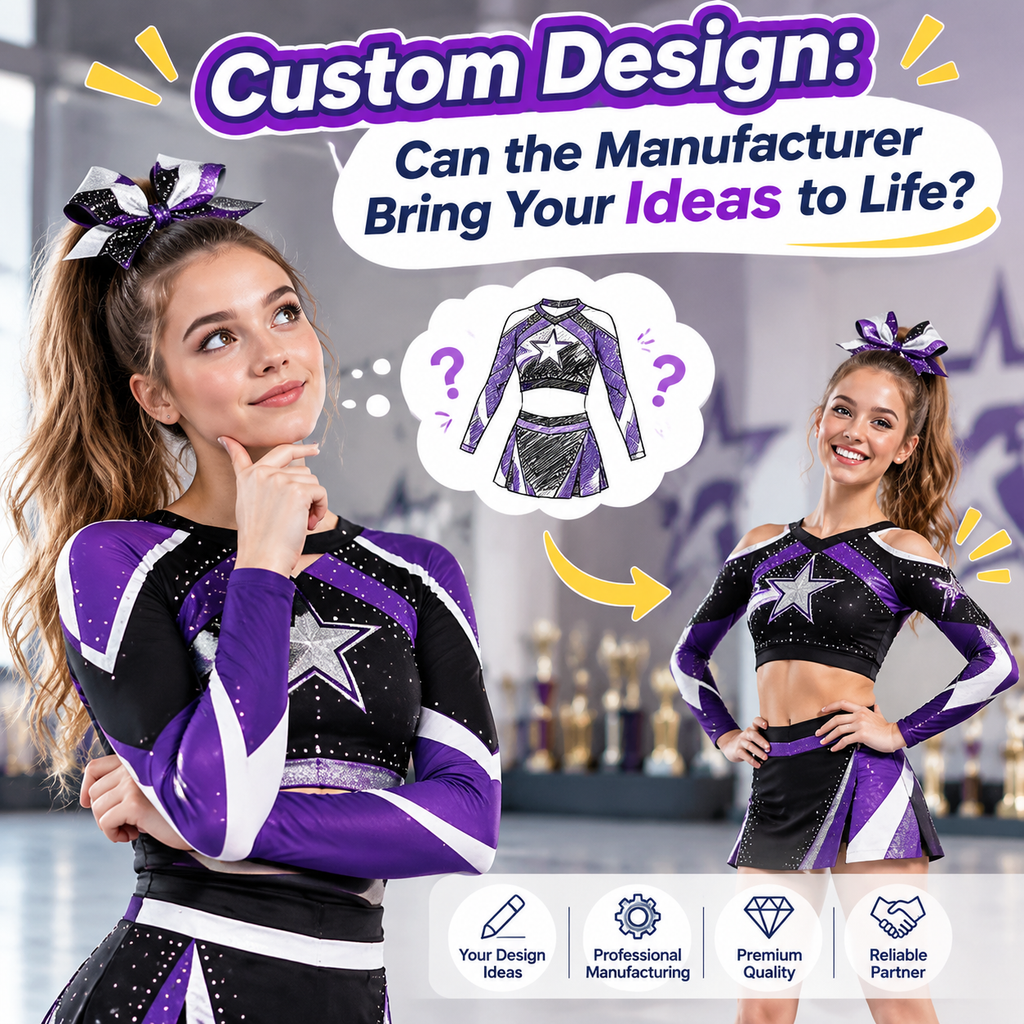
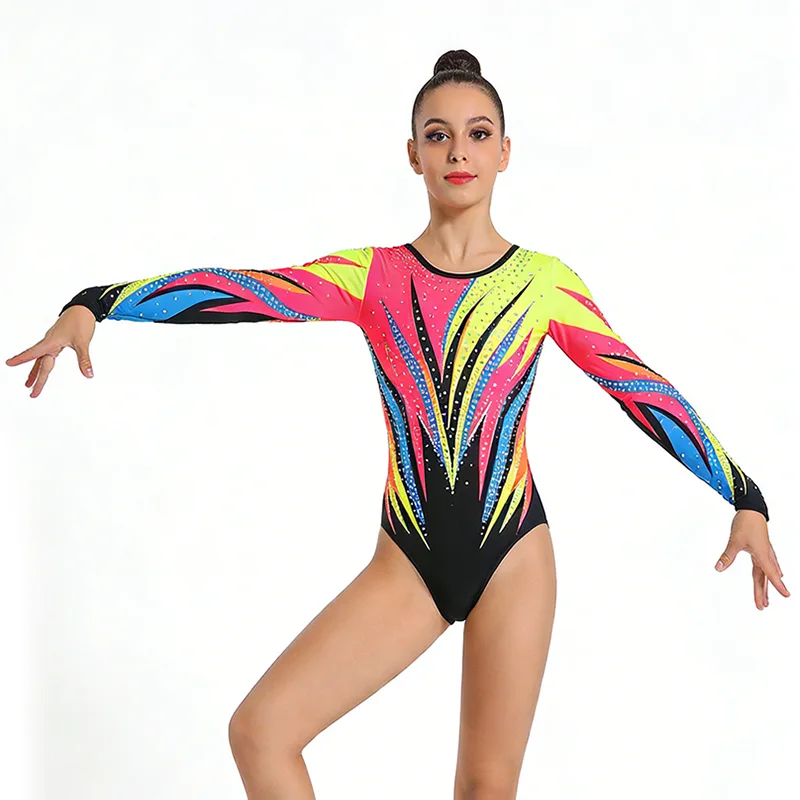
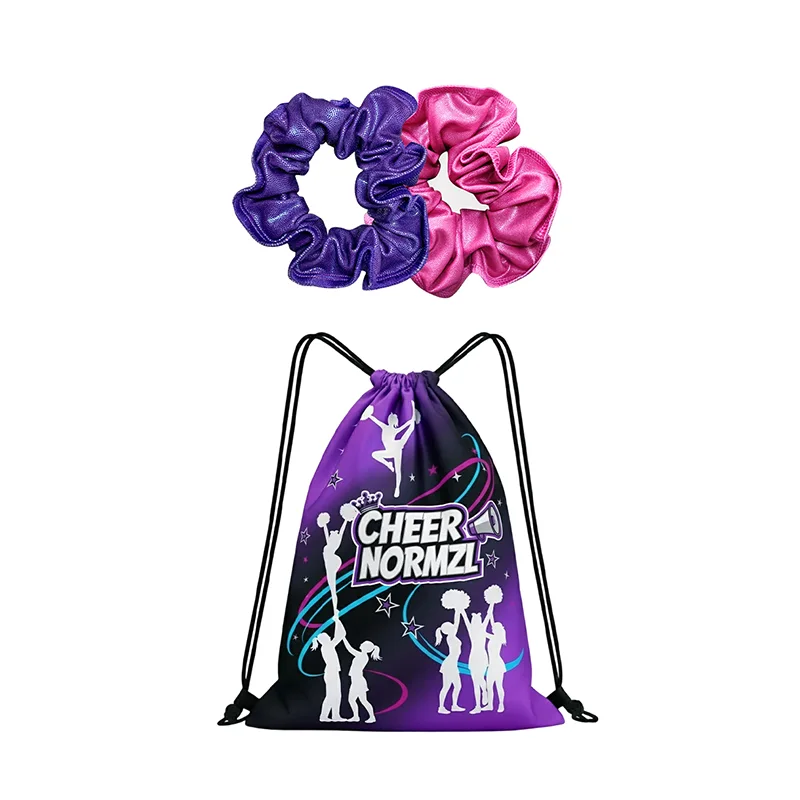




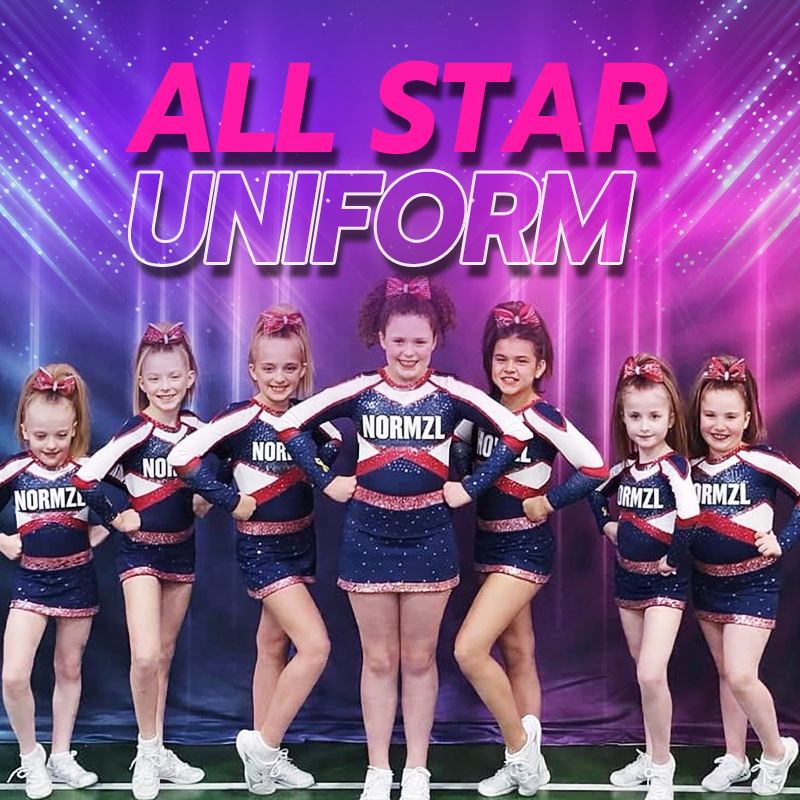
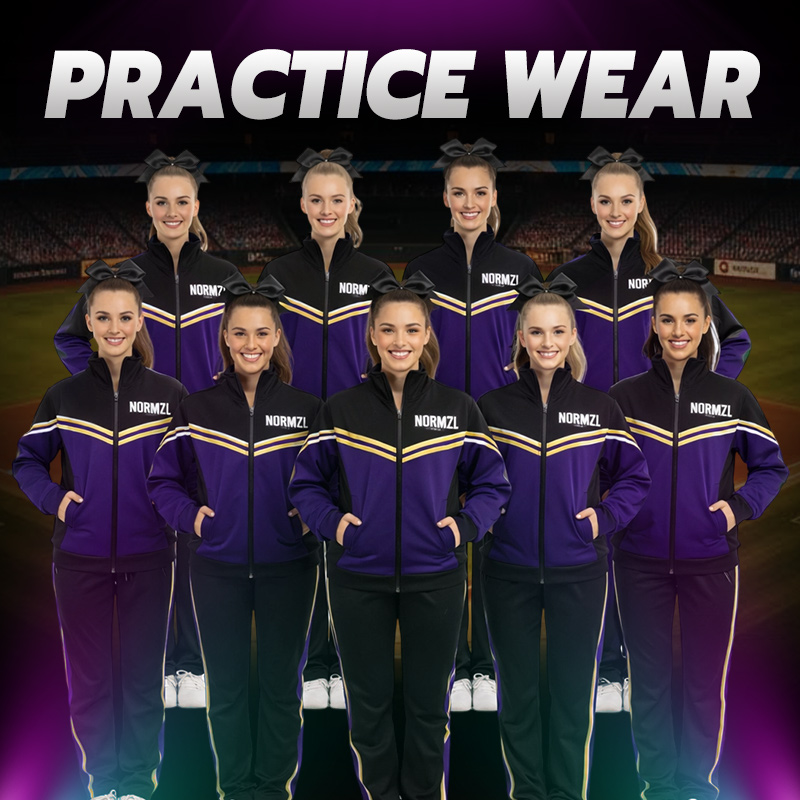
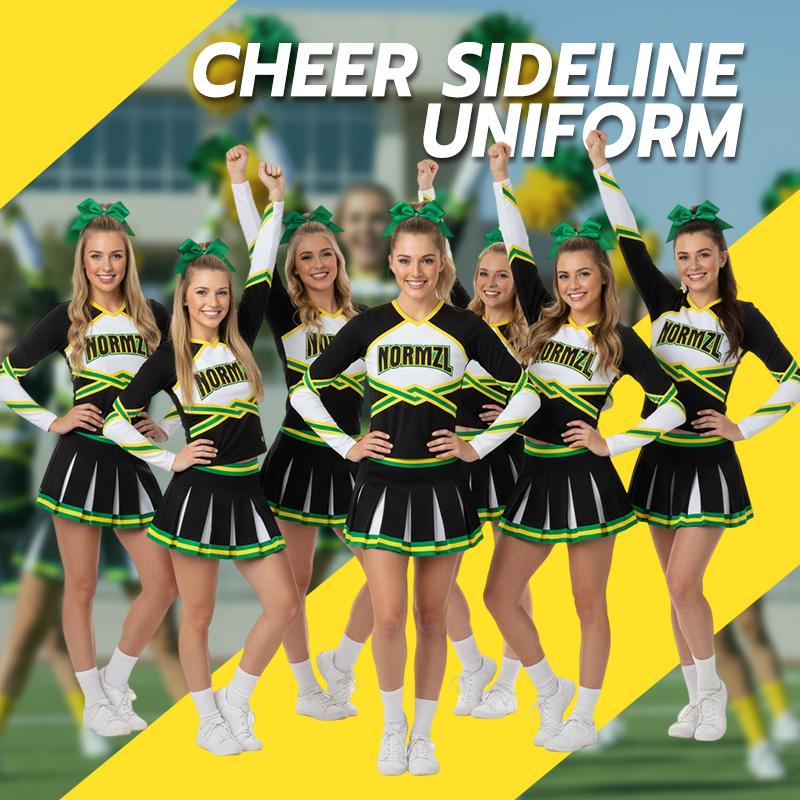
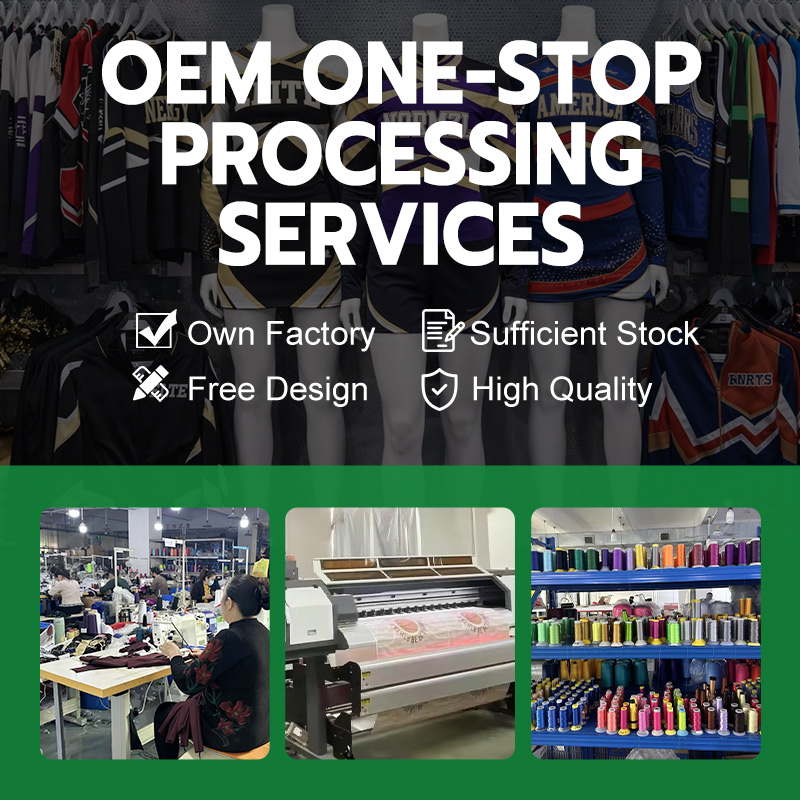
A great uniform design often starts with a visual reference. It could be an AI-generated image, a screenshot from social media, a competitor’s uniform, or a sketch created by your team. These references help communicate the look you want, but turning them into actual garments requires more than simply copying the image.
We recently received an AI-generated uniform design from a client. Our team worked with the client to adapt the original concept and turn it into a physical uniform, making practical adjustments along the way to achieve a result that could be brought to life through actual production.
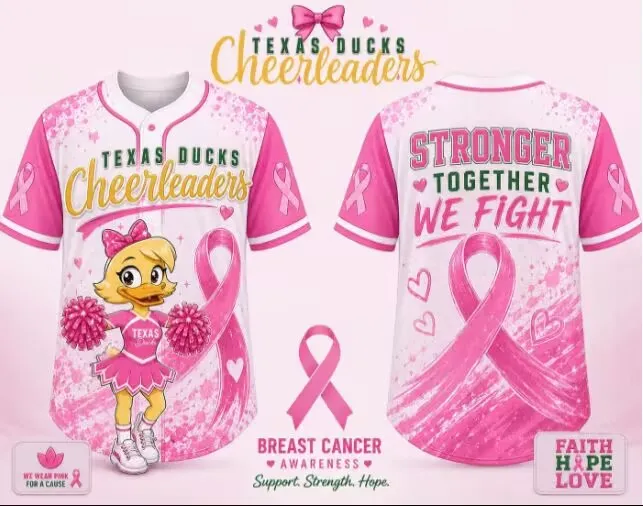
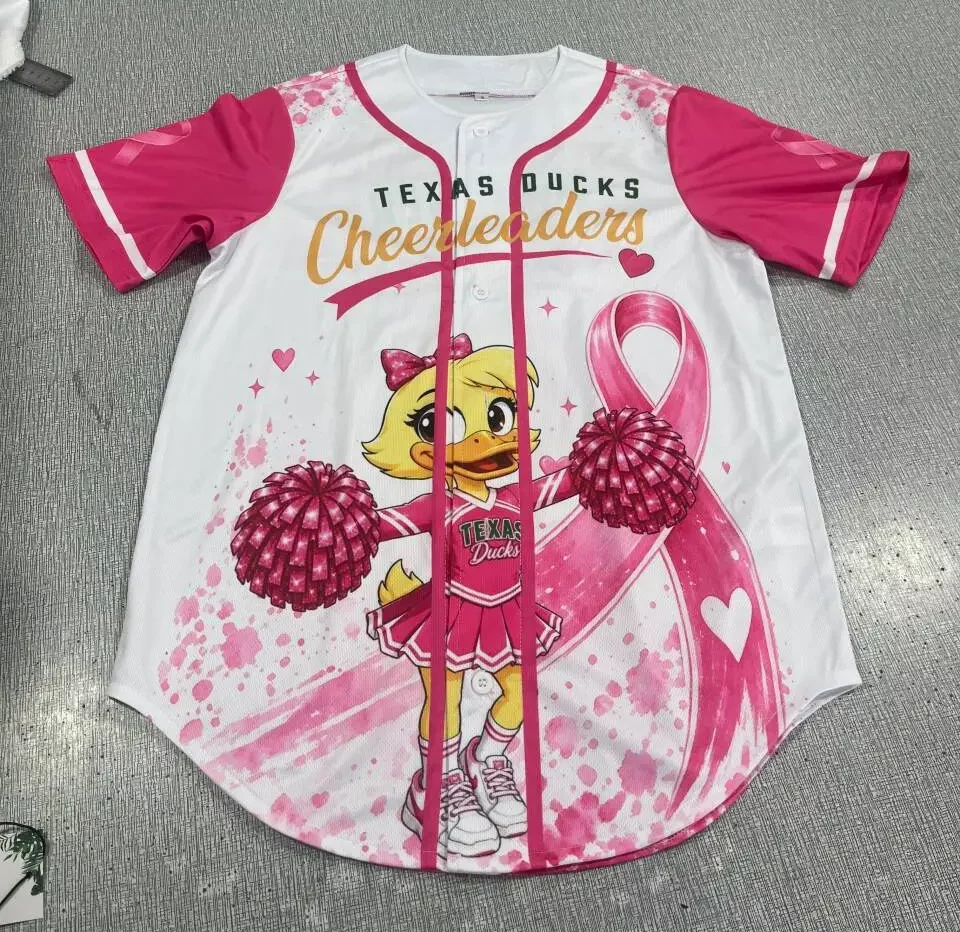
For cheerleading teams, dance squads, 学校, アパレルブランドや, understanding this process can save time, reduce unnecessary revisions, and help ensure the final uniforms meet both visual and functional expectations.
A production-ready uniform design needs to consider fabric properties, 衣服の構造, printing methods, 装飾, and the practical requirements of the people wearing it. このガイドでは, we explain how to evaluate a design reference and work with a uniform manufacturer to turn your ideas into a design that can actually be produced.
- A reference image sets style direction; ファブリックの動作, decoration limits, and construction decide the final look.
- Check every design for color accuracy, pattern complexity, decoration cost, and fabric match before requesting a quote.
- Normzl’s free design service refines your draft until sign-off, then the pattern office cuts 4-6 prototype versions for you to choose from.
- Sampling takes 7 日; bulk orders up to 200 pieces ship in 30 日.
- Cheer uniform MOQ is 5 セット, so small teams can start custom without overcommitting.
Why a Design Reference Needs to Be Adapted Before Production
A rendering promises things fabric cannot sign. It drapes perfectly, holds every color at full saturation, and places hundreds of stones with pixel-level precision. Spandex shifts under tension, dye reacts to fiber content, and rhinestones come in fixed diameters. None of those physical facts appears in the picture you downloaded.
This gap is not a flaw in the design; it is the difference between pixels and textile. What separates a smooth project from an expensive one is where the gap surfaces. Catch it while the design is still a drawing and the fix costs one revision round. Catch it on a finished sample and it costs a remake.
Catch it after bulk production and it can cost the order. Teams that adapt the reference before quoting almost always spend less. Teams who ask the factory to “just match the picture” pay for the lesson later. The sections below cover exactly what gets checked and changed.
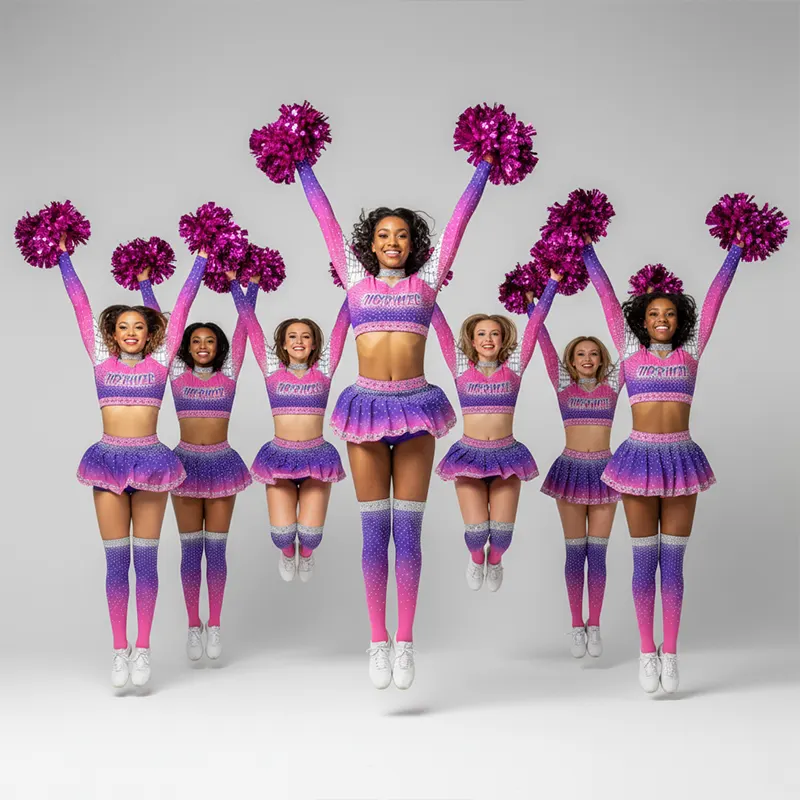
One scene shows the stakes. A coach sends a rendering with an ombré gradient flowing across the whole shell and crystal dust scattered over both sleeves. As a custom uniform design, it looks ready to quote. On the evaluation sheet it needs three decisions before any fabric is ordered. Can the gradient fabric take the dye? How do the sleeve stones map to real stone sizes? Where will the shoulder seams interrupt the artwork? Those three answers are the difference between a sample that matches and a sample that goes back.
What to Evaluate in a Uniform Design Reference
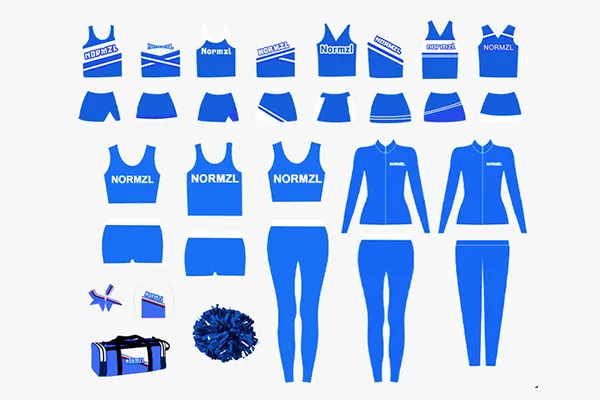
Four things decide whether a reference can be produced as drawn: 色, pattern complexity, 装飾, and fabric. Before building a new look from scratch, it helps to understand how to design a custom cheer uniform for your team. Evaluation moves faster once you know which elements carry the identity and which ones are replaceable, because that decides where a custom uniform design can flex.
Color Combinations and Team Branding
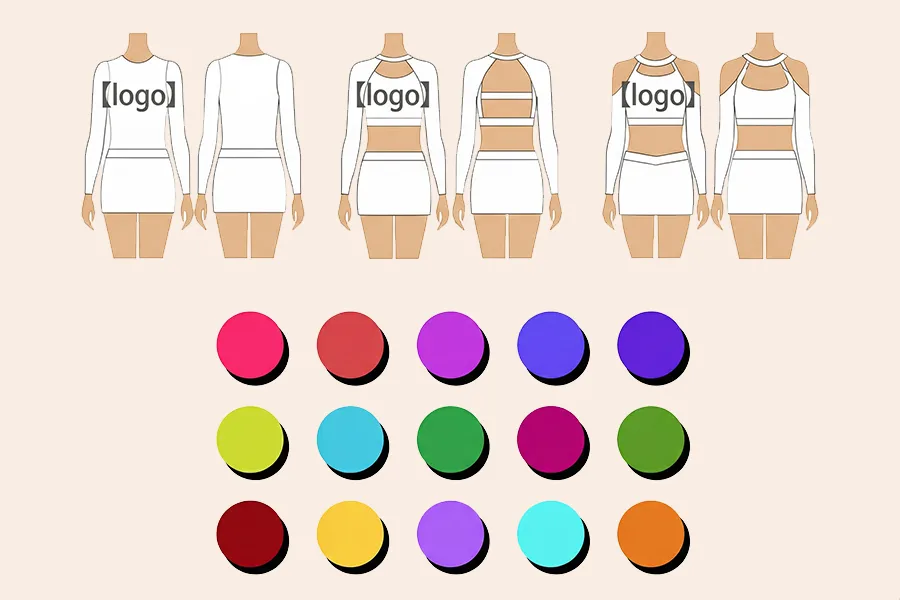
Screens exaggerate color. A neon green that glows on a phone can print duller on polyester, and metallic fabric shifts hue as the light moves. This is why colors get confirmed on physical swatches rather than on screen samples — our team sends a free fabric swatch pack and electronic color cards for exactly this step.
Branding elements also need contrast to read from a distance. Logo size, lettering weight, and the balance between team colors and neutral panels decide whether the uniform reads cleanly on the floor or dissolves into a blur. A palette that looks bold in a rendering can lose its separation once every panel is shiny.
Pattern Complexity and Graphic Details
Sublimation printing reproduces gradients and photographic detail across a full shell, which makes it the default for complex graphics. Hard-edged color blocks and fine lines that cross seams need alignment planning, or the pattern visibly drifts where panels meet. A good production draft decides where each graphic element breaks before the files go to the printer.
Intricate cut-out shapes depend on the cutting method. Laser cutting holds appliqué edges precise where manual cutting distorts small curves — at our factory, laser equipment handles pattern and graphic cutting for exactly this reason. If your reference leans on delicate cutouts, ask early whether the cutter can hold that tolerance on your chosen fabric.
Decorative Elements and Embellishments
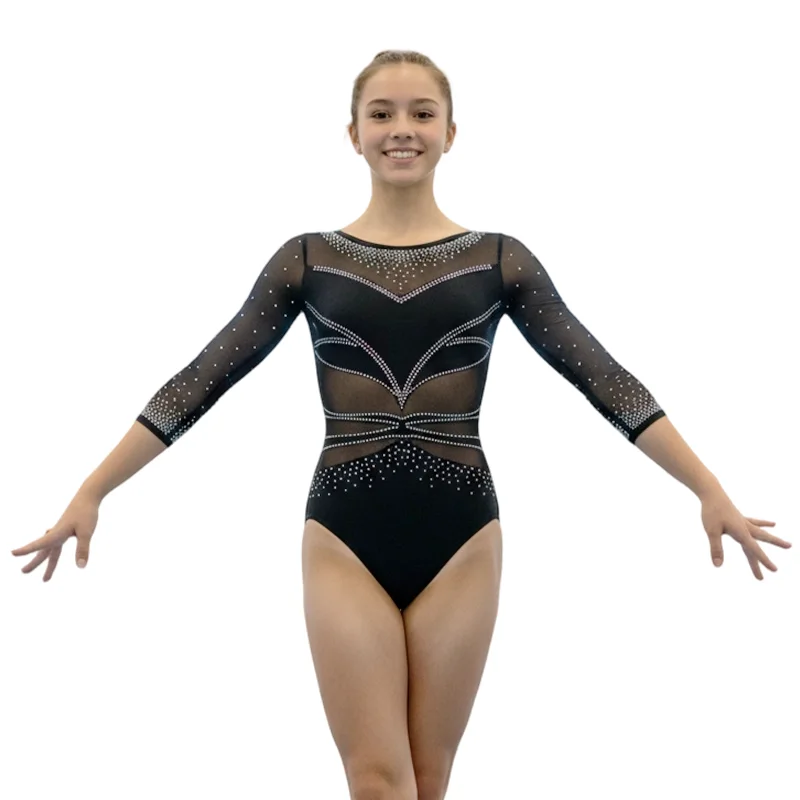
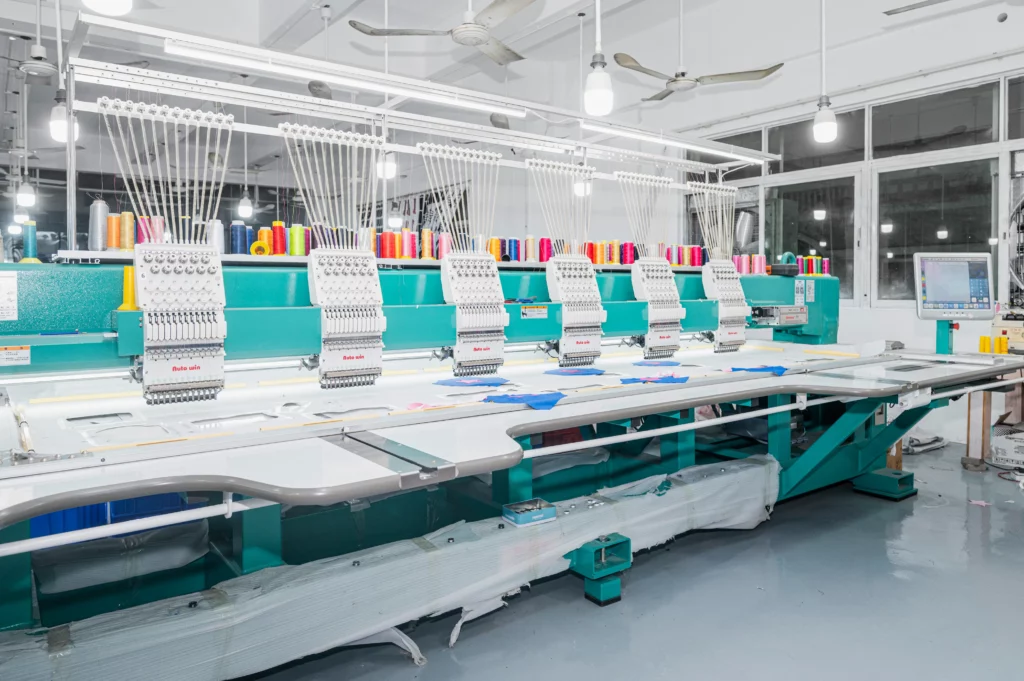
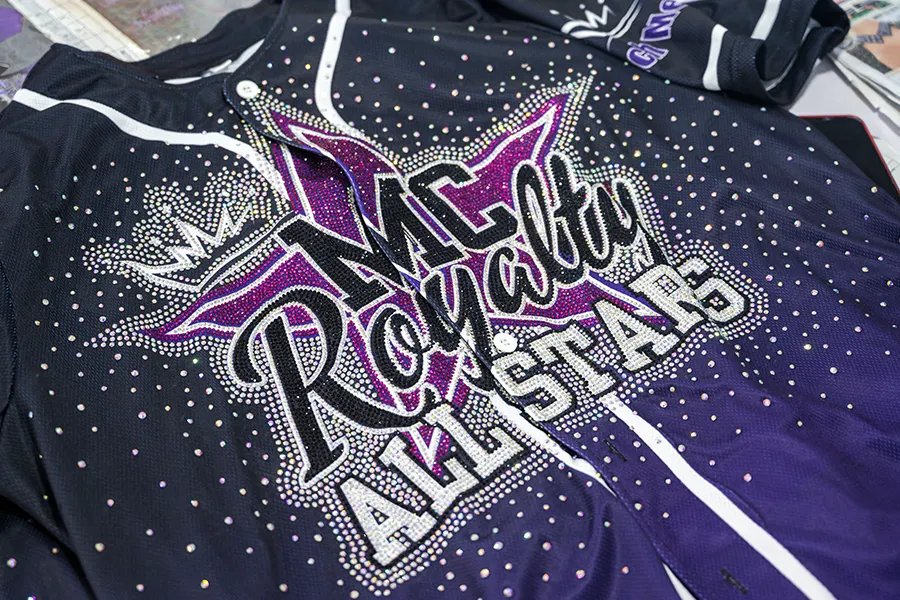
Rhinestone layouts in AI images rarely respect real stone sizes. Production layouts work from fixed diameters, minimum spacing rules, and transfer templates loaded into an automatic rhinestone machine. A rendering showing thousands of pin-sized crystals becomes a layout built from stones that physically exist — the pattern survives, the density changes.
Sequins arrive as trim in set widths and colors. Embroidery adds raised texture; heat transfer stays flat and light. A reference that mixes several decorations needs a sequence plan. Each technique applies at a different stage of assembly, and a wrong order can ruin the layers beneath it.
Fabric Selection and Garment Structure
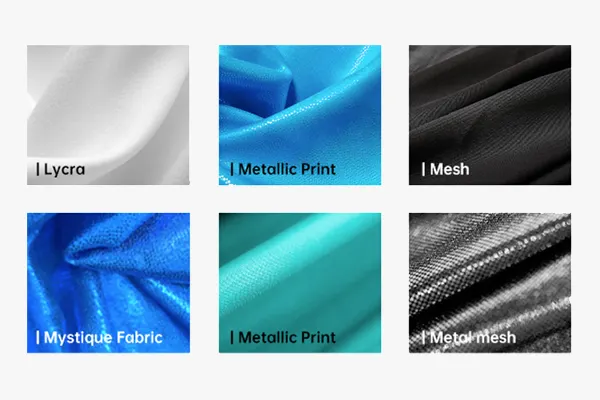
Fabric choice caps what the design can do. Sublimation needs high polyester content; spandex limits press temperature; metallic laminates accept no dye at all and lean on heat transfer or stones instead. Choosing the fabric first, then adapting the design to it, prevents the most common sampling surprise.
Structure matters as much as surface. A shell built on 4-way stretch fabric with flatlock seams moves differently from a lined skirt panel, and print scale should follow the stretch direction. Panels that stretch more need graphics drawn larger in the flat pattern, or the logo arrives on the body looking squeezed.
How to Turn a Reference Image into a Production-Ready Uniform Design
With the evaluation done, conversion runs in three steps: review, adjust, confirm. Skipping any one of them moves the cost of a mistake further downstream, where it multiplies.
Review Design Requirements and Feasibility
Feasibility starts with numbers: 量, deadline, そして予算. A 5-set MOQ supports small teams, but dense crystal coverage on 5 sets prices very differently from the same design at 50 セット, because setup work does not spread out. Stating the budget range early lets the factory propose a technique mix that hits the look at the right cost.
Each decoration on the reference then maps to a process: 昇華, 熱伝達, 刺繍, タックルツイル, アップリケ, or rhinestone setting. The factory checks which equipment each process needs, from digital printers and laser cutters to automatic stone setting. Anything that would outsource poorly or slow the schedule gets flagged. Nothing gets quoted before this pass is complete.
Adjust Details Based on Available Materials and Techniques
Adjustment is a negotiation between the look and the process. Gradient prints compress into panel colors when the fabric cannot take dye. Stone counts drop or stone sizes grow when the layout exceeds the template. A metallic panel becomes appliqué stitched onto a dyeable base. Each substitution keeps the visual intent and changes only the mechanism.
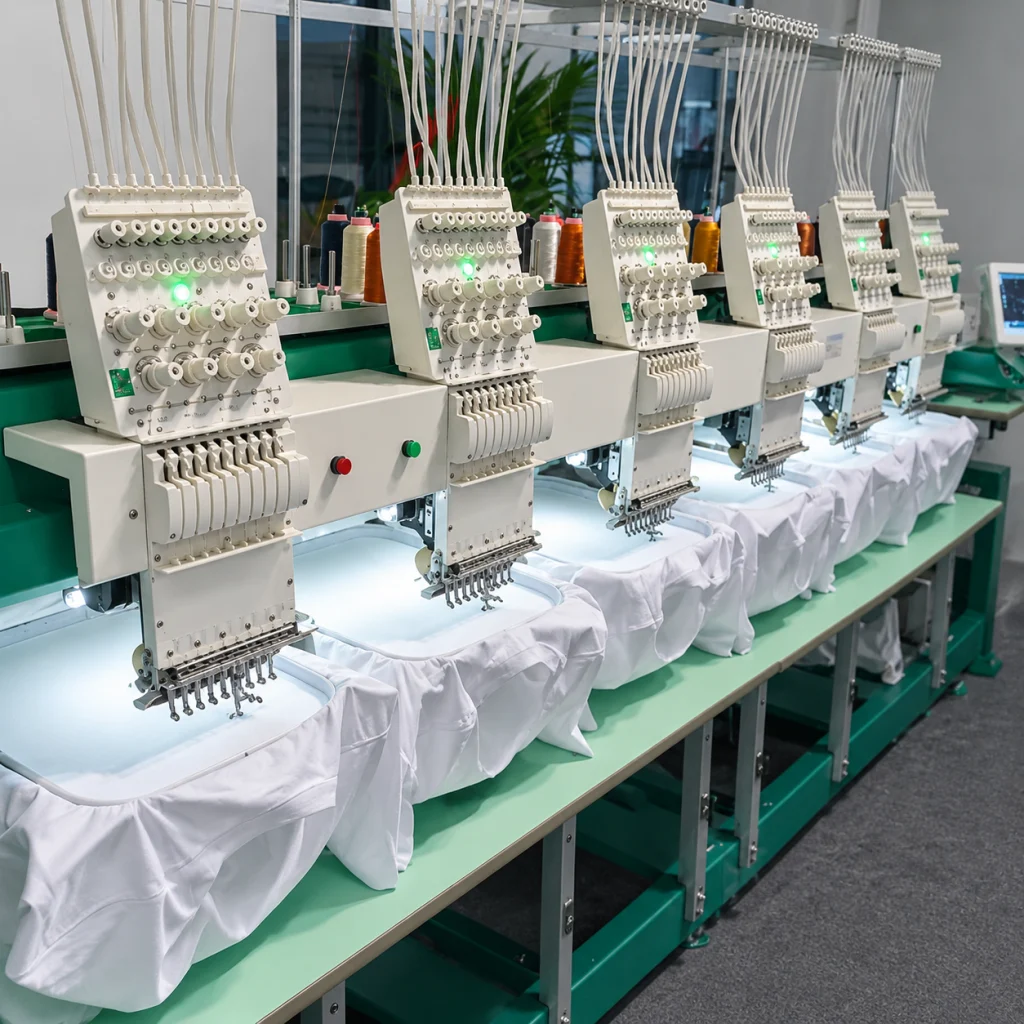
When budget forces a choice, protect the torso. Chest and front-panel details read first in photos and from the stands; sleeve sparkle can be simplified with little loss of impact. This loop runs fastest with a custom cheerleading uniform manufacturer that keeps design, 切断, 印刷, and stone setting under one roof, because the artwork, the pattern, and the sample bench sit in the same building.
Confirm the Design Before Sampling
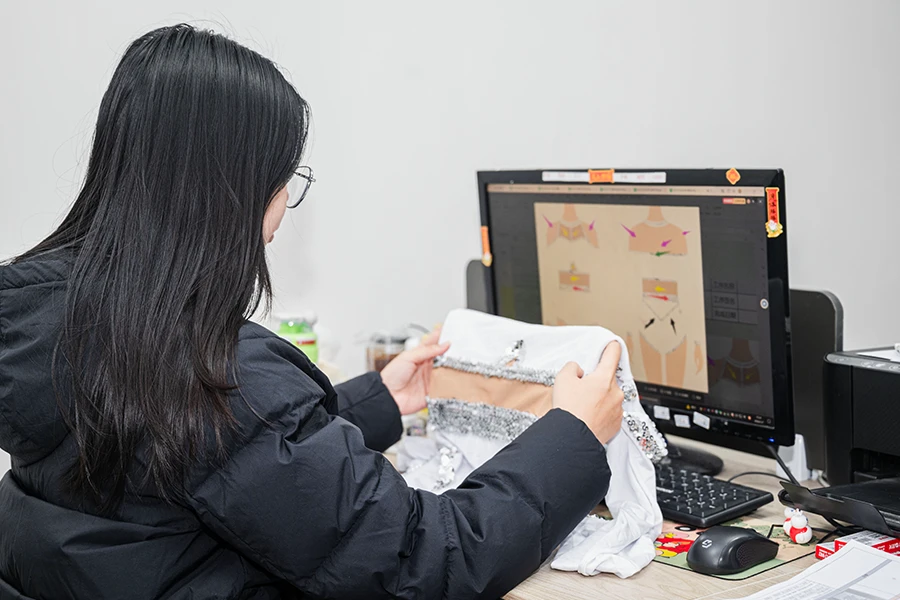
Confirmation happens in layers. The artwork is revised until you sign off — design drafts come back within 3 days per revision round, and nothing proceeds to the pattern office on an unconfirmed file.
Colors get chosen from photos and video of real fabric, never from a screen. The pattern office then produces 4-6 prototype versions so you can pick the closest match before bulk. Only after the prototype is approved does production release — see how custom cheer uniforms are made from design to delivery for the full sequence.
What Information Should You Provide to Your Uniform Manufacturer?
The quality of the final design depends partly on how clearly you communicate your requirements.
You do not need to have a professional technical drawing or complete production file before contacting a manufacturer. Even a few inspiration images can provide a useful starting point.
しかし, providing more information can help the design team understand your expectations and reduce unnecessary revisions.
Here is a practical checklist of materials you can prepare:
| Information | What to Provide | なぜそれが重要なのか |
|---|---|---|
| Design References | AI images, photos, スケッチ, or existing uniform examples | Communicates your preferred style and visual direction. |
| チームブランディング | Logo files, school name, team name, and mascot | Ensures accurate branding and logo placement. |
| Color Requirements | Pantone codes, color references, or physical samples | Helps improve color consistency. |
| ユニフォームタイプ | チアリーディング, majorette, ダンス, or other team apparel | Determines the garment structure and functional requirements. |
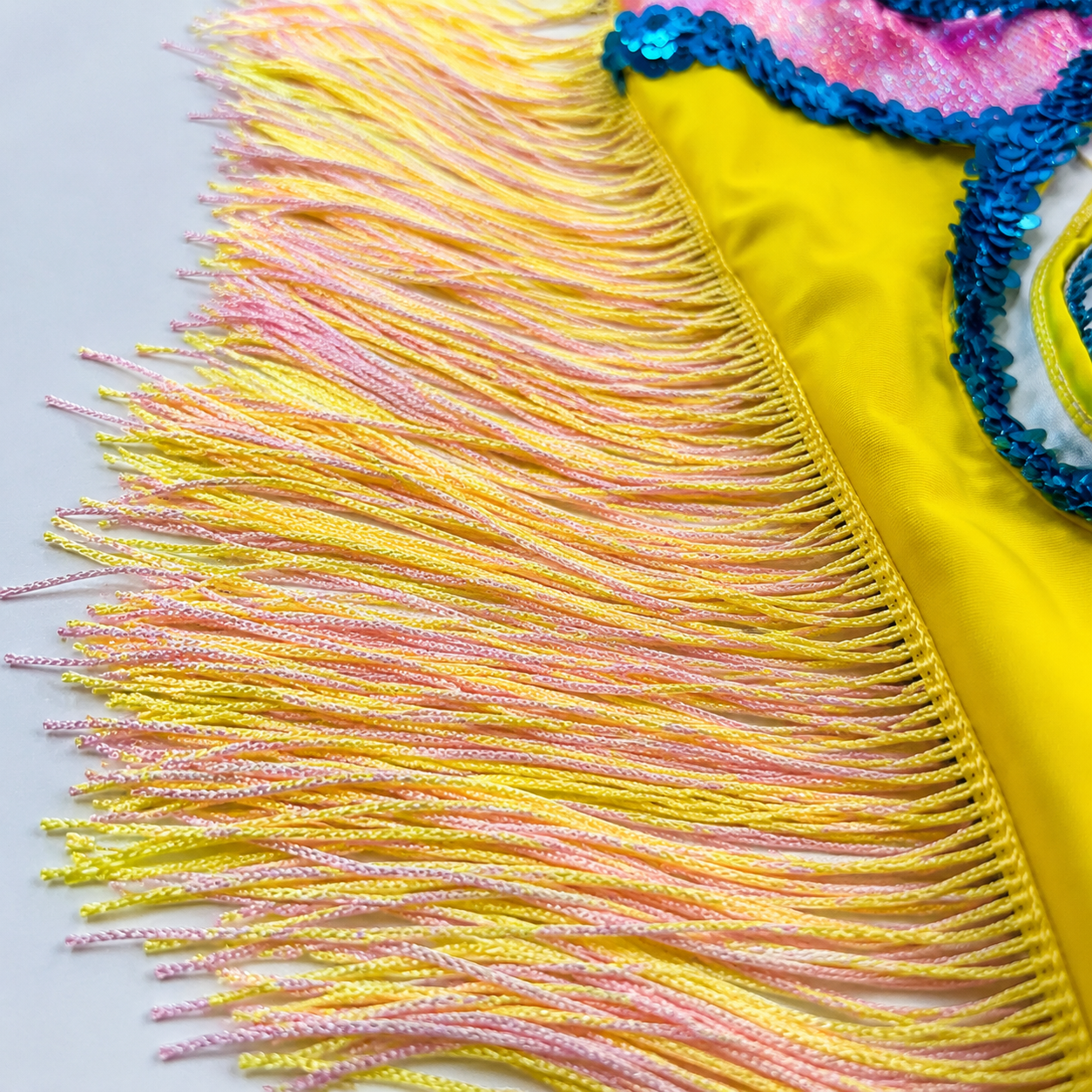
| Customization Details | ラインストーン, スパンコール, 刺繍, 印刷, フリンジ, and other decorations | Helps the manufacturer evaluate available production techniques. |
| Size Information | Size range, サイズ表, and quantity breakdown | Supports pattern development and production planning. |
| Order Requirements | 推定数量, 目標予算, and delivery deadline | Helps determine a suitable production plan. |
If you only have an AI-generated image, that is perfectly fine as a starting point. You can also provide multiple reference images to show different details, such as the neckline from one design, the skirt structure from another, and the decorative pattern from a third.
The manufacturer can then help organize these ideas into one consistent uniform concept.
The more clearly you identify which elements are essential and which are open to adjustment, the easier it becomes to develop a design that matches your expectations.
School programs should also confirm their uniform rules before finalizing art, since state associations publish regulations on coverage and markings. の National Federation of State High School Associations (NFHS) is the usual reference point. A full tech pack helps but is not required to start; teams without one can borrow the structure from our guide to tech packs for cheer uniform manufacturing.
Turn Your Uniform Ideas into Custom Designs with Normzl
ノルムツルにて, we understand that every team has its own visual identity, パフォーマンス要件, and customization preferences. A reference image is often the first step in communicating these ideas, and our design team works with customers to turn those ideas into practical uniform designs.
As a custom cheerleading and team apparel manufacturer, we support design development for cheerleading uniforms, majorette uniforms, ダンスウェア, 練習着, and other team apparel.
Our customization options include:
- Custom Colors and Graphics: Develop team-specific color combinations, パターン, ロゴ, 名前, と数字.
- Dye-Sublimation Printing: Create colorful graphics, グラデーション, and detailed patterns on suitable fabrics.
- Rhinestones and Sequins: Add decorative details for competition uniforms and performance apparel.
- Embroidery and Heat Transfer: Apply customized logos, レタリング, and other branding elements.
- Fabric and Construction Options: Select suitable materials and garment structures based on the design and intended use.
From the initial reference image to digital mockup development and sample production, we work with customers to review design details and identify practical solutions before bulk manufacturing.
Whether you are a school cheer coach, オールスタージムのオーナー, dance team organizer, uniform distributor, or sportswear brand, you can share your ideas with us even if your design is not yet finalized.
Have a uniform reference you’d like to bring to life?
Send us your design images, チームのロゴ, 好みの色, and basic order requirements. Our team will help evaluate your ideas and develop a custom uniform design that is ready for the next step toward production.
Contact Normzl to Start Your Custom Uniform Design
よくある質問
Can a manufacturer produce a uniform exactly like an AI-generated design?
Close, with adjustments. AI images ignore fabric behavior, stone sizes, and seam alignment, so manufacturers convert them into production files first. The finished garment follows the adapted, confirmed design rather than the raw image.
What should I send with my uniform design reference?
チームカラー, logo artwork (vector preferred), quantities with a size breakdown, deadline, and budget range. Notes on what you like most about the reference also help the designer protect the right elements.
How long does it take to turn a reference into a sample?
About 7 days from confirmed artwork to a finished sample. Design revisions come back within 3 days per round before that point, and bulk orders of up to 200 pieces ship within 30 日.
What is the minimum order for custom uniforms?
Normzl’s cheer uniform MOQ is 5 セット, with accessories starting at 10 個. Low minimums let new teams test a design before committing to larger quantities.
Do I need a tech pack to get started?
いいえ. A reference image plus team colors, ロゴ, サイズ, and deadline is enough to start. A tech pack speeds up quoting and sampling, and the factory team can help you build one along the way.