





Majorette teams typically need both practice uniforms and performance uniforms, and the two categories cannot simply substitute for each other. Practice uniforms are worn multiple times per week, washed after every session, and tested through repetitive drills that stress seams and elasticity. Performance uniforms carry heavier decoration, face stricter visual standards, and are reserved for a limited number of appearances each season.
The difference goes beyond fabric weight. Schneiden, Konstruktion, trim, and care requirements each shift between the two garment types. Understanding where they diverge — and where they overlap — helps coaches and team purchasers allocate budget, plan reorder cycles, and make sure dancers have the right kit for every stage of the season.
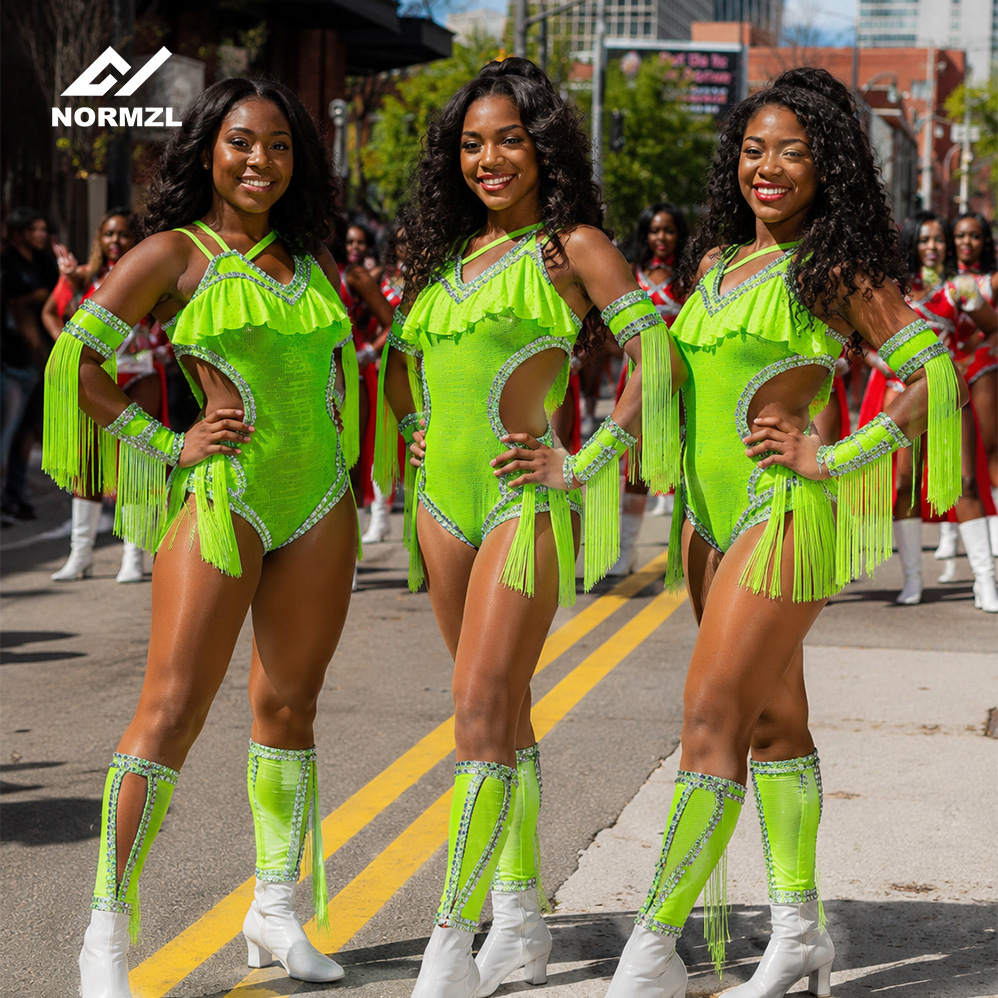
Schneller Vergleich
The table below summarizes how practice and performance uniforms differ across the dimensions that matter most for ordering and daily use.
| Dimension | Practice Uniform | Performance Uniform |
|---|---|---|
| Usage frequency | Multiple sessions per week | Selected appearances per season |
| Stoff | High-stretch, feuchtigkeitstransportierend, machine-washable | Stage-oriented finishes — metallic, shimmer, satin — selected for visual impact under lights |
| Schneiden | Fitted for coach visibility and unrestricted drills | Tailored silhouette with princess seams and decorative panels |
| Dekoration | Minimal — screen-printed logos, simple piping | Heavy — rhinestone patterns, sequin motifs, appliqués, custom prints |
| Washing frequency | After every use | Only when necessary; spot-clean between wears |
| Per-unit budget | Lower | Higher, depending on decoration density |
| Lebensdauer | 1–2 seasons with regular rotation | Several seasons with careful storage and limited washing |
Budget and lifespan figures depend on fabric grade, decoration complexity, and care compliance. A factory quote with your design specs will confirm exact pricing.
What Should Majorettes Wear for Practice?

Practice sessions vary in intensity and purpose within a single week. What a dancer wears for a conditioning circuit does not necessarily suit a full-routine rehearsal. Breaking practice wear down by training type helps teams order the right pieces.
Conditioning. A moisture-wicking top paired with stretch shorts or leggings keeps the dancer cool and lets the coach read body alignment. Flat-lock seams reduce chafing during repeated reps.
Kick-line practice. High kicks demand bottoms with sufficient stretch and recovery. Fitted dance pants or leggings with a gusseted crotch allow full extension without pulling at the knee. Der Üben & Camp-Bekleidung line at Normzl includes options built for this kind of repetitive, high-amplitude movement.
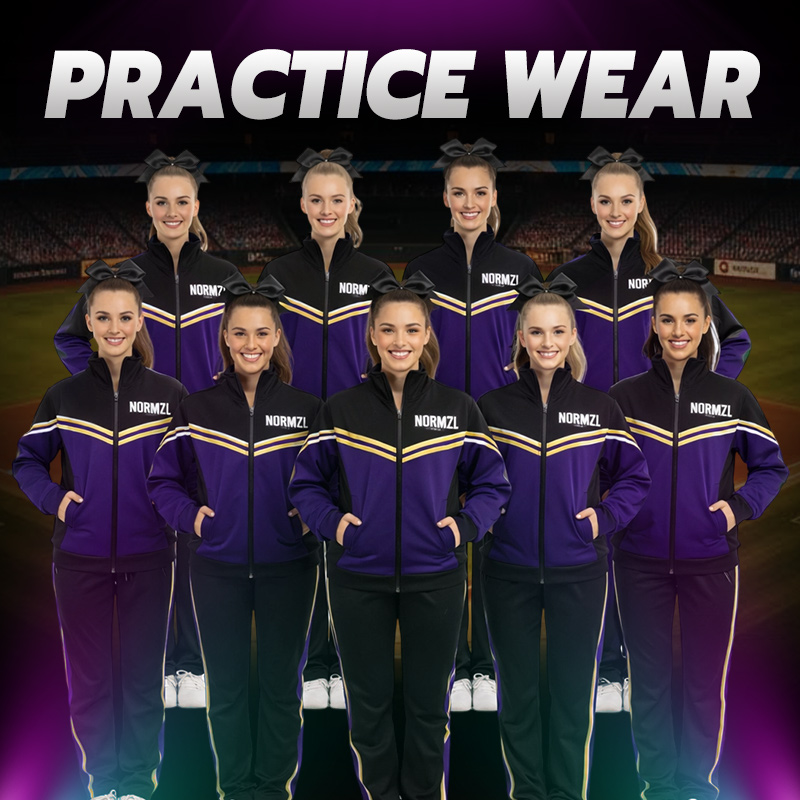
Dance technique. For choreography drills, teams often wear matching practice tops in team colors. This builds visual unity during group work and helps dancers get accustomed to moving in sync. Majorette dance practice clothes for this purpose typically use a lightweight knit with four-way stretch.
Marching rehearsal. Comfortable sneakers or drill shoes, paired with practice bottoms that do not restrict stride length, are the standard. Tops should stay tucked or sit at a consistent hemline so the visual line looks clean from a distance.
Full-routine rehearsal. Many teams dress in their complete practice uniform — top, unten, and shoes — for run-throughs that simulate performance conditions. This builds team identity and lets the coach evaluate formations as they will appear on the day.
Across all of these settings, the common requirements are fabric with adequate stretch and recovery, seams that lie flat against the skin, and tops that stay in place during arm work, turns, and bends.
What Makes a Performance Uniform Different?
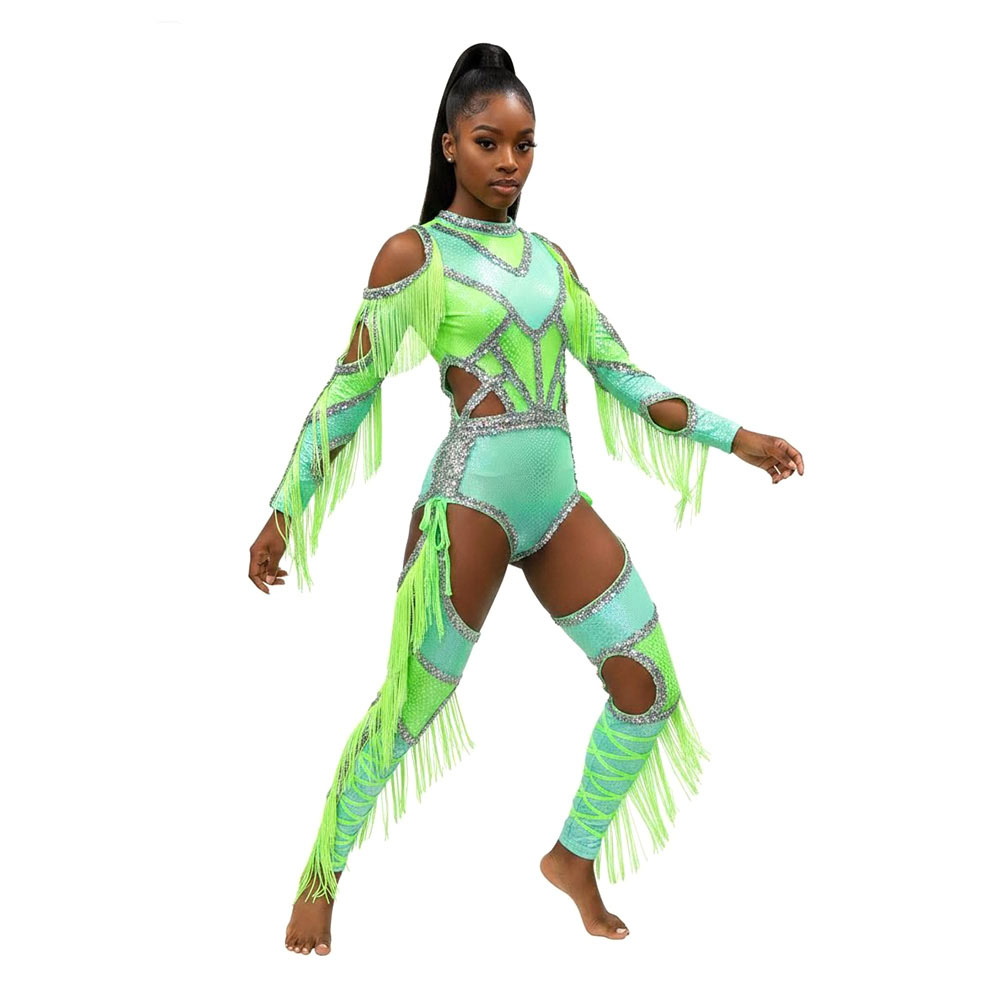
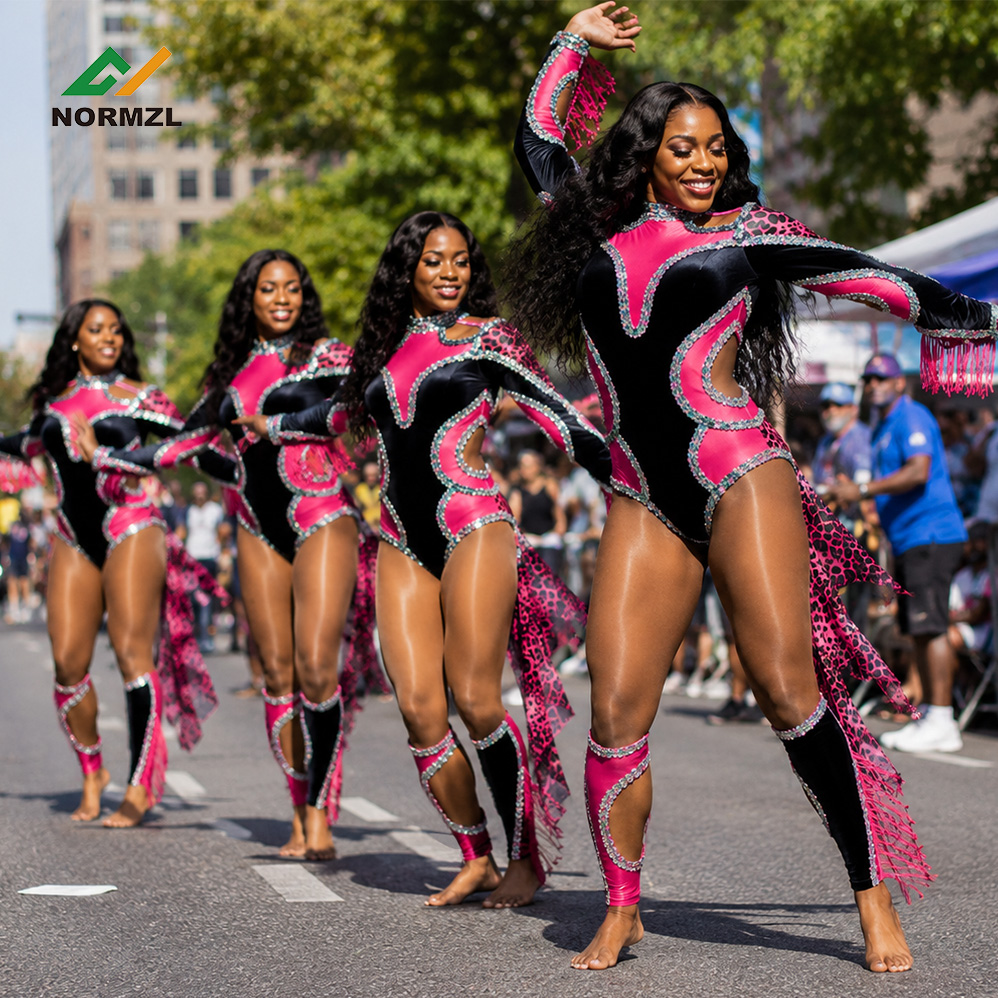
Performance uniforms are engineered for visual impact under stage or outdoor lighting. Every design decision — from fabric selection to trim attachment — serves the goal of catching the audience’s eye from a distance. Unser Tanzen & Majorette-Teams collection covers the custom builds described below.
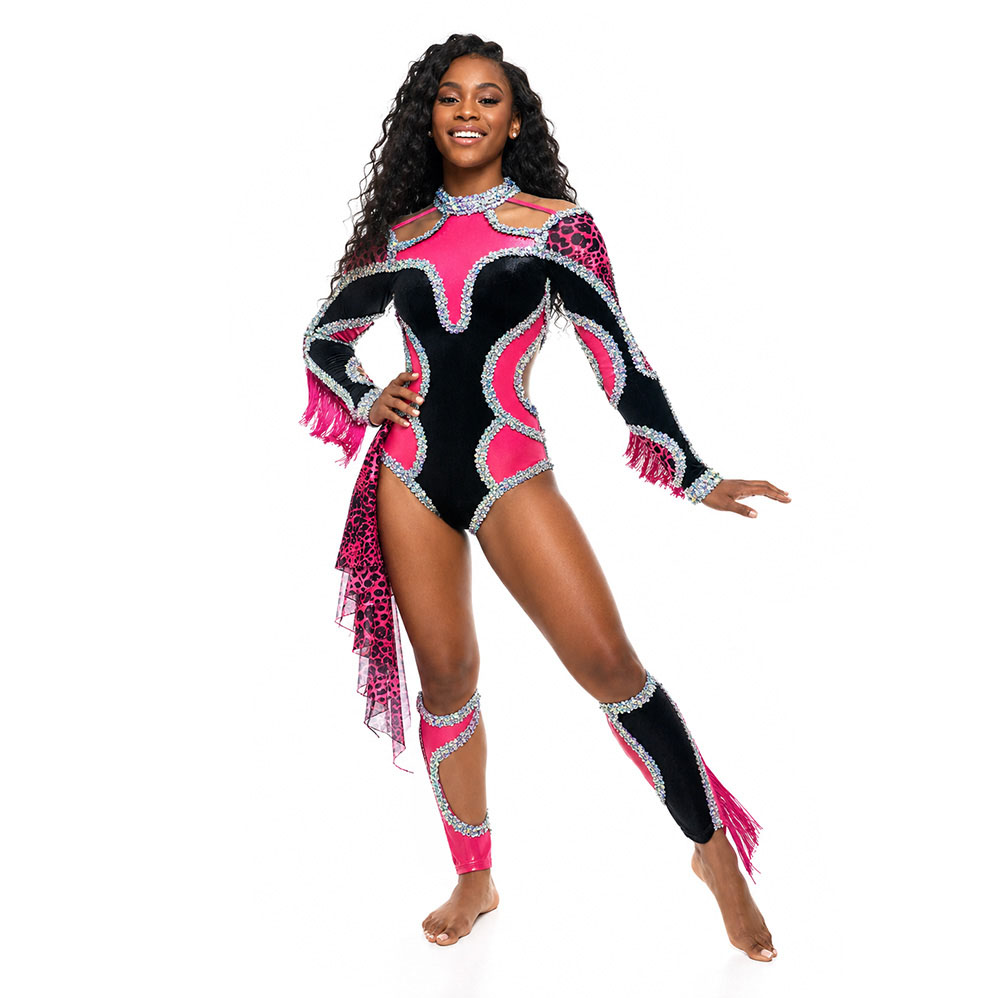
Stage visual effect. Fabrics are chosen for how they reflect and refract light. Metallische Oberflächen, shimmer satins, and bold solid colors read clearly from the back row of an auditorium. Matte cotton blends that look acceptable up close can appear flat under stage lighting.
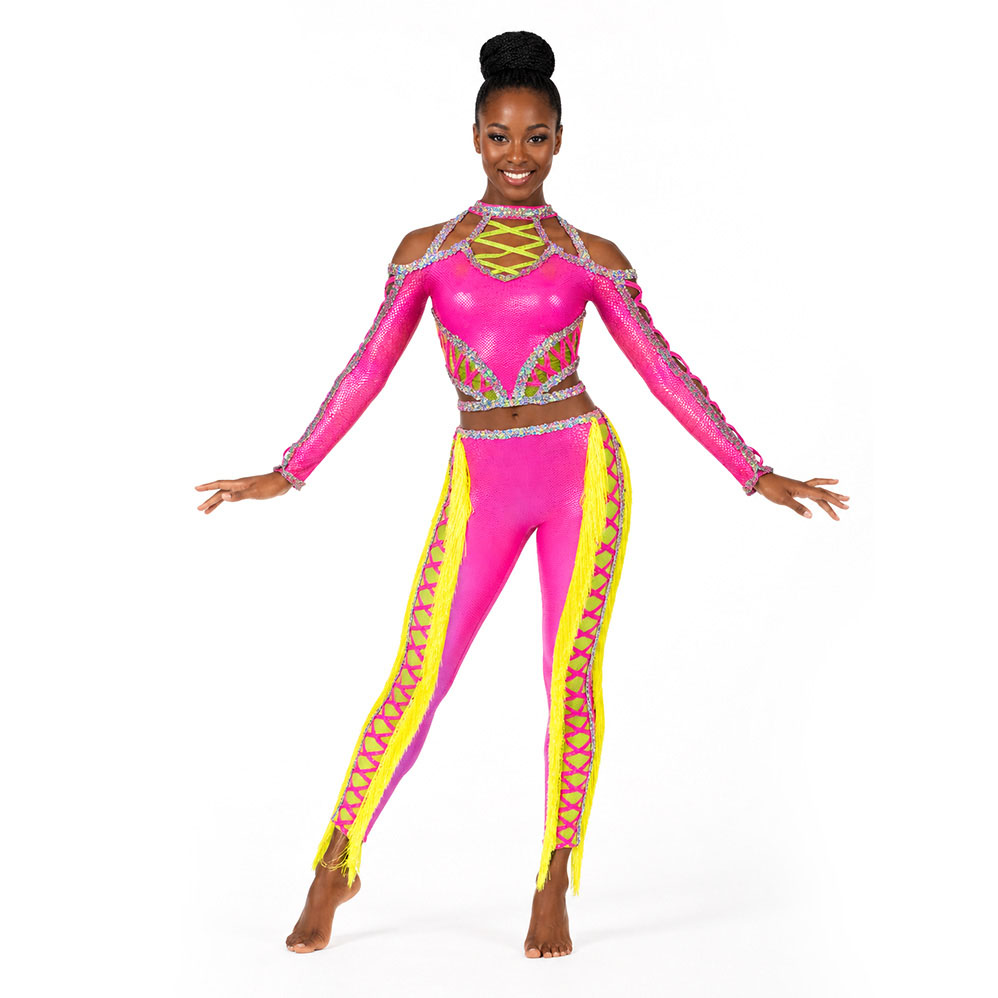
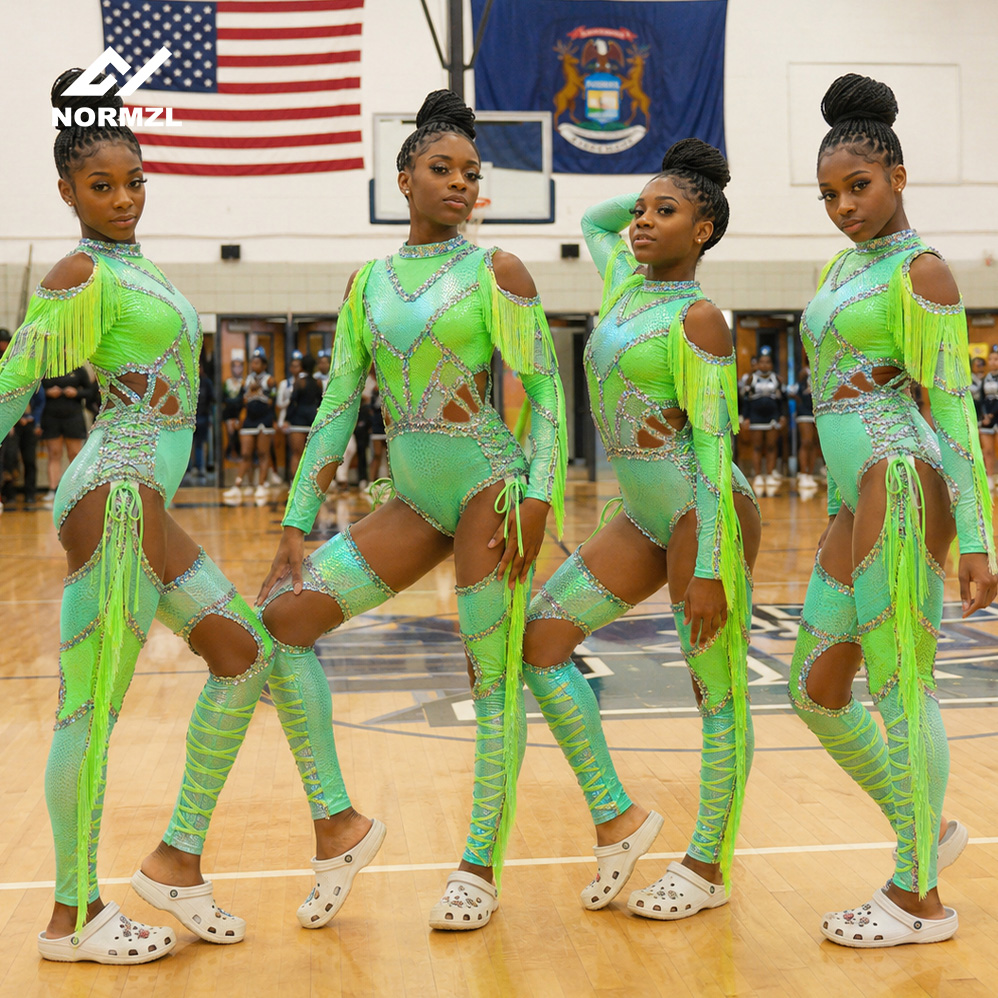
Custom fit. Performance uniforms are typically more tailored than practice wear. Princess seams, strategic stretch panels, and lined bodices create a polished silhouette while still allowing the range of motion majorettes need for high kicks and splits.
Randbereich. Fringe is one of the most recognizable elements of a majorette uniform. Its weight, length, and placement are calculated to amplify the visual arc of spins, Tritte, and arm movements. Heavier fringe produces a more dramatic swing; lighter fringe suits faster choreography where excess fabric could obscure the line.
Strasssteine und Pailletten. Heat-set rhinestones and hand-sewn sequins form patterns that often incorporate the team name, Maskottchen, or a custom motif. A single performance top can carry hundreds of individual stones. The sparkle reads well even in large venues.
Capes and caplets. Some designs include a cape or caplet for dramatic entrance effects. These add visual weight and require careful balance with the rest of the uniform. Cape attachment points must be reinforced to handle the extra pull during spins.
Stiefel, gloves, und Zubehör. Performance kits typically extend beyond the garment. White go-go boots, matching gloves, gauntlets, and headpieces all contribute to the unified look. Each accessory must be coordinated in color and material with the main uniform.
Because of the additional construction steps and trim, performance uniforms carry a higher per-unit cost and require more lead time than practice sets.
How Many Practice Sets Does a Majorette Need?
The answer depends on weekly rehearsal frequency, laundry turnaround, and the climate the team trains in. Here are general guidelines based on common schedules. For how set counts fit into the wider ordering timeline, see our complete guide to custom majorette and dance uniforms.
1–2 practices per week. Two complete practice sets allow rotation and ensure one is clean while the other is in the wash.
3–4 practices per week. Three to four sets prevent excessive wear on any single garment and give the dancer options on days when laundry has not caught up.
5 or more practices per week. Four to five sets are advisable. Intensive programs often train twice in one day, and sweat-saturated garments need time to recover their elasticity between wears.
Summer camp. Heat and extended sessions accelerate fabric fatigue. Adding one or two extra sets beyond the weekly baseline helps the dancer stay fresh through long camp days.
Performance or show week. Keep the regular practice sets in rotation and add one dedicated dress-rehearsal set that stays in reserved condition for the actual show run-throughs.
In all cases, rotating sets rather than wearing the same one repeatedly extends the life of each garment.
When Should Teams Rehearse in Performance Uniforms?
Performance uniforms should not replace practice wear for daily training. The decoration, tailored fit, and higher cost make them impractical for sweat-heavy, repetitive drills. Jedoch, certain rehearsal milestones do call for the full performance kit.
Sample movement test. When the first production sample arrives from the factory, a team leader or designated dancer should test it through the full range of performance movements. This confirms whether the cut allows comfortable high kicks, deep bends, and arm extensions before the full batch is cut. Unser sample approval checklist walks through what to sign off before you release the order to production.
First full-look test. Once all uniforms arrive, the team should rehearse at least one session in the complete performance look — uniform, boots, gloves, headpiece. This reveals any fit adjustments needed before the first public appearance.
Pre-show dress rehearsal. A full run-through in performance uniforms, ideally on the actual stage or field, helps dancers adjust to the weight and feel of the decorated garment under performance conditions.
Checking fringe and capes. A dedicated rehearsal focused on fringe and cape movement confirms that lengths are correct, attachment points hold, and the decorations enhance rather than interfere with the choreography.
Testing boots with the uniform. Boot height and uniform hemline need to work together. A rehearsal in the full kit reveals whether the hem sits correctly at the boot top and whether the dancer can move safely.
Promotional photos. Team photos and social-media shoots typically use the full performance uniform. Schedule the photo session early enough that any last-minute alterations do not conflict with the performance date.
Coordinate Practice and Performance Collections
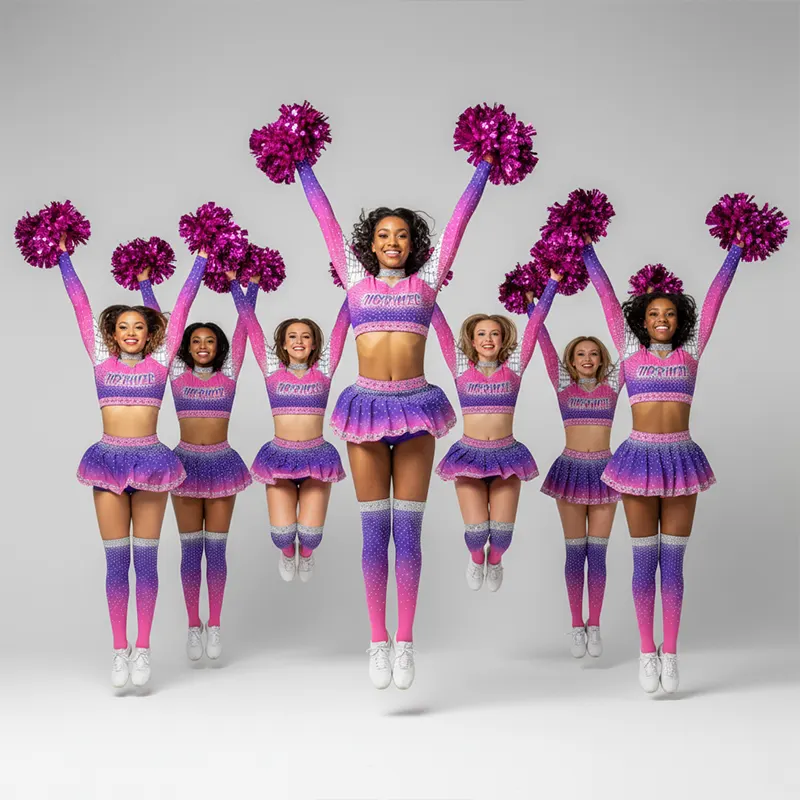
A well-planned uniform program makes the practice collection and the performance collection look like they belong to the same team, even though the decoration levels differ. These majorette uniform design ideas show how a shared colour and motif language carries across a squad.
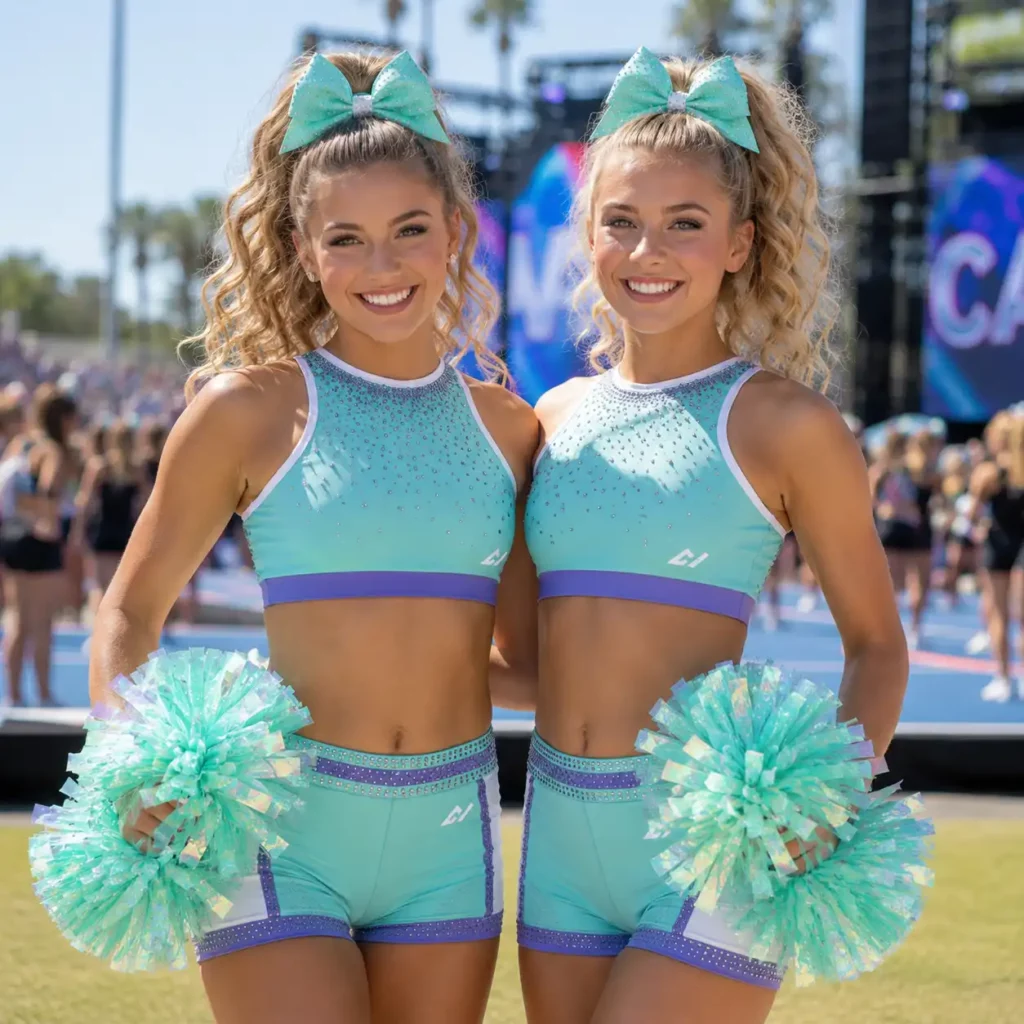
Use the same team colors. Practice tops and bottoms should match the performance uniform’s primary color palette. This creates visual continuity from the training room to the stage.
Practice wear uses simplified logos. Screen-printed or heat-pressed versions of the team crest replace the rhinestone or embroidered originals. The silhouette stays recognizable at a fraction of the cost.
Set designated practice-day outfits. For teams that train multiple times per week, assigning specific practice combinations — for example, “full white kit for dress rehearsals, navy practice tank with white shorts for regular sessions” — builds discipline and keeps the practice collection looking unified.
Retain performance visual elements but reduce decoration. Farbblockierung, sleeve stripes, or panel lines from the performance design can carry over into the practice top. The effect is similar, but without the rhinestones and fringe that belong on stage.
Make practice wear usable for travel and events. Well-designed majorette practice wear doubles as team travel clothing. Matching tracksuits or coordinated tank-and-short sets present a polished look at airports, hotels, and community appearances.
Budget Allocation
When a team plans its seasonal uniform spend, dividing the budget into clear categories helps avoid underfunding one area at the expense of another. A typical split looks like this.
Core performance uniforms — 50–60 %. These carry the heaviest decoration and the most complex construction, so they command the largest share.
Daily practice sets — 15–20 %. Multiple sets are needed for rotation. Per-unit cost is lower than performance uniforms, but the total quantity is higher.
Warmups — 10–15 %. Track suits, zip-front jackets, or pullover hoodies for outdoor rehearsals and layering before performances.
Footwear and accessories — around 10 %. Tanzschuhe, drill shoes, boots, gloves, headpieces, and pom accessories.
Backup and reorder reserve — 5–10 %. New members joining mid-season, unexpected damage, or growth-related replacements all require a financial buffer. Confirm the reorder policy and lead time with your factory at the quoting stage.
Investing in durable, well-constructed practice wear can reduce long-term replacement costs, since garments that hold their shape and color through repeated washing do not need to be replaced as frequently.
Care and Replacement Schedule
Proper care extends the usable life of both practice and performance garments, though the routines differ. How each construction detail — seams, rhinestone settings, fringe attachment — should be maintained is covered in our craftsmanship and care guide.
Übungskleidung is rotated by usage frequency and washed after every session. Machine wash on a gentle cycle with like colors, and tumble dry on low or line dry to preserve elasticity. In den meisten Fällen, practice sets last one to two full seasons before fabric thinning, elastic degradation, or logo cracking calls for replacement. For detailed fabric-care guidance, the general principles of laundering, drying, and maintaining synthetic and moisture-wicking textiles are summarized in the laundry reference.
Performance uniforms should be washed as infrequently as possible. Spot-clean soiled areas between wears. When a full wash is necessary, hand wash or use a delicate cycle inside a mesh laundry bag. Air dry flat to protect rhinestone settings and fringe attachment.
Store fringe and rhinestone garments separately. Hang performance uniforms on padded hangers in a breathable garment bag. Folding can crush rhinestones and tangle fringe. Keep them away from rough surfaces that could snag sequins or pull threads.
Replace based on condition, not a fixed calendar. Key indicators include loss of elasticity in waistbands and cuffs, fabric that has become translucent during movement, and decoration that is fading, loosening, or falling off. A uniform that looks worn under practice lights will look worn under stage lights as well.
Keeping a brief care log — noting when each garment was last washed, repaired, or retired — helps the team manager make reorder decisions based on evidence rather than guesswork.
Häufig gestellte Fragen
What do majorettes wear to practice?
Majorette practice uniforms typically consist of a fitted, moisture-wicking top paired with stretch shorts, Gamaschen, or dance pants. The outfit should allow full range of motion for kicks, turns, and marching drills while letting the coach see body alignment clearly. Matching team colors and simplified logos keep the look cohesive.
Can majorettes practice in performance uniforms?
Occasionally, yes — for dress rehearsals, movement tests on production samples, and promotional photos. For daily training, Jedoch, practice uniforms are the better choice. Performance decorations such as rhinestones and fringe can be damaged by repetitive drill movements, and the higher per-unit cost makes frequent replacement impractical.
How many practice outfits does a majorette need?
For a team that trains one to two times per week, two complete sets are usually sufficient. Teams practicing three to four times per week typically need three to four sets, and intensive programs with five or more weekly sessions may require four to five. Summer camp and performance week can add to that number.
What is the difference between dance practice wear and a majorette uniform?
General dance practice wear prioritizes stretch, Komfort, and coach visibility. A majorette uniform — whether for practice or performance — adds team-specific color blocking, insignia, Und, in the performance version, decoration such as fringe, Strasssteine, und abgestimmtes Zubehör. Majorette practice clothes bridge the gap: they use the same technical fabrics as dance wear but incorporate team identity elements that align with the performance look.
Letzte Gedanken
Normzl manufactures custom practice and performance uniforms for majorette teams, dance squads, and cheer programs worldwide. Our in-house design team works with your color palette, Maskottchen, and choreography requirements to build a coordinated uniform program — from daily practice sets to full performance kits with fringe, Strasssteine, und Zubehör. Share your team’s needs and we will put together a design proposal and bulk quote.
Create Your Team’s Championship Look