




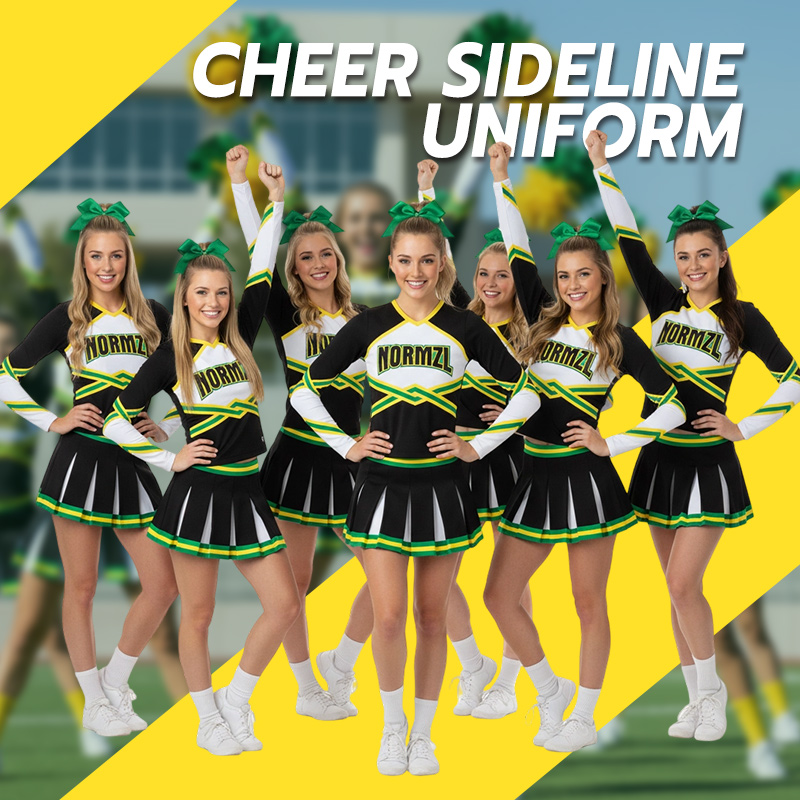

The short answer: most athletes need between two and five cheer practice sets depending on how often they train. Teams that practice one or two sessions per week can manage with two sets. Teams running three to four sessions weekly should plan on three to four sets. Athletes training five or more times per week typically need around five sets plus a backup, especially during competition season.
The actual number depends on variables beyond the practice schedule itself — laundry frequency, local climate, and the type of training the team does all shift the calculation. The recommendations below give a starting framework that coaches and purchasers can adjust to their own program.
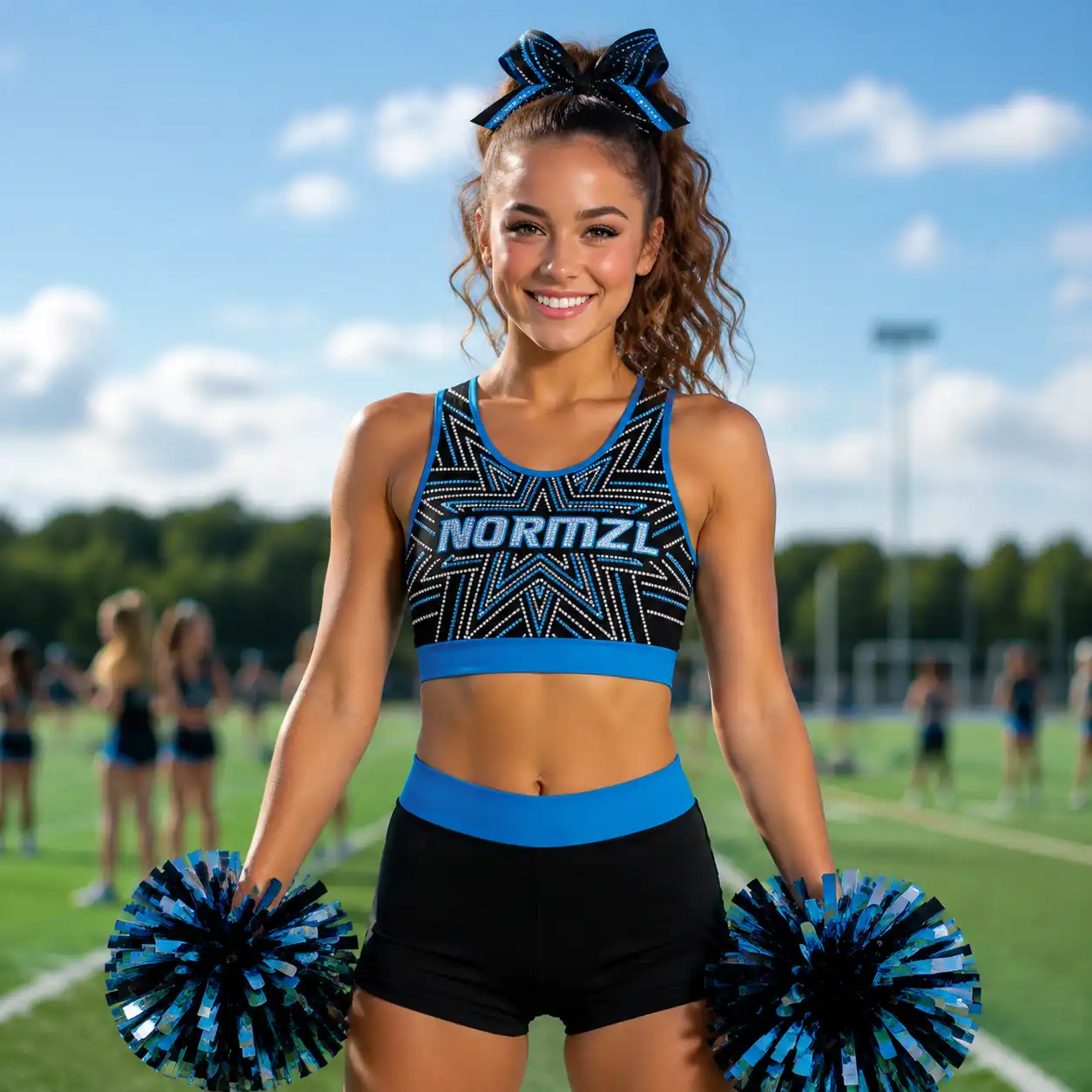
What Is Included in a Cheer Practice Set?
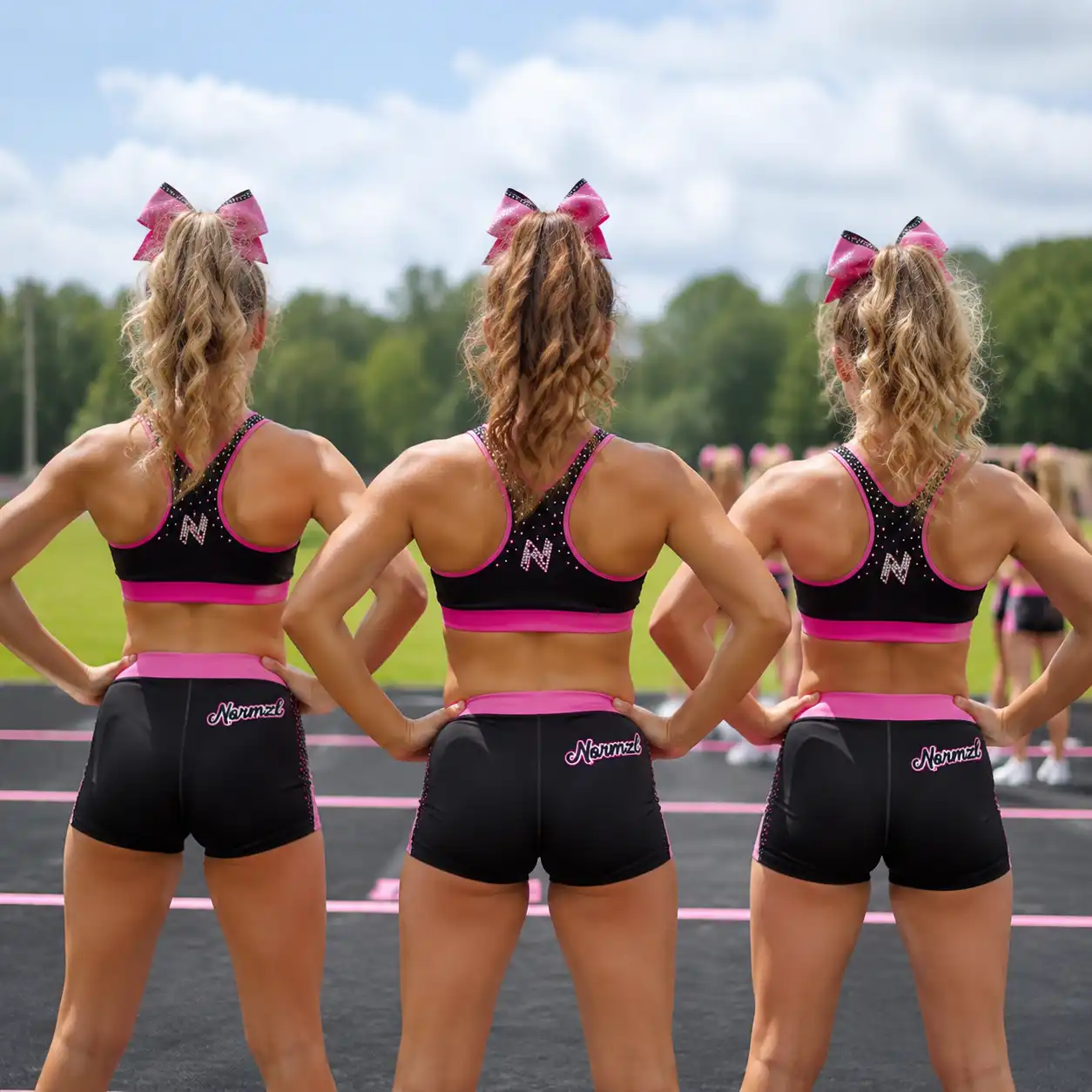
Before counting sets, it helps to define what one “set” includes — the term varies across team orders, and a quote that uses the word without specifying contents can lead to confusion at the ordering stage.
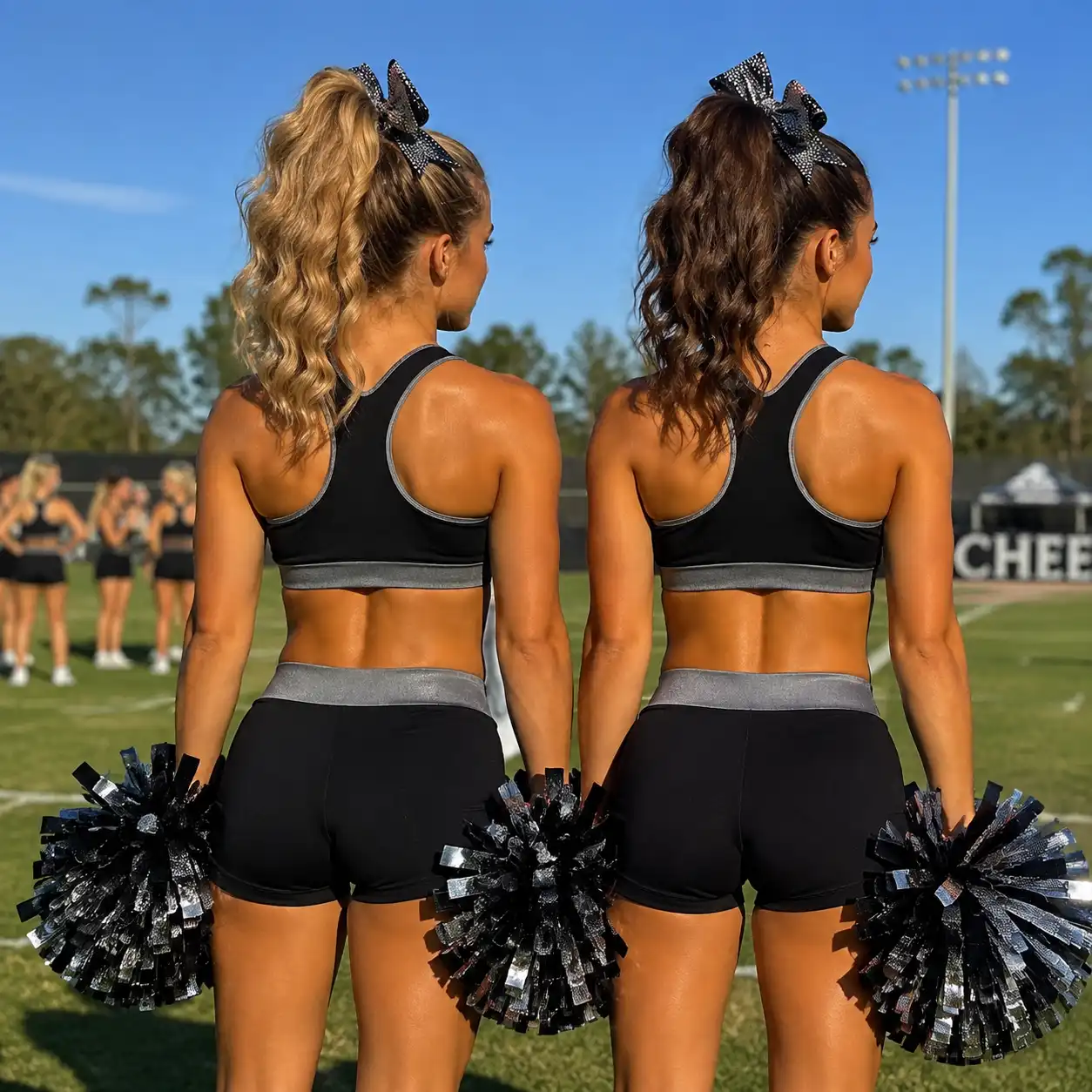
Basic set. A sports bra and a pair of shorts — the minimum unit most teams start with. This configuration covers the essentials for a single training session in warm weather or indoor facilities. Some suppliers also include a matching tank top in the basic set; confirm the exact piece list before placing the order.
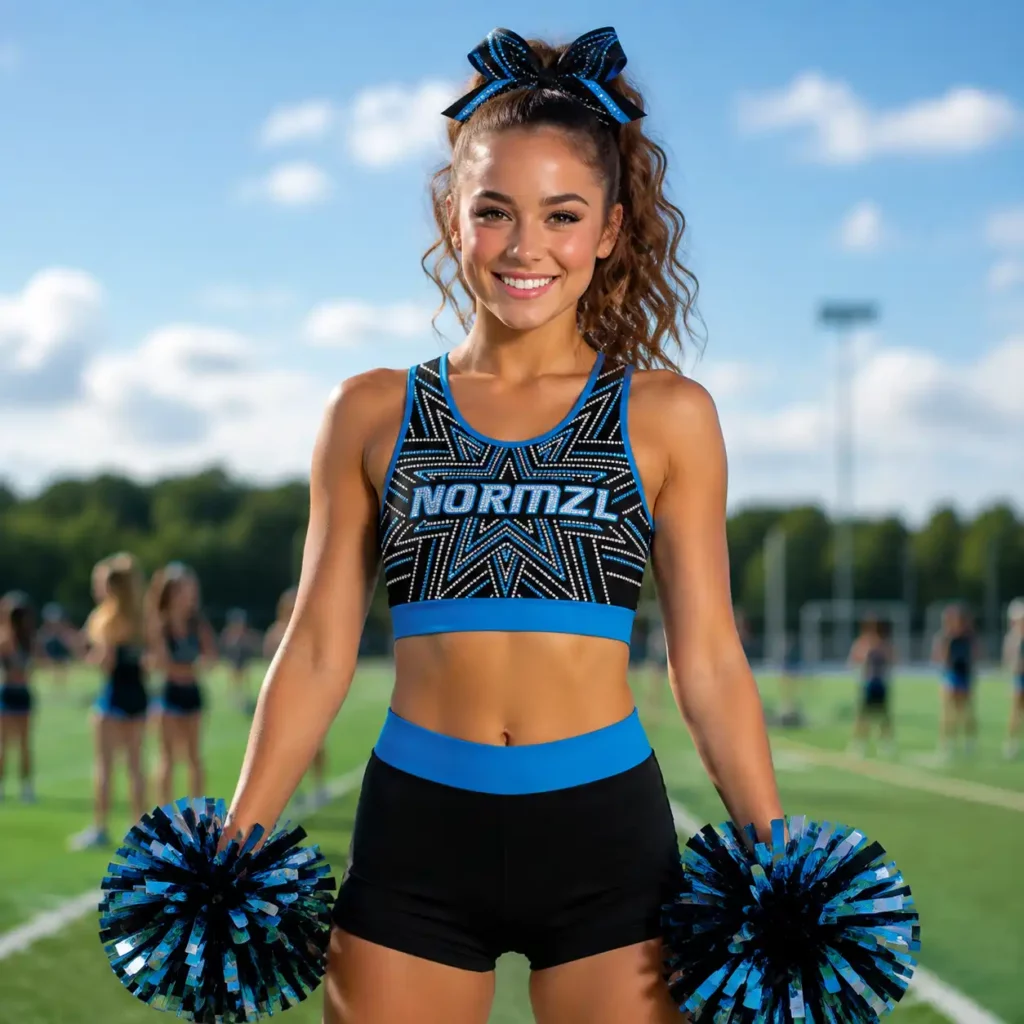
Complete set. A tank top or tee, shorts, and leggings. This is the full outfit an athlete wears from base layer outward, and the version most coaches prefer when ordering for a roster. The leggings add coverage for cooler facilities and for activities like dance cleanup where the coach wants to see the full leg line. A sports bra is typically included as well, making this a true head-to-waist kit.
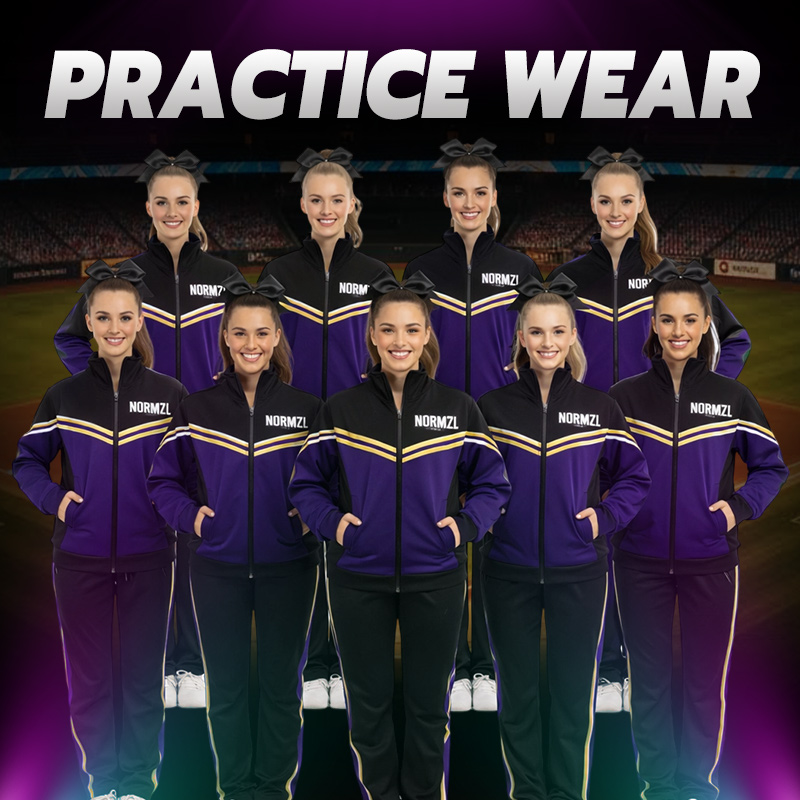
Winter training set. A long-sleeve top, leggings, and a lightweight jacket, built on top of the complete set’s base layers. For teams training through colder months or in air-conditioned facilities where a bare midriff during stunts is impractical. The jacket doubles as a warm-up layer for outdoor sessions and team travel.
When a supplier quotes “per set,” confirm which configuration the price covers. A quote that includes only a top and shorts will look cheaper than one that bundles the sports bra, leggings, and jacket, but the buyer will need to source the missing pieces separately — often at a higher per-unit cost from a different vendor. The Practice & Camp Wear category at Normzl lists what each set configuration includes so purchasers can compare on an apples-to-apples basis.
Recommended Number of Sets by Training Schedule
The table below maps weekly training frequency to a practical set count. It assumes the athlete washes cheer practice outfits after each use, which is the standard hygiene recommendation for high-intensity athletic wear.
| Practices per Week | Recommended Sets | Typical Situation |
|---|---|---|
| 1–2 | 2 | School sideline, recreational squads, off-season maintenance training |
| 3–4 | 3–4 | Competitive team, club teams in active season, all-star gyms running weekly training blocks |
| 5+ | 5 plus 1 backup | All-Star gym in peak season, squads with two-a-day sessions or tournament prep |
| Camp week | 5–7 | Intensive multi-day camp, preseason boot camp, tournament travel week with back-to-back sessions |
The backup set for the 5+ category accounts for situations that are difficult to plan around: a garment damaged during a stunt, a spill or stain that does not come out before the next session, or a growth spurt that changes an athlete’s fit mid-season. For camp weeks, the higher end of the range reflects the fact that athletes may not have access to laundry facilities during multi-day residential camps, and sweat volume in extended outdoor sessions can make a single set unwearable by the afternoon.
Teams exploring practice wear options across these frequency ranges should note that the set count is a starting point. The factors in the next section push the number higher for many programs.
Factors That Increase the Number of Sets Needed
The schedule-based table above is a baseline. Several real-world conditions push the actual number of cheer practice uniforms higher, and coaches who plan only to the table often find their athletes short by mid-season.
Hot and humid weather. Athletes sweat through garments more quickly in warm climates, and a single practice can leave a set too saturated to wear again without washing. Teams in southern U.S. states, Southeast Asia, or similar climates often need an additional set beyond what the session count suggests. In extreme heat, some teams change tops mid-session, which effectively doubles the top count.
Two-a-day training. Morning and afternoon sessions mean two outfit changes per day, and athletes may not have time to launder between them. Plan for at least one extra set per athlete during two-a-day blocks. This is common during preseason conditioning camps and the weeks immediately before competition.
Limited laundry access. Travel teams and squads at shared facilities may lack same-day laundry. If athletes cannot wash between every session, the set count needs to cover the gap — typically one additional set for every session that goes unwashed.
Different training disciplines. A team doing tumbling, stunting, and conditioning on separate days may want different garment configurations for each — fitted tanks for tumbling, compression shorts for stunting, moisture-wicking fabric for conditioning. Each discipline-specific outfit adds to the total count. The article on cheer practice wear for tumbling, stunting, and conditioning breaks down the garment requirements by activity type.
Team requires uniform dressing. When coaches require identical cheer practice uniforms at every session, athletes cannot mix personal gym clothes with team gear, and the full set count must come from the team order. This is common in competitive all-star programs and school varsity squads with strict dress codes.
Dress-rehearsal outfit. Teams often reserve a dedicated set for dress rehearsals in full competition makeup and shoes, kept separate from daily practice wear. This set sees less total wear but still needs to be part of the order, bringing the count up by one.
Build a Practical Weekly Rotation
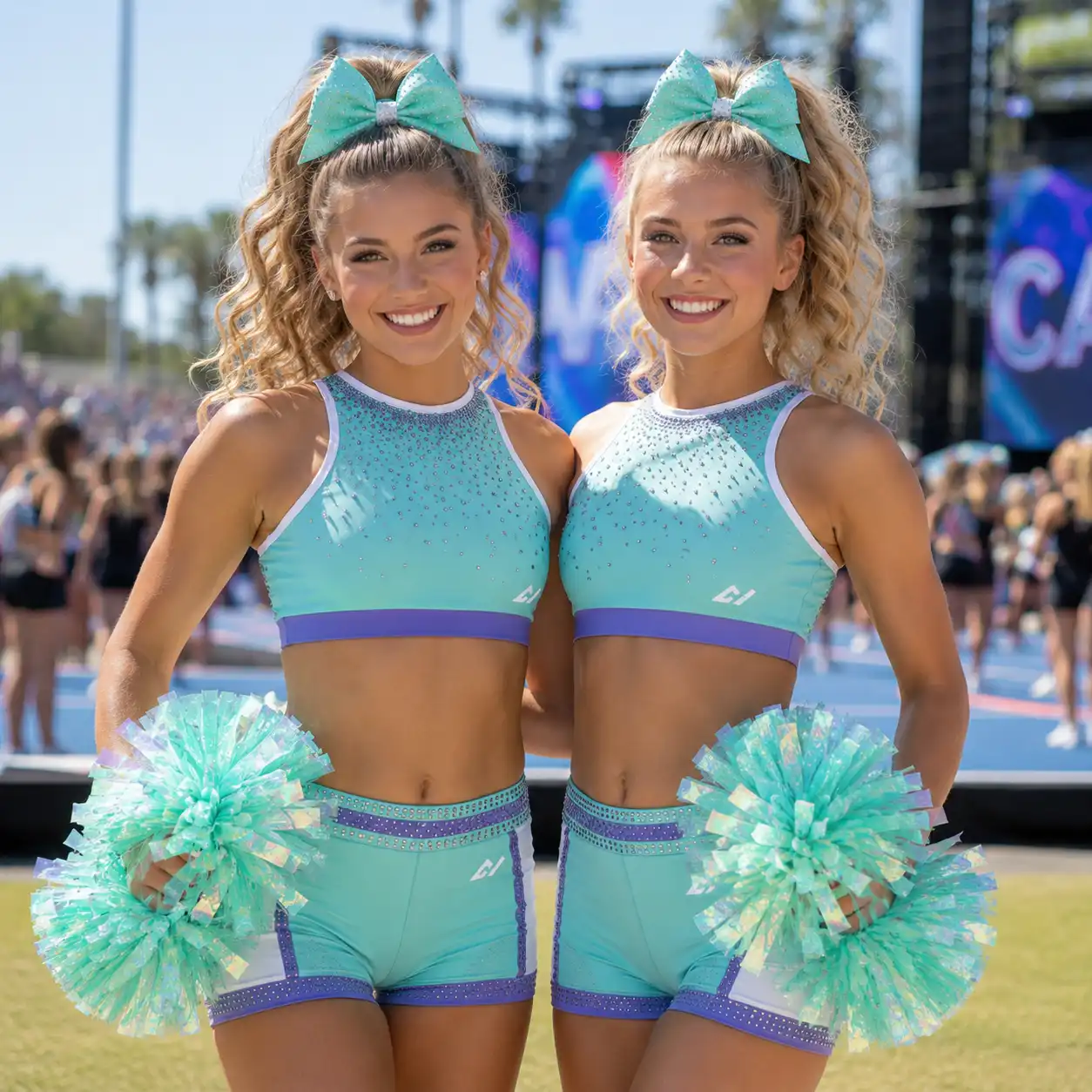
Having the right number of sets matters less than having the right set for each day’s training focus. Here is an example of how a team training four times per week might structure a weekly rotation:
Monday — Tumbling day. Fitted tank and mid-thigh shorts for clear body alignment visibility. The coach needs to see spine position and hip angle through every pass.
Tuesday — Stunting day. Fitted tee and compression shorts with smooth fabric to prevent snagging on a teammate during lifts and catches.
Wednesday — Conditioning day. Lightweight moisture-wicking tank and breathable shorts for high-sweat work. The fabric should dry fast enough that the athlete is not carrying wet material through the final circuit.
Thursday — Full-routine day. Complete team set worn with competition shoes and full hair. This is the dress-rehearsal outfit, and it simulates competition conditions as closely as possible.
Backup set. Held in reserve for substitution if any set is not ready by the next session.
For five-day schedules, add a fifth set and shift the discipline assignments. The key principle: each set has a purpose tied to the day’s training focus, and the backup ensures the rotation holds when laundry or wear issues arise. Teams that assign a specific purpose to each set tend to get more even wear across their wardrobe, which extends the functional life of every piece.
How Teams Can Reduce Cost
Ordering cheer practice outfits for an entire roster is a significant budget item, and most program purchasers are looking for ways to bring the per-athlete cost down without cutting corners on quality. Several strategies work.
Mix and match tops and bottoms. Order a smaller number of tops and a larger number of bottoms — or vice versa — since bottoms typically experience more wear and washing. Coordinating colors across all pieces allows any top to pair with any bottom, so the athlete can build a fresh-looking outfit from mismatched pieces.
Keep a unified core color. Standardizing on one or two core colors — navy bottoms and white tops, for example — simplifies reordering and eliminates shade mismatches between production batches. When the color palette is stable, a replacement piece ordered mid-season will match the sets from the original order.
Order in bulk. Per-unit cost decreases as order volume increases. Booster club purchasers should consolidate the team’s needs into a single order cycle rather than placing individual purchases throughout the season. Consolidating also reduces the total shipping cost and ensures every piece comes from the same fabric lot, which avoids color variation.
Avoid completely redesigning every season. Adopting a stable core design and updating only accent details — a stripe color, a logo placement, a neckline trim — keeps the wardrobe functional across seasons while still giving the team a refreshed look. Full redesigns discard usable inventory and force the entire roster to reorder from scratch.
Invest in high-use items first. Budget first for the everyday tank and practice short — the pieces that see wear at every session. Specialty items like jackets, warm-up pants, or camp-only sets can be ordered in smaller quantities or deferred to a second order. The Custom Cheer Apparel program at Normzl allows teams to configure orders around actual usage patterns rather than buying fixed bundles that include pieces the roster may not need.
When Should Practice Sets Be Replaced?
Cheer practice uniforms have a functional lifespan that depends on training frequency, washing care, and fabric quality. Knowing when to retire them prevents athletes from training in gear that no longer performs as intended.
Elastic weakening. When a top or short no longer snaps back to its original shape after stretching, the fabric has degraded. Sagging waistbands or gaping neckline cuffs signal the end of usable life. This tends to appear first in the waistband of the shorts and the armhole cuffs of the top, where the elastic undergoes the most repeated stretching.
Waistband deformation. A waistband that rolls or fails to stay at the natural waist during movement forces the athlete to adjust the garment instead of focusing on the drill. Rolling waistbands are the most common complaint from athletes and typically indicate that the elastic core has lost its recovery tension.
Fabric becoming see-through. Material that has thinned to transparency — visible skin or undergarments when stretched — should be replaced immediately. This commonly occurs in high-friction areas like the inner thigh on shorts and the underarm panel on tops. A fabric that was opaque at the start of the season can become sheer after months of washing and stretching.
Seam damage. Split seams, pulled stitching, or fabric tearing along seam lines indicate structural failure. A seam that opens during a stunt is both a wardrobe malfunction and a safety issue — loose fabric can catch a teammate’s hand or foot during a partner lift.
Logo peeling. Heat-pressed logos, rhinestones, or patches that lift or detach create an unkempt appearance and can snag teammates during stunting. If the decoration method was not suited to the fabric or the washing regimen, peeling can appear within a single season.
Size no longer fitting. Youth athletes grow, and roster changes bring new body types. A garment too tight restricts movement through a full split or deep backbend; one too loose shifts during drills and requires constant adjustment. Most youth competitive programs need to reassess fit against the cheer uniform size chart at least once per season.
Inspect each athlete’s sets at the midpoint and end of the season. Replace any garment showing two or more of the signs above before the next training cycle begins. Keeping a small reserve stock in common sizes helps cover unexpected replacements without requiring a full reorder.
Frequently Asked Questions
How many cheer practice outfits do I need?
Most athletes need between two and five sets, depending on weekly training frequency. Teams practicing one to two times per week can manage with two sets. Three to four sessions per week calls for three to four sets. Five or more sessions, or intensive camp schedules, typically require five sets plus a backup. Laundry access and climate can shift these numbers up or down.
Do cheerleaders wear the same outfit to every practice?
Not necessarily. Many teams rotate between sets based on the day’s training focus — a fitted tank for tumbling, compression shorts for stunting, moisture-wicking fabric for conditioning. Some coaches require identical team dressing at every session. The rotation approach allows athletes to wear the right garment for each activity while extending the life of each set through even distribution of wear.
How often should cheer practice wear be washed?
After each use. Athletic wear absorbs sweat, bacteria, and skin oils during training, and allowing these to remain in the fabric degrades the material and creates odor. Most sports medicine guidance recommends washing athletic clothing after every wear to maintain fabric performance and skin health (How Often Should I Wash My Exercise Clothes?, The Conversation).
What should be included in a cheer practice set?
At minimum, a top and shorts. A complete set adds a sports bra and leggings. A winter training set further adds a long-sleeve layer and a lightweight jacket. When ordering for a team, confirm with the supplier which pieces are included in the quoted “set” price, as the contents vary between basic, complete, and seasonal configurations.
Final Thoughts
The number of cheer practice sets an athlete needs is not a fixed number — it depends on the training schedule, the climate, laundry logistics, and the team’s dressing standards. Start from the session-frequency table above, adjust for the factors that apply to your program, and build a weekly rotation that keeps every athlete in clean, functional gear at every practice. For teams planning a new order or refreshing an existing wardrobe, map your weekly schedule to the set counts, decide on a core color palette that simplifies reordering, and confirm with your supplier which pieces each set includes.
Create Your Team’s Championship Look