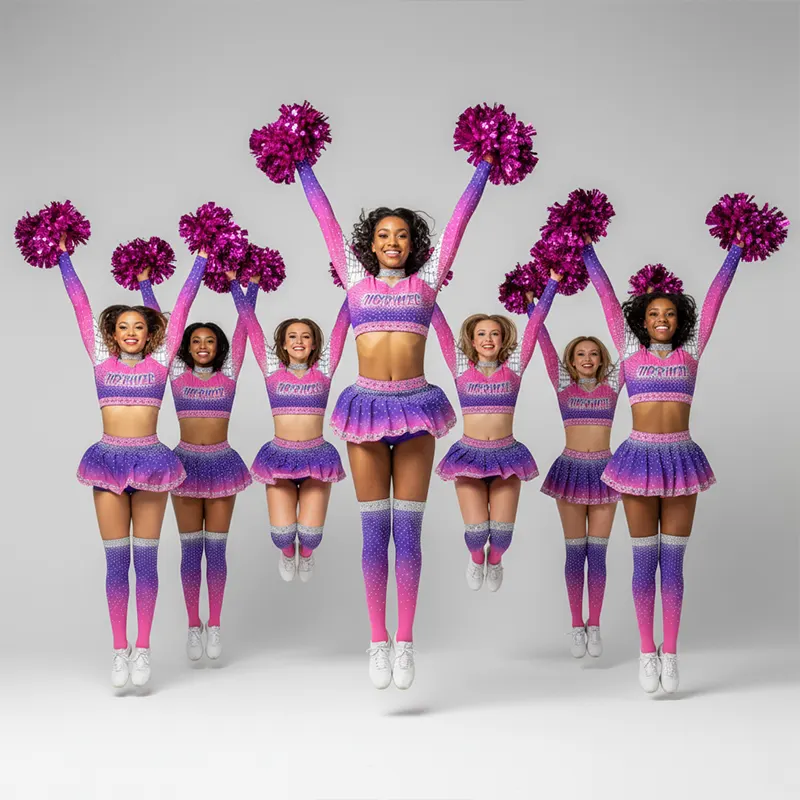
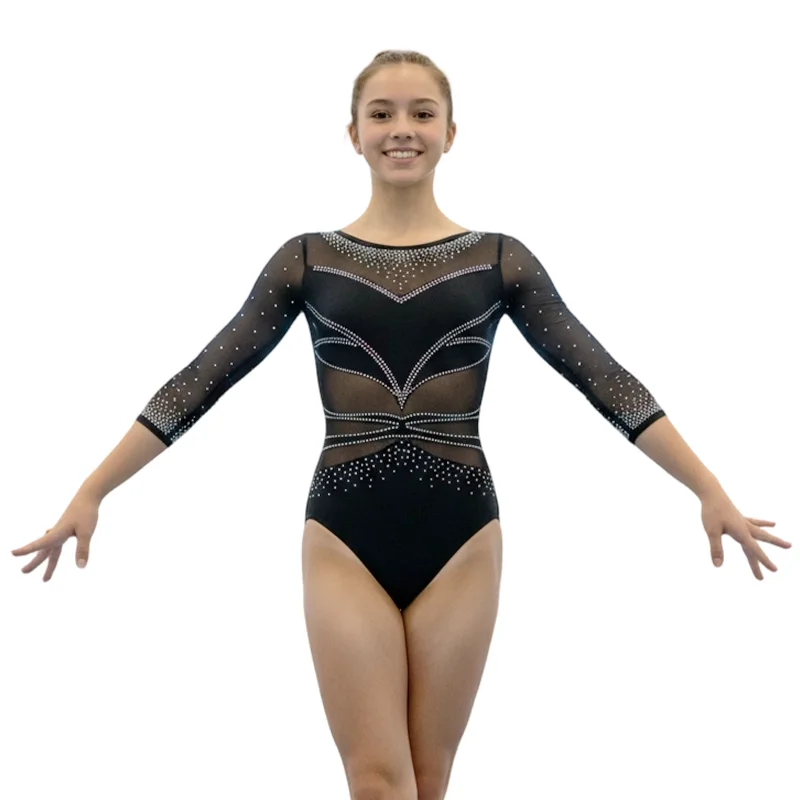
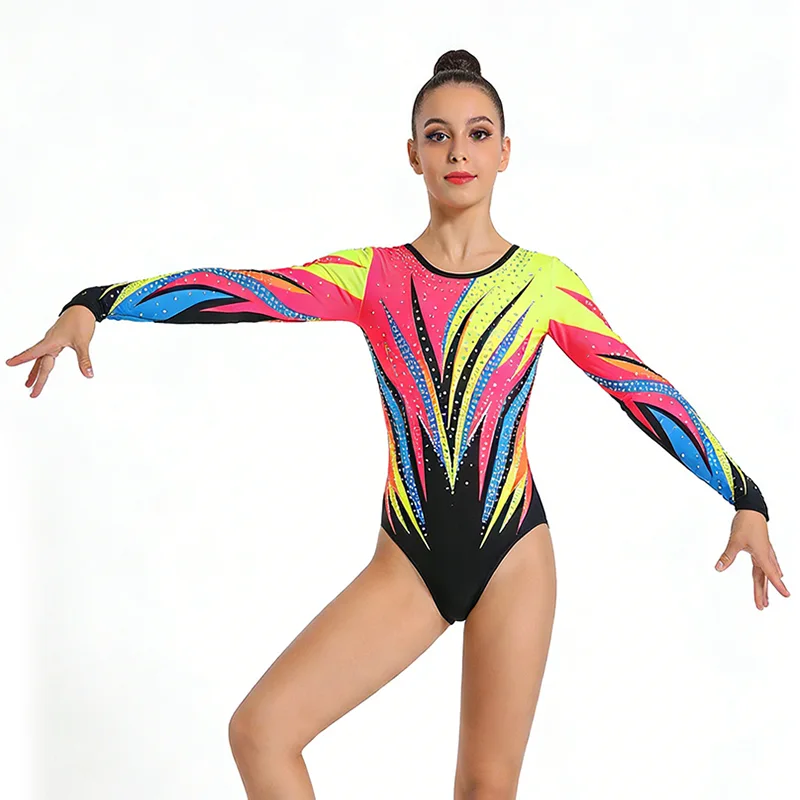






Coverage in a cheer uniform is a design problem, not a compromise. A team needing more midriff coverage, higher necklines, longer sleeves, or longer skirts does not have to accept a uniform that restricts jumping, tumbling, or stunting. The same factory pattern-making that produces a traditional two-piece can produce full coverage — the difference is in cut, layering, fabric selection, and structural detail.
This article walks through the design decisions that determine how much a cheer uniform covers, how to confirm your team’s requirements before ordering, and what construction details keep the uniform functional through a full competition routine.
What Makes a Cheer Uniform Modest?
“Modest” in cheerleading uniform terms refers to how much of the body the garment covers during active movement — not just standing still. A uniform that looks adequate at attention may ride up or shift during a back handspring. Practical modesty is measured in motion.
The design dimensions that determine coverage levels are:
Midriff coverage. A modest design extends the top to meet the skirt waistband or past it, so the midriff stays covered through arm raises and tumbling. Achieved with a longer top, a tunic-length cut, or an integrated liner.
Higher neckline. A crew neck or mock neck provides more chest coverage than a standard V-neck. Raising the neckline even slightly changes the overall look.
Increased sleeve length. Options range from cap sleeve to full length. Longer sleeves require attention to underarm structure so the sleeve does not restrict overhead movement.
Adjusted skirt length. A longer skirt covers more of the thigh, but the hem point affects how the skirt moves during high kicks. The right length balances coverage with clean lines during motion.
Integrated safety shorts. Built-in compression shorts under the skirt provide security during inversions and stunts. When integrated at the pattern stage, they sit cleanly without a separate garment layer.
Reduced sheer areas. A modest design places mesh only in non-visibility-sensitive areas or layers opaque fabric beneath the mesh.
Avoiding unnecessary cutouts. Keyhole backs, side cutouts, and open-back designs reduce coverage. A modest uniform minimizes these in favor of continuous fabric.
Each of these can be specified independently. The design conversation starts with which coverage dimensions matter most to your athletes, school, or organization.
Confirm the Team’s Coverage Requirements First
Before any design work begins, get the specific coverage requirements on paper. “More modest” means different things to different people. Work through these items before requesting a quote:
School or league dress code. Many schools publish athletic uniform guidelines specifying minimum skirt length, neckline type, or midriff coverage (the NFHS Spirit section is one reference for member-school activity guidelines). Get the actual written policy, not a verbal summary.
Athlete age group. Youth teams — particularly elementary and middle school — often have stricter coverage expectations than high school or college squads. When ordering custom cheer apparel for younger athletes, confirm each coverage point against the age group’s needs.
Parent input. For youth and school teams, parents are often the ones raising coverage concerns. Collecting their input before design is finalized avoids a round of alterations after samples arrive.
Religious or cultural requirements. Some athletes need coverage beyond typical cheer design — arms to the wrist, legs to the ankle, or the hair. These are achievable within cheer uniform construction but need to be stated explicitly at the design stage.
Competition rules. The rulebook the team competes under may specify what the uniform must and must not cover. Check the current season’s regulations before finalizing coverage levels.
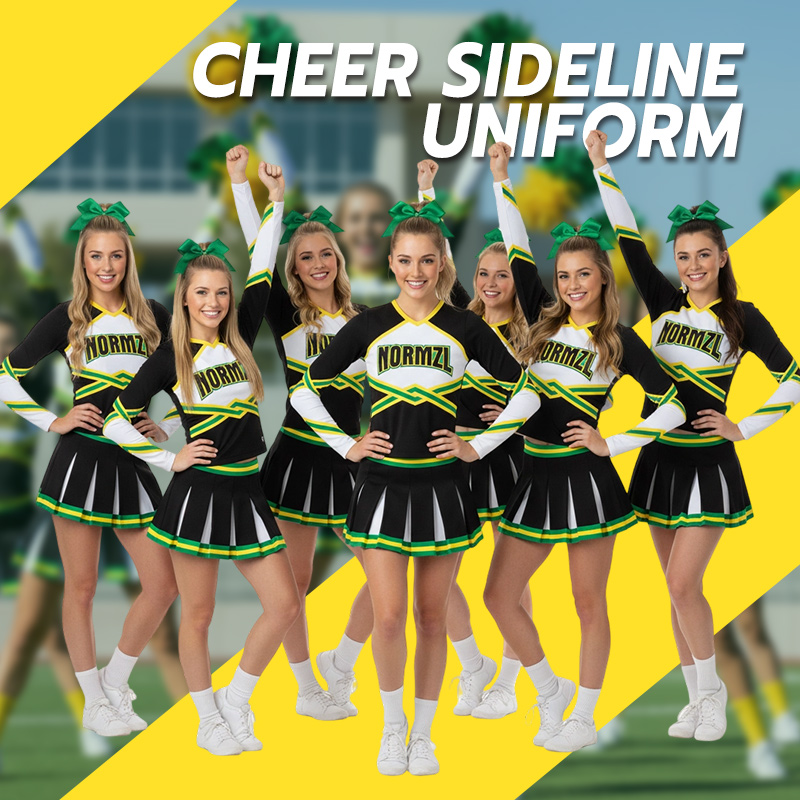
Indoor vs. outdoor use. A uniform designed for outdoor sideline cheer in cool weather naturally accommodates more coverage. If the same uniform must work in both settings, design for the more demanding scenario and address the other through layering. For sideline-specific programs, see our Sideline School Cheer category.
Getting these requirements in writing before design begins prevents the most common ordering problem: a uniform that meets one standard but fails another nobody mentioned.
Modest Cheer Top Design Options
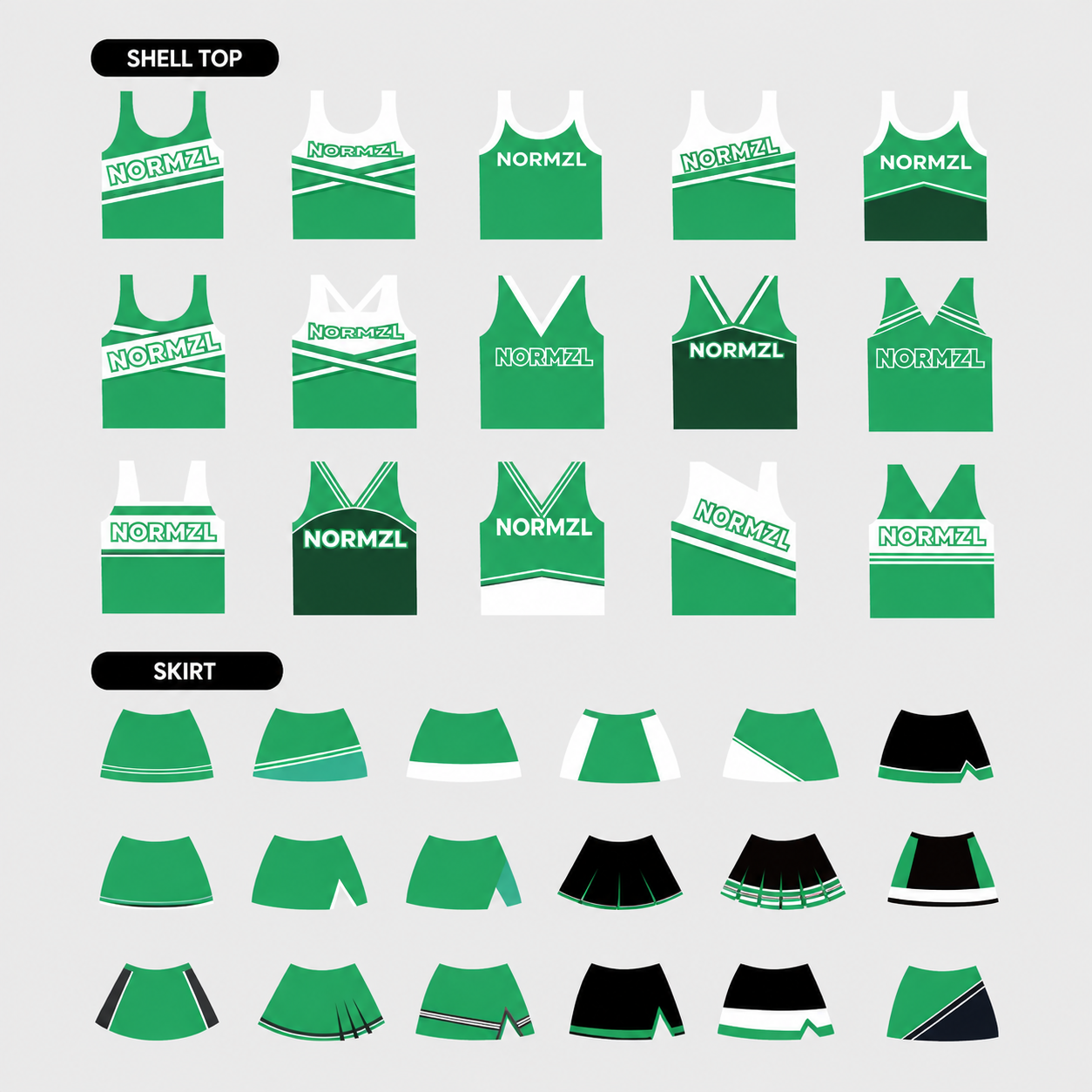
The top is where most coverage decisions concentrate. The design options available:
Full-length top. Extends to the hip or below, covering the midriff completely without a separate liner. The extra length needs to be patterned so it does not bunch or ride up during tumbling.
High-neck top. Crew neck, mock neck, or a raised V-neckline covering more of the chest and collarbone. Even a modest increase in neckline height changes the overall look from the stands.
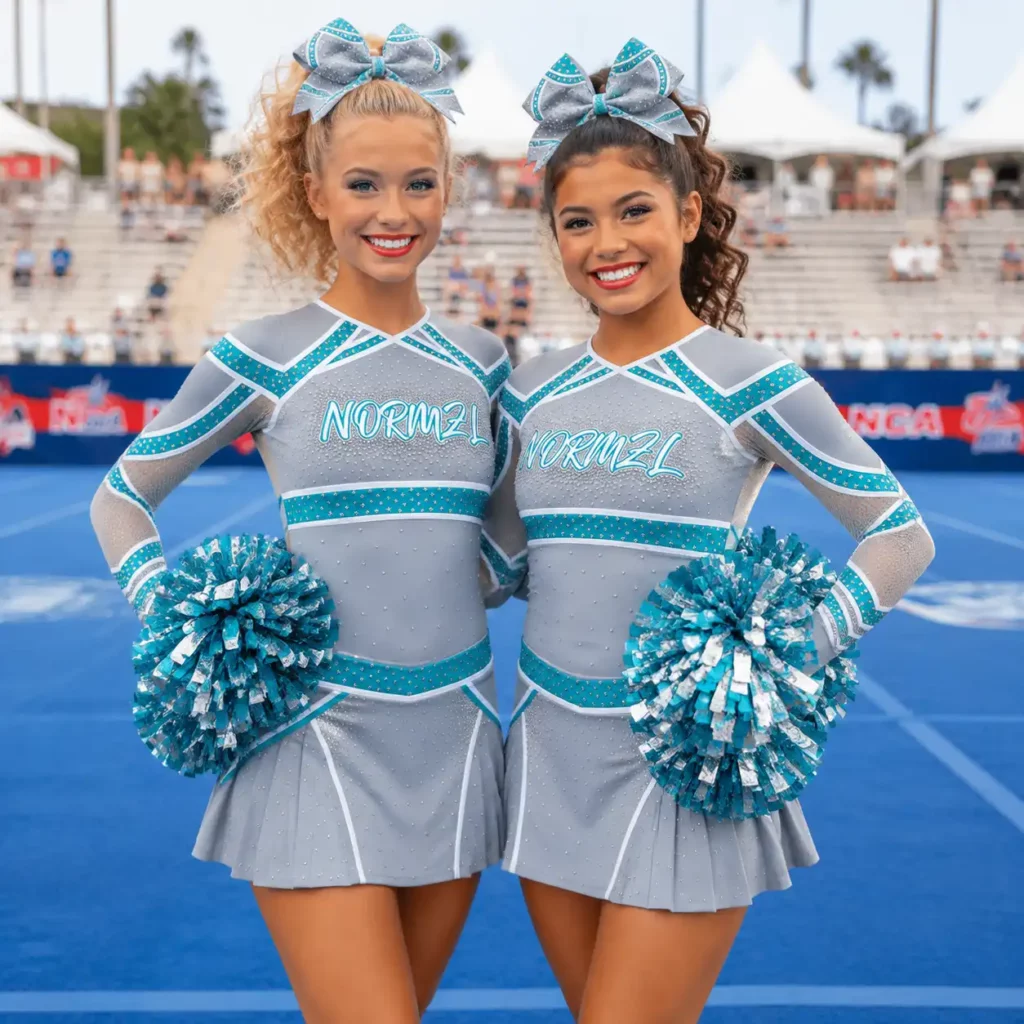
Long-sleeve top. Sleeves running the full arm length, suitable for outdoor events or cooler venues. The key construction point is the underarm: a long sleeve not cut with adequate range of motion will restrict overhead movement.
Tunic-length top. Longer than a standard crop top but shorter than a full-length top, typically reaching the waistband area. Provides midriff coverage while maintaining a traditional cheer silhouette with a skirt.
Uniform with integrated liner. A built-in layer underneath the visible top, providing extra coverage without the bulk and shifting of a separate garment. Bodysuits and liners designed for this purpose (Bodysuits & Liners) keep everything in place during dynamic movement.
Mesh layered over opaque fabric. For designs incorporating mesh panels, layering opaque fabric beneath the mesh provides coverage while maintaining the layered look. The opaque layer color should be confirmed against the actual uniform fabric at sample stage.
These options can be combined. A team might specify a high-neck, long-sleeve top with a tunic length and an integrated liner — the conversation is about which combination meets coverage requirements while keeping the uniform functional.
Skirts, Shorts, and Bottom Coverage
Bottom coverage involves the same balance between coverage and movement:
Skirt length and movement. A skirt’s length directly affects how it behaves during motion. Most teams targeting modest coverage land on a skirt that reaches mid-thigh to just above the knee when standing — long enough to cover adequately, short enough to kick and jump without catching the hem.
Built-in shorts (safety shorts). Compression-style shorts sewn into or worn under the skirt, providing security during inversions and stunts without a visible separate garment. When integrated at the pattern stage, they do not shift during performance.
Skort. A skirt with attached shorts underneath, providing a skirt’s look with shorts’ coverage. Similar to built-in shorts but with a more defined outer skirt layer.
Compression shorts. Worn under the skirt as a separate layer. These work but are less clean than integrated options because a separate waistband creates bulk.
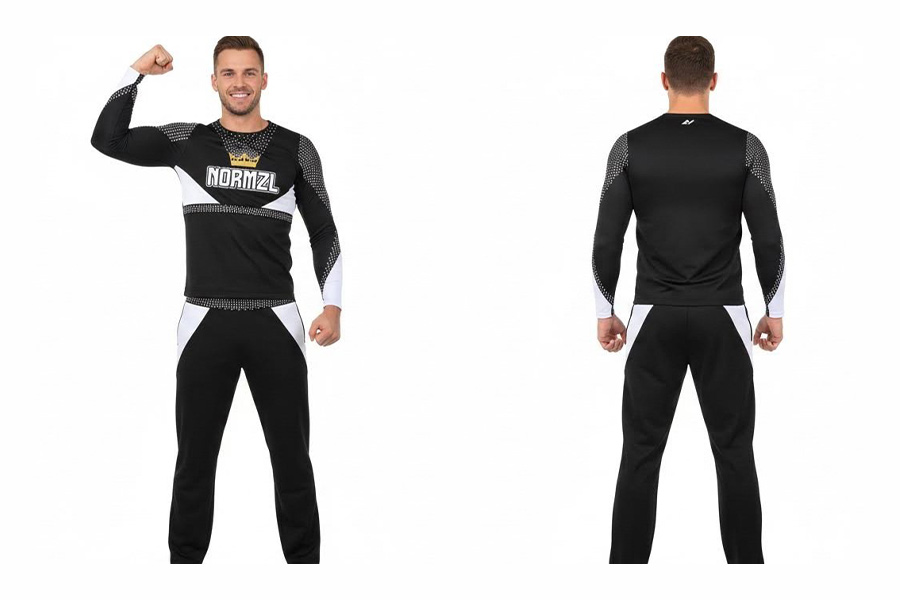
Leggings or athletic pants. For full leg coverage, compression leggings or athletic pants paired with a tunic or full-length top eliminate exposure concerns. Common for youth programs, religious requirements, or outdoor sideline cheer. The waistband connection with the top needs to be designed so the two pieces move together.
The right option depends on the actual coverage requirement. Built-in shorts address security during stunts; longer skirts address visual coverage; leggings or pants address full-leg requirements.
How to Preserve Full Mobility
Coverage additions only work if the athlete can still perform. Here are the construction points that determine whether a covered uniform performs as well as a traditional one:
Shoulder and arm-raise space. A higher neckline or longer sleeve must not restrict overhead arm movement. The armhole needs to be cut so the arm can reach fully overhead without the top riding up. This is a pattern decision, not something the athlete adapts to. A raglan sleeve or added ease at the shoulder can help maintain range of motion.
Underarm structure. Where the sleeve meets the body is the highest-stress area for arm movement. A long-sleeve top with a poorly placed underarm seam will bind when the arm reaches overhead — movements constant in cheer. Measuring against our Size Chart & Measure Guide at the ordering stage helps confirm the right fit through the shoulder and arm.
Waist stretch and top length. If the top needs to stay down during motion, the waistband connection needs stretch or a secure fit. A tunic or full-length top that rides up during arm raises defeats its coverage purpose. Stretch panels at the sides or a slight flare at the hem allow the top to move with the body.
Skirt hem and kick clearance. The skirt needs enough opening at the hem for a full kick without resistance. A skirt too narrow restricts the kick; one too wide creates excess fabric that can catch during stunts. The balance depends on skirt length and the athlete’s leg length, which is why samples are tested on actual movement.
Thigh activity space. Built-in shorts or leggings need room for the thigh to expand during squats and jumps. The fit target is snug enough to stay in place, with enough stretch to move through the full range.
Garment stability during tumbling. A top that shifts or a skirt that rides up during a tumbling pass means the athlete adjusts her uniform between elements. Stability comes from the waistband connection, the skirt’s weight distribution, and the top’s length relative to the torso.
Design Ideas That Avoid a Heavy or Conservative Look
More coverage does not have to mean a heavier or visually flat uniform. Design techniques that maintain visual interest:
Side color panels. A contrasting color panel along the side of the top or skirt creates a visual line that breaks up the fabric mass. One of the simplest ways to keep a covered uniform from looking boxy.
Concentrate sparkle on shoulders and chest. When coverage increases, visual weight can shift downward. Placing rhinestones or metallic detail on the upper shoulder and chest area draws the eye up and gives the uniform presence from the stands.
Opaque mesh for layering effect. Opaque mesh as an overlay creates depth without the coverage reduction of sheer mesh. The layering effect is visual rather than structural, adding design interest without weight.
Metallic accents, piping, and logos. Clean lines of metallic piping or contrasting trim along the neckline, sleeve, or hem add visual interest without extra fabric layers. These details work well on high-neckline or long-sleeve tops where trim has more length to follow.
Avoid adding weight through excessive layers. Coverage through design intelligence, not stacking fabric. A single well-constructed layer with the right cut performs better than two lighter layers that shift against each other. When a liner is needed, integrate it into the top’s pattern.
Sample Approval Tests
Before approving a design for production, run it through the movements the athletes will actually perform:
Arm raise. Both arms fully overhead. Does the top ride up? Does the neckline pull? Does the sleeve bind?
Deep squat. Full squat with arms extended. Does the skirt provide coverage from all angles? Does the top stay in place?
Split. Front split on the floor. Does the skirt hem open adequately? Do built-in shorts stay in position?
Jump. Full toe-touch or spread-eagle. Does the skirt flip excessively? Is the midriff still covered at peak?
Tumbling pass. A series of back handsprings. Does anything shift, ride up, or bunch? Does the neckline stay put during inversions?
Stunting simulation. A basket toss or pyramid hold. Does the uniform stay in place when airborne? Is coverage maintained from below?
Transparency check under strong light. Hold fabric under bright gym fluorescents or outdoor sunlight. Are there sheer areas not visible under normal lighting?
If any test reveals a coverage or mobility issue, the design goes back to the pattern stage — not to a quick fix.
Frequently Asked Questions
Can modest cheer uniforms still be competition-ready?
Yes. Coverage and competition readiness are not in conflict as long as the design accounts for range of motion at the pattern stage. A modest uniform built with the right armhole structure, stretch panels, and stable waistband performs through the same routine as a traditional cut.
What can cheerleaders wear under a uniform for more coverage?
A bodysuit or camisole liner under the top, and compression shorts under the skirt, are the most common additions. However, separate layers can shift during performance. An integrated liner built into the top at the pattern stage holds position better than a separate garment.
Are long-sleeve cheer uniforms more restrictive?
Not if the armhole and underarm are constructed correctly. Restriction in a long sleeve comes from a poorly placed seam or an armhole cut too tight, not from the sleeve length itself. A well-patterned long-sleeve top allows full overhead reach without binding.
How long should a modest cheer skirt be?
Most teams targeting modest coverage choose a skirt reaching mid-thigh to just above the knee when standing. This provides adequate coverage during jumps and stunts while allowing full kick range. The exact length should be confirmed on a moving sample, not from a size chart alone.
Final Thoughts
Coverage in a cheer uniform is achieved through specific design decisions — cut, layering, fabric selection, and structural detail — and those decisions are most effective when made before the first sample is cut. A uniform designed for coverage from the start performs better than one with coverage added afterward.
If you are ordering for a school with a dress code, a youth team with parent expectations, a program with religious or cultural requirements, or a competition squad balancing rule compliance with athlete comfort, start by writing down the specific coverage points your situation requires. With that list, a factory can build a design that hits every point without sacrificing mobility.
Create Your Team’s Championship Look