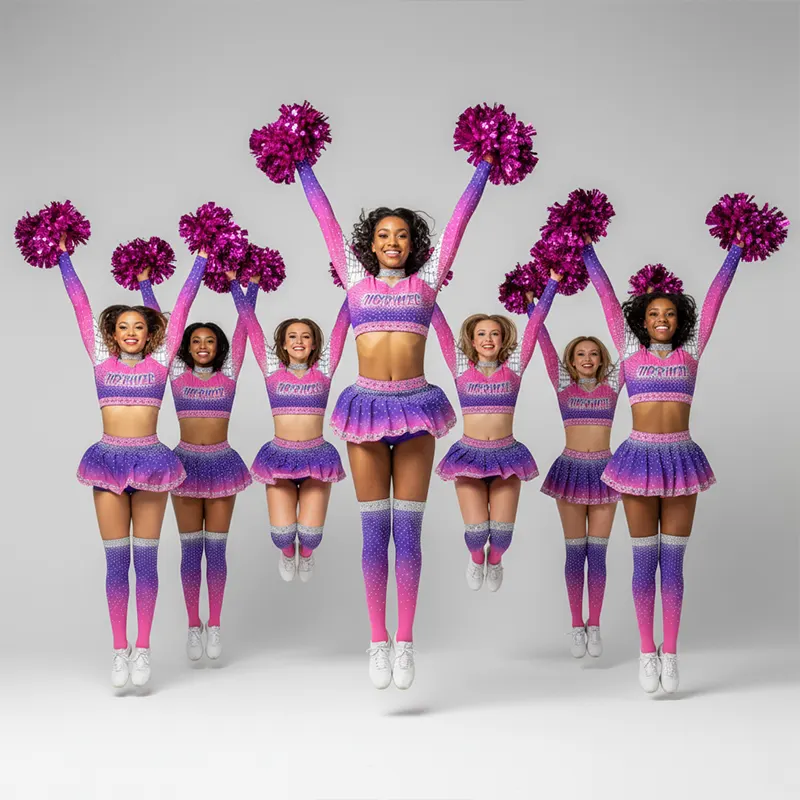






A cheer body liner is a fitted functional layer worn beneath the competition uniform, primarily for added coverage, warmth, and completing the overall look. For coaches and purchasers ordering team uniforms, the liner is a specification decision that affects how the uniform fits, what it reveals during motion, and whether the whole roster reads as one unit under arena lighting.

What Is a Cheer Body Liner?
A body liner is a close-fitting garment constructed to sit between the performer’s skin and the outer uniform. It is typically a sleeveless or sleeved torso piece covering the trunk and, depending on the style, extending to the arms or neck. Its job is functional first: it fills any gap between the uniform’s neckline, armholes, or hemline and the performer’s body, so the uniform looks finished from every angle and during every movement.
The structure typically includes a front and back panel sewn into a single shell, with arm openings or sleeves set in at the shoulder. Some builds add a mock neck, a keyhole opening, or a low back to match the uniform’s cut. Seams are placed to stay hidden, and the fabric is chosen for stretch and recovery rather than compression.
Difference from a regular base layer. A general-purpose base layer is designed for thermal regulation or muscle support and is not cut to interact with a specific outer garment. A cheerleading body liner is cut to the competition uniform’s dimensions — its neckline, armhole depth, and torso length are set so the liner stays concealed under the uniform’s specific cut, and its fabric weight is light enough that it does not change how the outer uniform drapes.
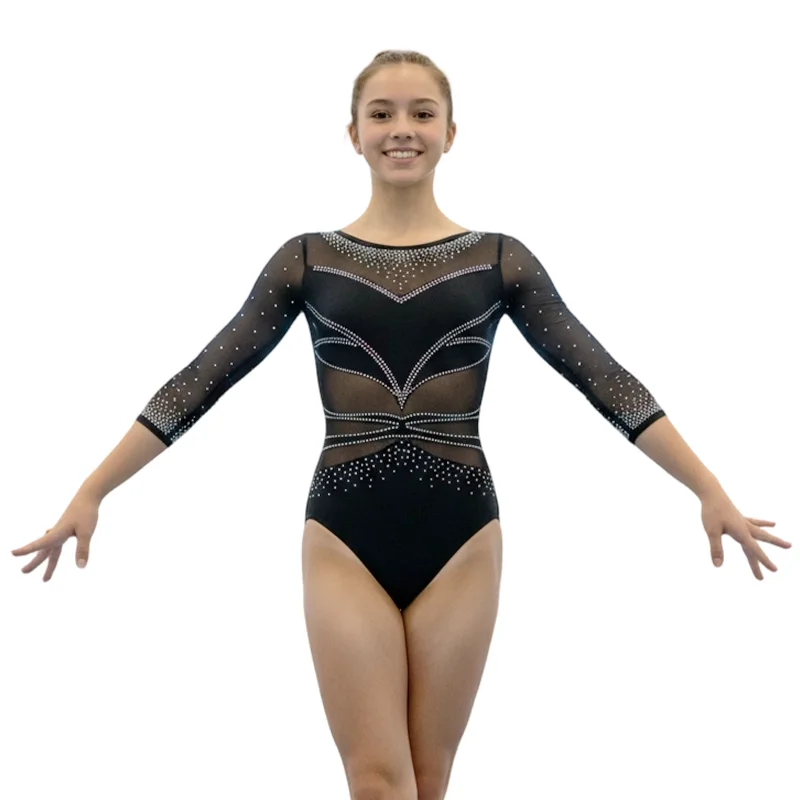
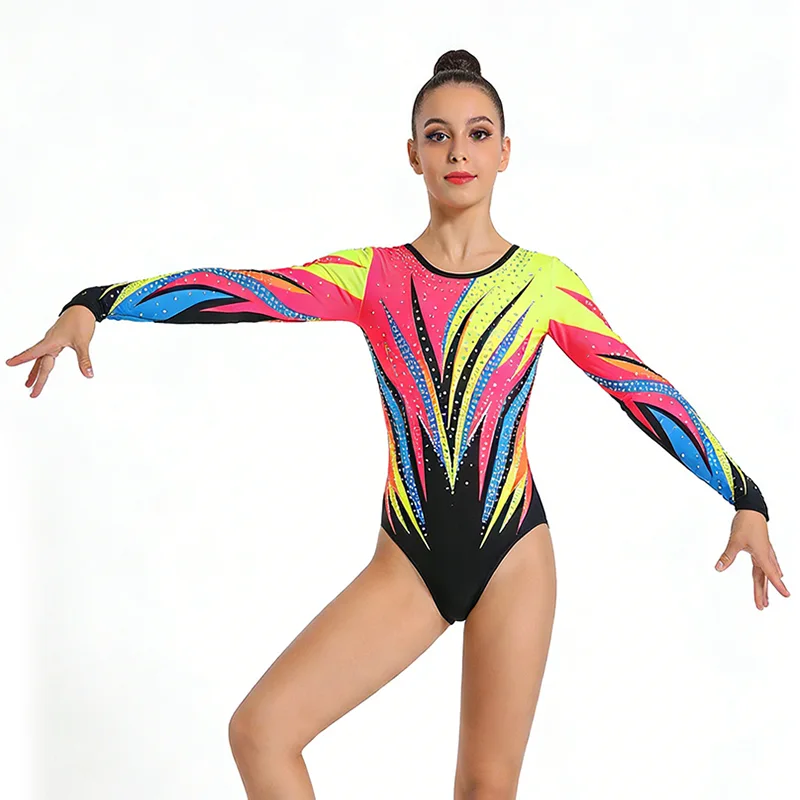
Difference from a cheer bodysuit. The terms overlap in casual use, but in production they describe different things. A cheer bodysuit is a standalone performance garment with its own decoration and design intent. A body liner is an under-layer not meant to be seen on its own; its color and finish are chosen to disappear under the uniform or create a deliberate illusion effect at the edges. A bodysuit can function as a liner when the uniform is designed for it, but not every bodysuit is a liner.
Does it count as part of the competition uniform? In most programs, the body liner is treated as a uniform component rather than a separate undergarment. Competition rule bodies and school dress codes often specify coverage requirements that the liner helps the uniform meet.
When Does a Cheer Team Need a Body Liner?
Not every uniform program requires a body liner, but several common situations make one a practical specification.
Sleeveless or off-shoulder uniforms. A body liner with sleeves — even cap sleeves — fills the gap left by a sleeveless shell so the uniform has a consistent appearance across the roster under arena lighting.
School modesty and dress code requirements. Many schools set minimum coverage for necklines, midriffs, and shoulders. A body liner lets a team keep the uniform design the coach wants while meeting the administration’s rules. The National Federation of State High School Associations (NFHS) publishes spirit rules that include uniform coverage standards for member schools (NFHS Spirit Rules), and individual state associations may add their own requirements.
Cold weather outdoor events and sideline cheer. For football sideline cheer, outdoor competitions, and early-season games, a long-sleeve body liner adds a light insulating layer without the bulk of a separate warm-up top. It stays in place through cheers and jumps, unlike a separate undershirt that can ride up.
Unifying skin tone or sleeve appearance. A nude-tone or skin-matched body liner creates a uniform visual line at the arms and neckline across a roster with varying skin tones. This is common in competition cheer and is especially visible with mesh panels, open backs, or illusion necklines.
Changing the look without remaking uniforms. A body liner in a different color or sleeve length can shift the appearance of an existing uniform, updating the look without replacing the outer shell. Whether the uniform’s cut accommodates the additional layer is confirmed at the sampling stage.
For teams also ordering practice wear or sideline layers alongside competition uniforms, the Custom Cheer Apparel category covers the full range of program pieces beyond the liner itself.
Types of Cheer Body Liners
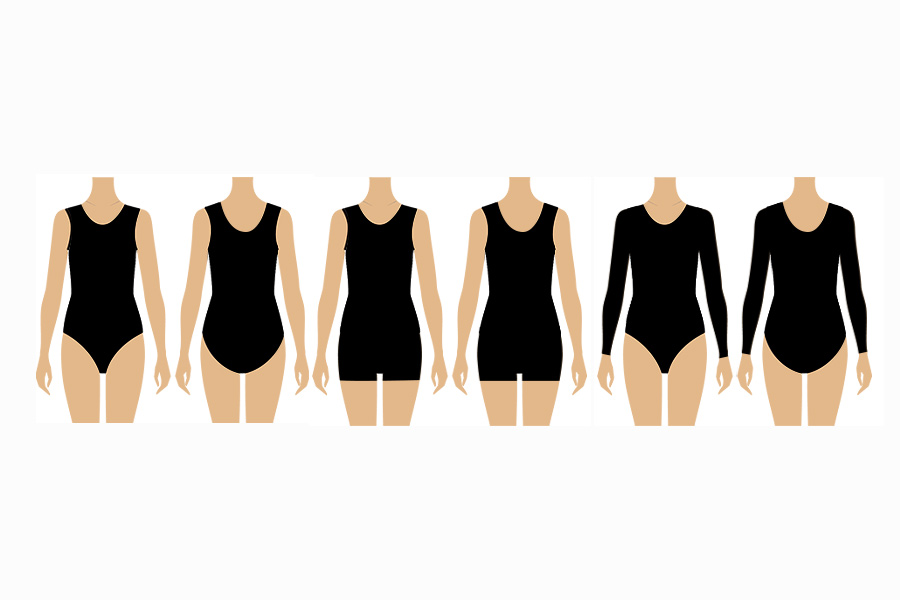
Body liners can be grouped by sleeve length, neckline treatment, and finish. Most custom programs let you combine options across these categories.
By Sleeve Length
Long-sleeve liner. Extends from shoulder to wrist. Used for cold-weather events, modesty coverage, and uniforms with high armholes. The sleeve is typically set-in or raglan to allow full arm range.
Short-sleeve liner. Covers the shoulder and upper arm, ending above the elbow. Suits mild weather and uniforms that need shoulder coverage without a full sleeve.
Sleeveless liner. A torso-only piece with finished arm edges. Used when the uniform itself has sleeves and the team needs trunk coverage only.
By Neckline Treatment
Mock-neck liner. A standing collar rising to the base of the neck, used under uniforms with high necklines or illusion panels to prevent the liner’s edge from peeking above the uniform.
Nude illusion liner. Cut in a skin-tone shade with mesh or sheer panels at the neckline, shoulders, or back. Creates the visual effect of bare skin while providing actual coverage, commonly paired with rhinestone or sequin uniforms for a “floating” decoration effect.
By Finish
Decorated liner. Includes rhinestones, sequin trim, or sublimated patterns visible through mesh or open areas of the uniform, placed to align with the uniform’s design.
Plain performance liner. A solid-color, undecorated liner in a matte finish — the most common type, used when the liner’s role is purely functional.
For teams exploring bodysuit options that cross over between liner and standalone use, the Bodysuits & Liners category shows the builds currently available.
How Should a Cheer Body Liner Fit?
A body liner should be fitted but not compressing. Its fit affects both comfort and how the outer uniform hangs.
Fitted, not tight. The liner should follow the body’s shape without pulling or leaving marks. If the fabric distorts the uniform’s drape, the size is too small; if fabric pools or wrinkles, it is too large.
No fabric bunching at underarms. Excess material at the armhole creates bulk that shows through the uniform and restricts movement. The armhole should sit close to the body without digging in.
Cuffs should not slide. Sleeve cuffs on a long-sleeve liner should stay at the wrist through arm raises, tumbling, and jumps. If the cuff rides up, the sleeve length or cuff construction needs adjustment.
Torso length must accommodate arm raises and tumbling. This is the most common fit issue with one-piece body liners. When the performer raises both arms overhead or extends into a tumbling pass, the torso stretches and pulls the liner upward. If the torso measurement is too short, the liner rides up at the waist or pulls the neckline out of position. Torso length is confirmed during sampling.
No visible edges beyond the uniform. The liner’s neckline, hem, and sleeve edges should sit inside the uniform’s edges when the performer is in motion.
These fit points are checked during the sample stage. The Cheer Uniform Size Chart & Measure Guide covers measurement in detail.
How to Measure for a Body Liner
For a custom order, the following measurements are typically taken per performer.
Bust/chest. Measured at the fullest point, tape level around the body. Determines the width of the front and back panels.
Waist. At the natural waistline, the narrowest point of the torso. Sets the waist shaping.
Hip. At the fullest point. Relevant for liners that extend below the waist or for one-piece builds.
Torso loop (girth). This is the critical measurement for one-piece body liners. The tape runs from the top of the shoulder, down through the crotch, and back up to the same shoulder point. It captures the total torso length the liner must cover. If short, the liner rides up during arm raises; if long, it sags or bunches at the waist. This is the measurement most often missed in standard sizing and the one that causes the most fit problems when skipped.
Arm length. From the shoulder point to the wrist bone, arm slightly bent. Sets the sleeve length.
Upper-arm circumference. At the widest point of the upper arm. Determines whether the sleeve has enough room without being loose.
For one-piece liners, the torso loop is non-negotiable. Every other measurement can be adjusted within a size range, but the torso length is built into the pattern and cannot be altered after cutting. Teams should take torso-loop measurements for every member.
Choosing the Right Color and Fabric
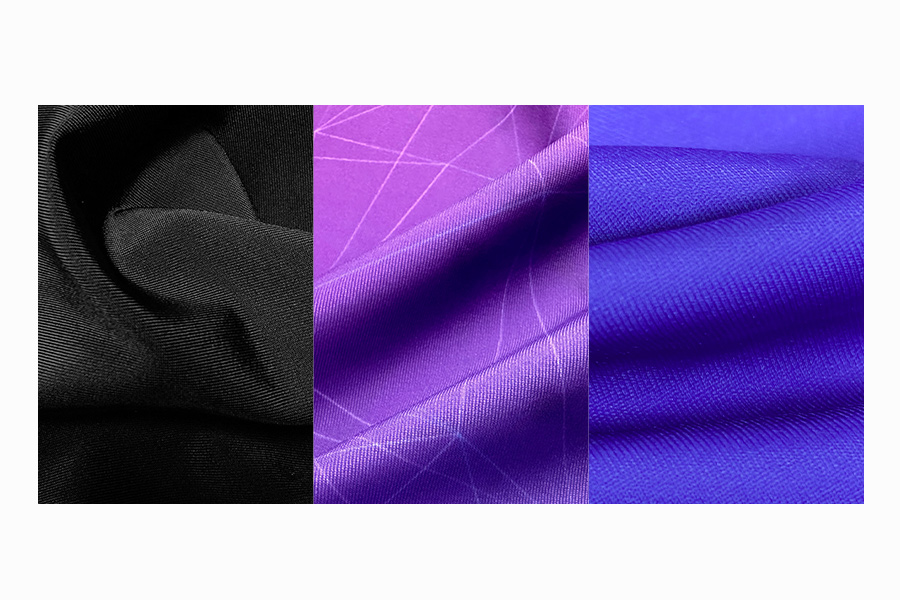
Color options. The three standard approaches are: matching the performer’s skin tone for an illusion effect, matching the team color for a tonal look, or using a contrast color when the uniform design calls for a visible liner. Skin-tone matching requires physical swatch comparison rather than screen color.
Fabric properties. A body liner fabric needs four key properties:
- Four-way stretch allows the liner to move with the body without restricting motion or losing shape.
- Breathability prevents heat buildup under the uniform.
- Moisture-wicking moves perspiration away from the skin so the liner dries between rotations.
- Opacity ensures the liner does not become sheer when stretched.
The specific fabric weight and composition depend on the liner’s role and is confirmed at quote.
Pairing with decorated uniforms. Rhinestone and sequin uniforms require a liner fabric smooth enough that stones do not catch during motion, and opaque enough that the decoration’s backing does not show through. For mesh uniforms, the liner color visible through the mesh becomes part of the design, and the fabric weight should hold its shape under the mesh panel. Teams ordering Dance & Majorette Teams uniforms with mesh or illusion panels face the same liner coordination questions.
Body Liner Matching Checklist
Before a body liner order goes into production, run through these checks against the actual uniform or a fit sample:
Neckline hidden. The liner’s neckline does not show above or below the uniform’s neckline when the performer stands, bends, and raises arms.
Sleeve type coordinated. The liner’s sleeve length and the uniform’s armhole cut work together — no bare skin showing where the uniform expects coverage, no liner sleeve bunching inside a uniform sleeve.
Color matched. The liner color has been checked against the uniform fabric in the actual performance lighting, not just on a screen.
No exposure or rolling after arm raise. With both arms overhead, the liner does not ride up at the waist, and no skin shows between the liner and the uniform’s hem.
Rhinestone placement not irritating skin. If the uniform has interior rhinestone or sequin work, the liner provides a smooth barrier between the decoration and the performer’s skin.
Does not interfere with zipper or closure. The liner does not bunch or catch when the uniform’s zipper, snap, or hook closure is fastened.
Frequently Asked Questions
What is a body liner in cheer?
A body liner is a fitted garment worn under the cheer uniform to provide coverage, light warmth, and a finished appearance. It is cut to the uniform’s dimensions so its edges stay hidden, and its fabric is chosen for stretch, breathability, and opacity rather than compression.
Do cheerleaders wear bodysuits under their uniforms?
Yes, in many programs. A bodysuit-style liner — a one-piece garment with snaps or a pull-on construction — is common for competition cheer because it stays in place through tumbling and jumps. Whether the team uses a bodysuit or a separate top-and-short liner depends on the uniform cut and the coverage needed.
Should a body liner match the uniform?
It depends on the design intent. For most programs, the liner matches the uniform color or the performer’s skin tone so it stays visually invisible. For uniforms designed with a visible liner at the neckline, sleeves, or mesh panels, the liner color is chosen as a deliberate design element and confirmed on a sample.
Can a body liner provide extra warmth?
A body liner adds a light insulating layer, enough for cool sideline conditions and early-season outdoor events. It is not a replacement for a warm-up jacket in cold weather, but it reduces the chill under the uniform during moderate cold. How much warmth it provides depends on the fabric weight, confirmed at quote.
How tight should a cheer body liner be?
Fitted but not compressing. The liner should follow the body’s shape without pulling, leaving marks, or distorting the uniform’s drape. If the performer can feel the liner restricting movement or the fabric stretches enough to change how the uniform hangs, the size or pattern needs adjustment.
Final Thoughts
A body liner is a small specification with an outsized effect on how a cheer uniform looks and performs. The right liner makes the uniform read as one clean piece, keeps the roster covered and comfortable through motion, and can extend the life of a uniform design by refreshing its look season to season. The wrong liner — poorly measured, wrong color, wrong fabric — shows up as bunching, exposure, and discomfort on the mat.
Before ordering, confirm the type of liner your uniform needs, take full measurements including the torso loop for every team member, and check the liner color against the uniform fabric in your actual performance lighting. A fit sample worn under the uniform settles any remaining questions before production begins.
Create Your Team’s Championship Look