




Coed cheer programs face a practical question a buying guide rarely settles: do the men on the team wear men’s cheer uniforms, or the same unisex cut as everyone else? The honest answer depends on the athletes, the chosen style, and the look the team wants. This comparison explains what to review when deciding between the two, and what a coed team should confirm before placing a custom order.
Decide men’s or unisex per style and per athlete, comparing the actual pattern, sample, and try-on, not a label or an assumption about gender.
What Is a Men’s Cheer Uniform?
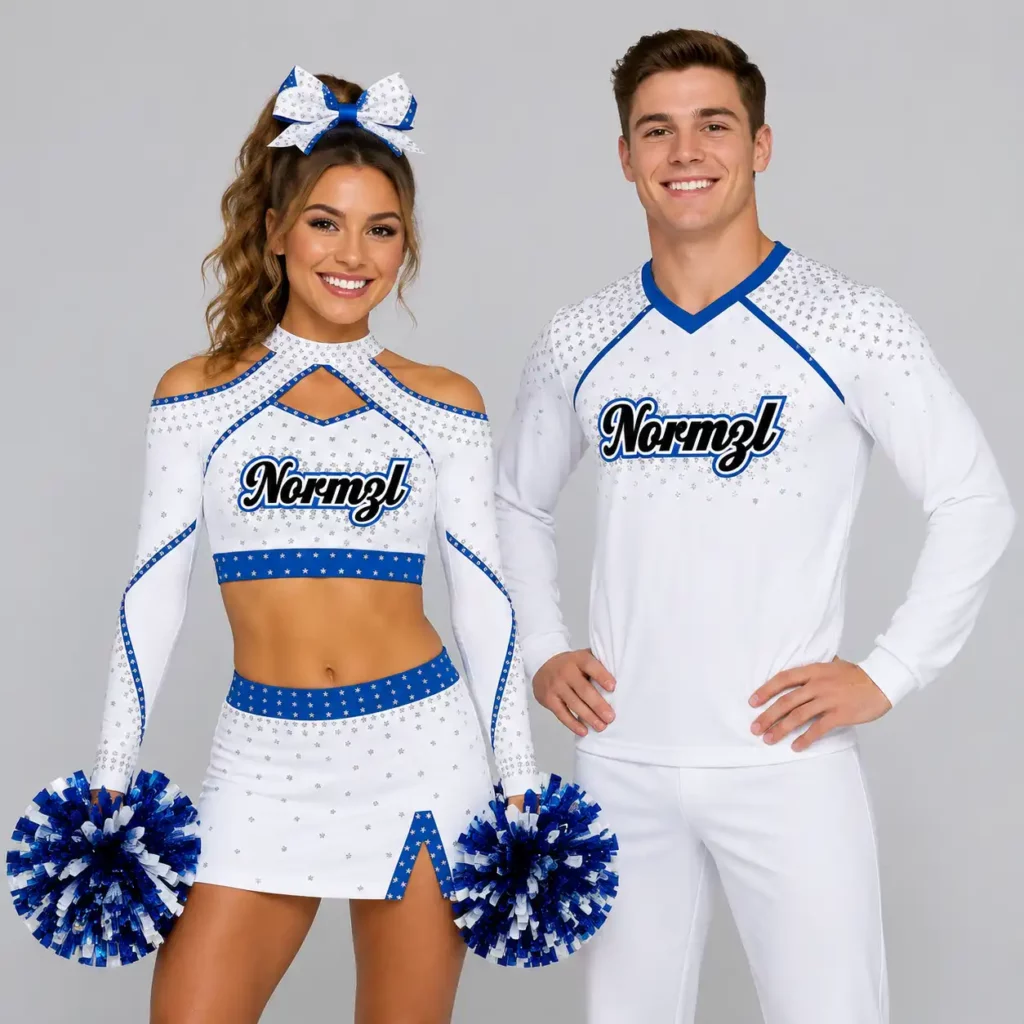
A men’s cheer uniform is marketed or developed for male athletes and may use a men’s-specific or athletic block. A unisex uniform is intended for wear across a broader group, but the exact pattern and proportions still depend on the supplier and style. The product specification, not the label alone, confirms the actual difference. The key distinction is pattern, not size.
Which one fits a team is a design decision, and the same program can reasonably use both. A men’s cheer uniform scaled from a general block and a men’s-specific cut can share a size label and still sit differently on the body. Record which athletes wear which pattern, so the order entry matches the roster.
A men’s-specific pattern and a unisex pattern may use different proportions, but the exact differences depend on the supplier and the style. NORMZL describes men’s pieces as being patterned for an athletic build. That is a design direction stated on the site, not a fixed measurement rule for every garment the company carries. Buyers should compare the actual specification and the sample, not the category name. Ask which block pattern a listed style uses, then read the numbers behind the name.
A coed program may use both patterns within one coordinated order when different athletes need different fit directions. Athletes assigned to the men’s-specific style can wear that cut, while others use the selected unisex option. The shared design keeps the group reading as one team on the floor.
How Does a Men’s Fit Differ from Unisex?
The question a coed program needs to answer is not which option is objectively better, but which specification fits the athletes and the design. The table below lists the review points to compare across any men’s-specific and unisex style under consideration. Fill each cell against the actual garment specification, the sample, or the try-on result you have, not against a general assumption about either category. Keep the finished table with the sample, so a later size question traces to an observed result instead of a recollection.
These are sourcing distinctions, not universal measurement rules. Exact shoulder, chest, length, rise, and inseam differences must be confirmed for the selected style.
| Review Point | Men’s-Specific Style | Unisex Style | How to Verify |
|---|---|---|---|
| Pattern basis | Positioned around an athletic fit | Intended for broader shared use | Ask which block the style uses |
| Garment proportions | No universal fixed measurements | No universal fixed measurements | Compare garment specifications |
| Size labels | Follow the style’s own chart | Follow the style’s own chart | Do not transfer sizes directly |
| Movement fit | Evaluate on the intended athlete | Evaluate on the intended athlete | Use a controlled try-on |
| Team appearance | Can match coordinated team colors and graphics | Can use the shared team design | Review the digital proof |
| Best choice | Depends on athlete and style | Depends on athlete and style | Confirm per roster entry |
The point of this framing is that the difference between the two categories is defined per style, not per label. Two brands can call a top men’s and produce quite different proportions, and one brand’s unisex cut may fit a given athlete better than its own men’s cut. The comparison earns its value only when it is filled with the actual numbers and observed results. Where two styles share a label, the sample and the spec, not the name, settle which one fits. When comparing men’s cheer uniforms with unisex options, treat the size chart, garment specification, and try-on result as the deciding evidence.
Unleash Your Team’s Championship Look
Which Fit Areas Can Affect Movement?
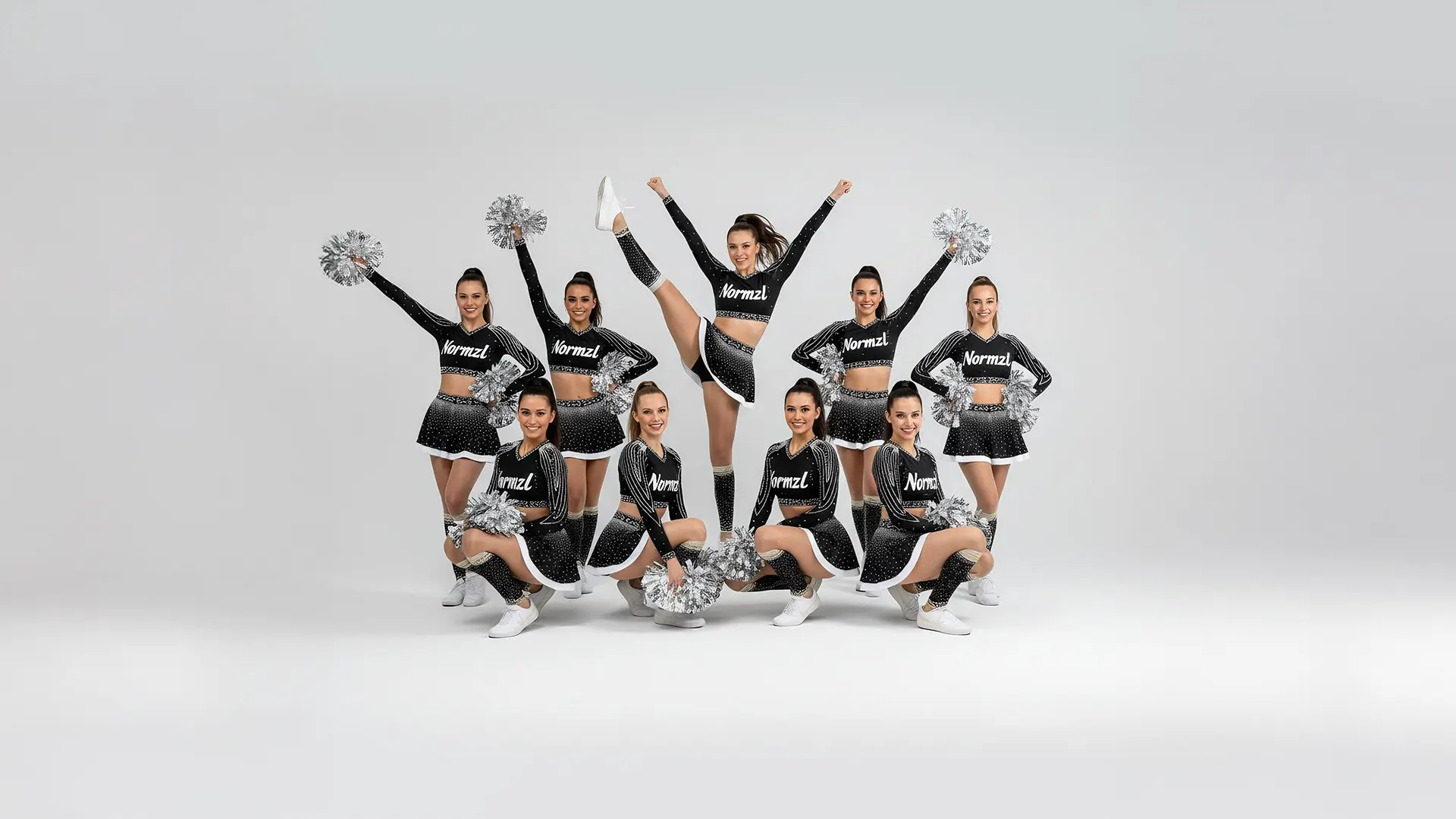
Cheer demands reach, jumps, tumbling, and stunting, so fit is a movement question, not only a visual one. The areas worth checking include the shoulders, chest, torso length, waist, rise, hips, inseam, and overall garment length. These are the points where a pattern either stays out of the way of a routine or quietly works against it. This section names the areas to inspect, not fixed measurements, because the numbers belong to the style and the athlete. Mark any area that only restricts during one specific move, since a routine stresses a garment unevenly.
When evaluating a fit, move rather than stand. Begin with controlled, low-risk movements that reflect the garment’s intended use, such as raising the arms, bending, and checking the range of motion. More demanding movement checks should follow the team’s normal coaching and safety procedures. A shoulder seam that binds or a hem that lifts, shifts, or fails to return to position are fit clues the eye misses in a mirror. Treat every observation as specific to the garment in front of you.
Write down which move exposed which limit. That record turns a subjective try-on into a concrete revision request the supplier can act on, and it keeps the next sample honest to the same test. Send that note in the same revision round as the fitting photos.
How Should Tops, Shorts, and Pants Be Selected?
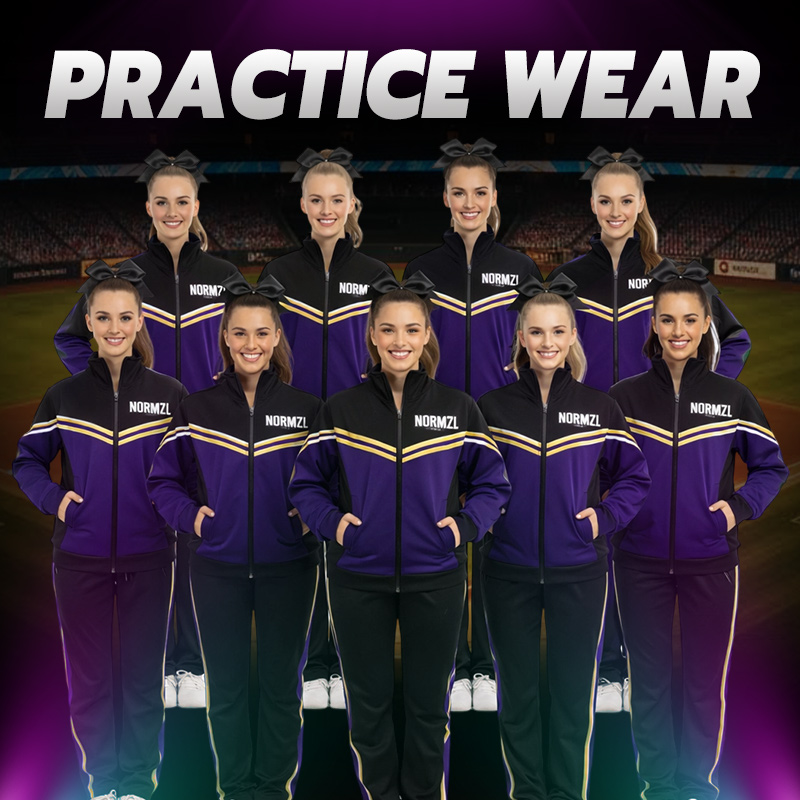
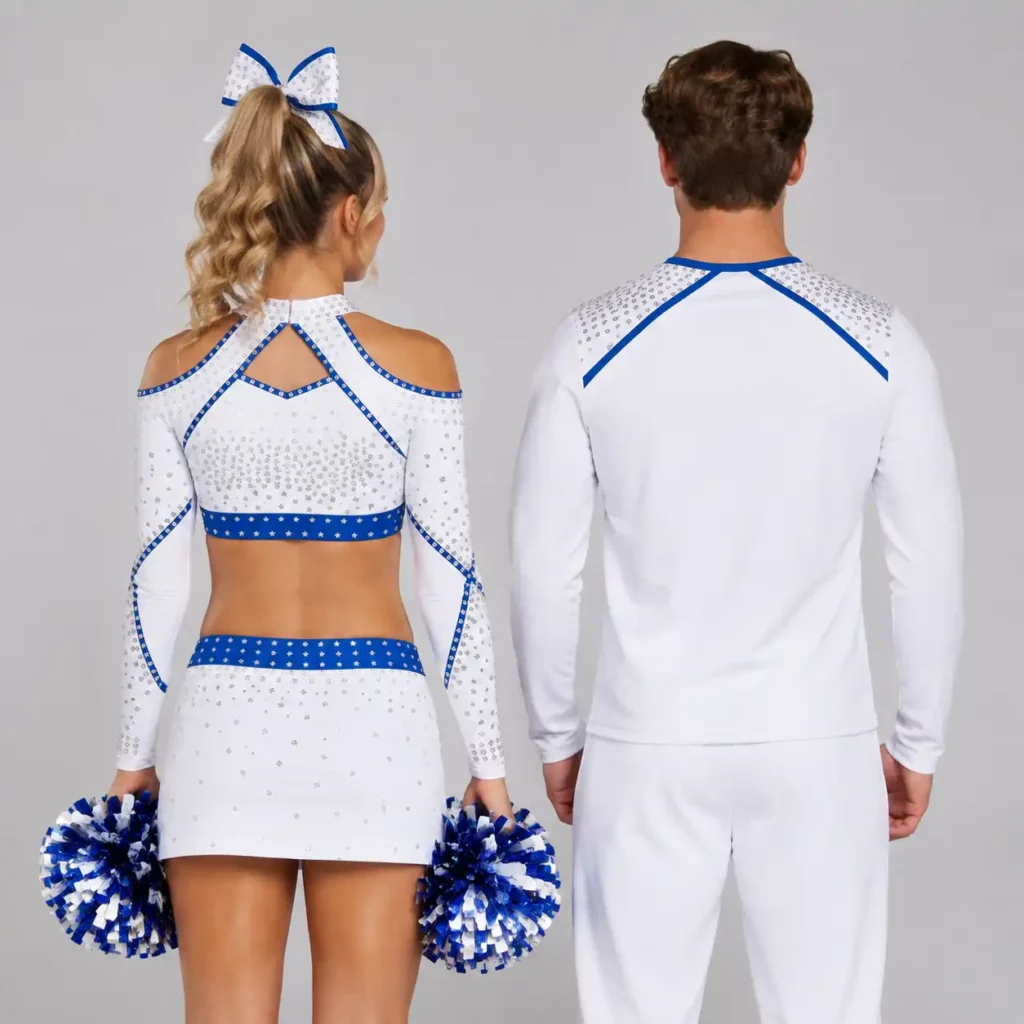
Selection follows use, not gender assumptions. Within NORMZL’s listed range of men’s cheer uniforms, teams choose among tops, shells, shorts, long pants, practice wear, and complete sets. Choose shorts, pants, tops, or shells according to the program’s coverage requirements, performance setting, and approved team design. Let each athlete’s fit need follow from that, not from a guess about who needs what.
If a sample is available, fit it on the intended athlete before you trust any size label. Practice pieces and competition pieces can differ on purpose, as long as each still serves the same team identity. Write the intended use beside each piece on the order sheet.
Different athletes may need different garment combinations within the same visual system. Record the selected top, shorts, pants, shell, or other approved piece for each roster entry rather than assigning garments from gender or team role alone. Build the order from the garments the site actually carries, and start from the men’s cheer apparel range to see what is offered before deciding what each athlete wears. Note coverage and modesty requirements for each garment before choosing a silhouette. Confirm whether each selected piece is available in the youth and adult size ranges required by the roster.
How Do Fabrics and Construction Aid Movement?
Fit and fabric work together. A stretch material that recovers its shape lets a garment move with an athlete instead of pulling against them, which is why performance stretch fabrics appear often in cheer apparel. Fabric stretch, panel placement, and seam position can affect how a garment feels in motion. Their actual effect must be checked on the selected style or sample rather than assumed from the material name. Describe these as the roles they play, not as guarantees attached to a specific piece.
When comparing fabric options with a supplier, describe the movement problem rather than the fabric answer. A message that opens with “the hem lifts on overhead reach” invites a different response than one that opens by demanding a four-way stretch fabric. The first asks a manufacturer to solve for your routine; the second asks them to quote a spec that may or may not fit it.
How Can Men’s and Women’s Uniforms Look Coordinated?
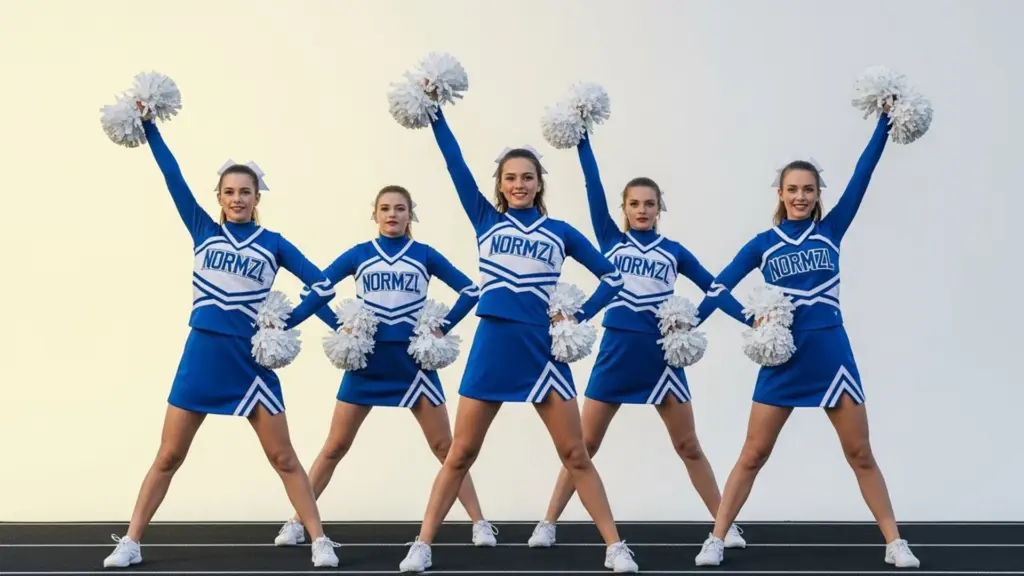
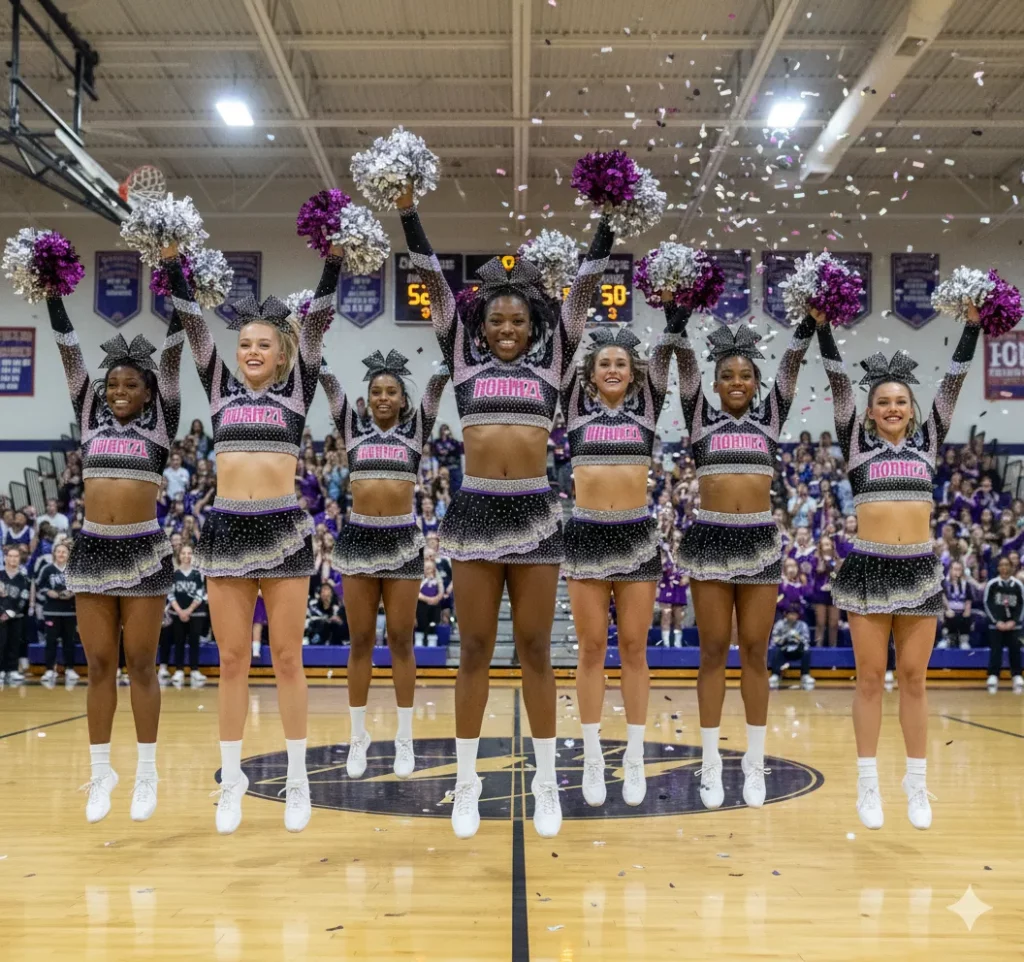
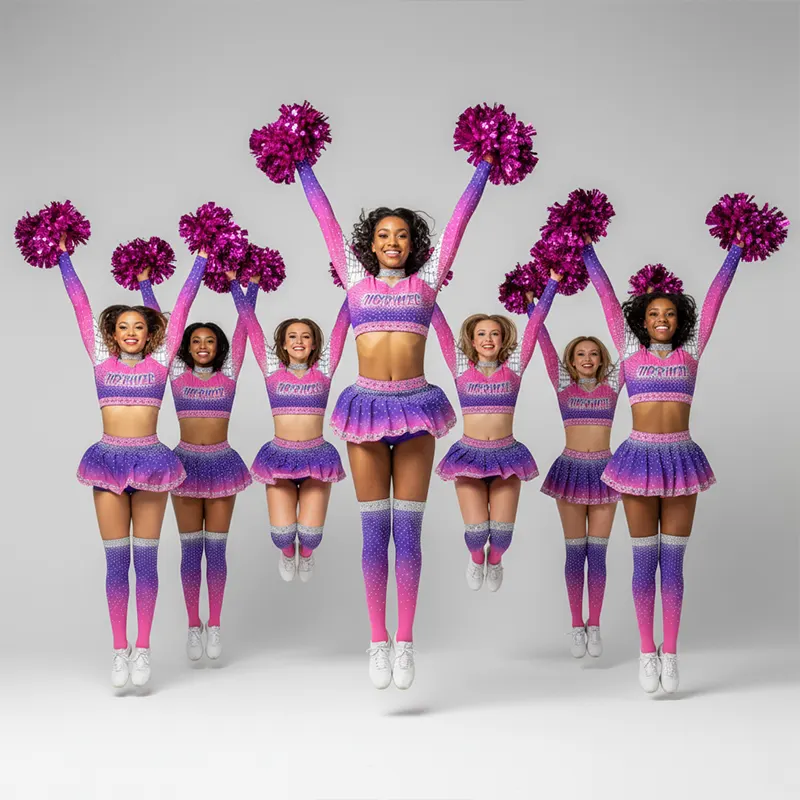
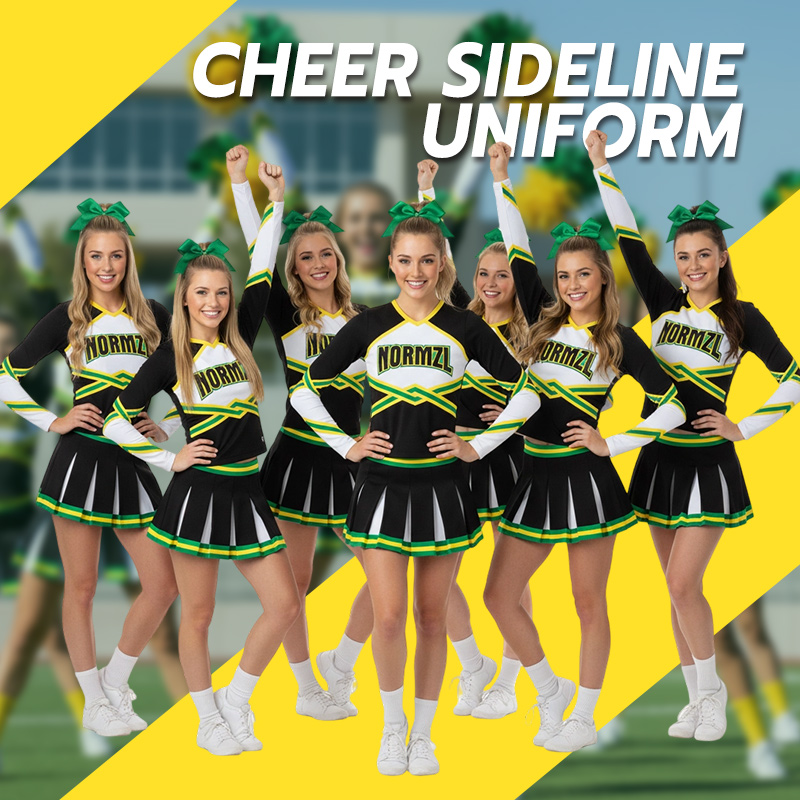
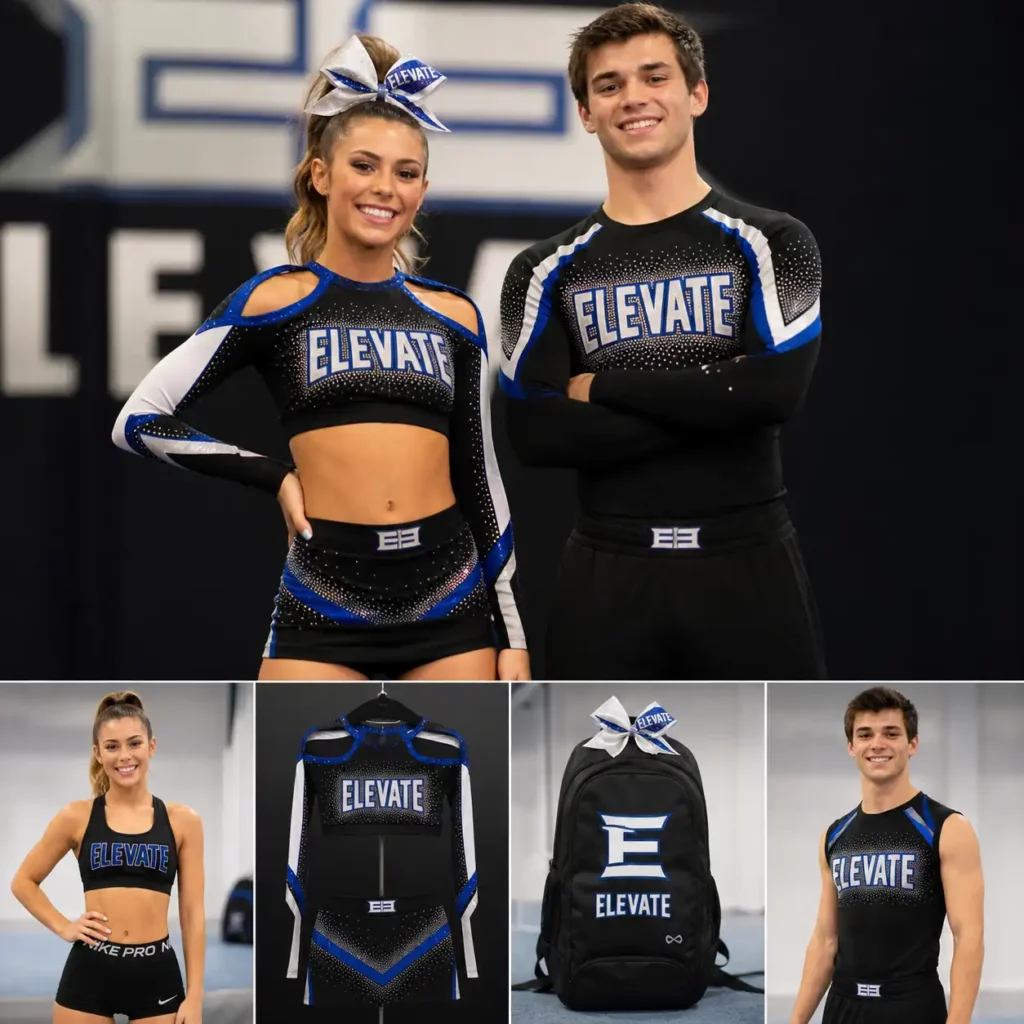
A coed team can keep one visual identity while wearing different patterns. Coordination comes from shared color, logo, graphic language, and trim, not from forcing everyone into the same cut. A men’s top and a women’s top can carry the same palette, the same wordmark, and the same accent detail while being shaped differently underneath.
A coordinated team appearance does not require every athlete to wear an identical pattern. Shared colors, logos, graphics, and trim can connect garments with different fit structures. Write the shared elements into one brief so every garment order references the same palette and trim. Agree the trim and font once, then reuse them so practice and competition sets stay linked.
Lock the visual system first, then let each athlete’s fit follow within it. Where cuts diverge for fit reasons, keep the graphic treatment aligned. Where fabric has to change for a practice piece, keep the trim consistent. For a broader view of keeping pieces consistent across a program, the guide to building a complete cheerleading apparel collection covers coordinating uniforms, warm-ups, and practice wear under one identity. Photograph the mixed lineup from the audience side before final sign-off, since the floor view is the one that matters.
What Should a Coed Team Confirm Before Ordering?
Before a quote, gather the facts a supplier needs to make a mixed order clean. Confirm the number of athletes assigned to each selected style, size range, and garment combination. Keep the athlete’s name or roster ID attached to the chosen fit so the supplier does not have to infer garment type from gender. Note the colors and logo, the sizing data, the use cases such as competition or practice, and the delivery requirements.
Add the rules of your specific program or event, because apparel questions often trace back to them. If USA Cheer rules apply to the team’s program or event, review the current published requirements. Other organizers may use different rules. Do not assume that any uniform, including a NORMZL uniform, automatically complies with every competition or program requirement. Collect fit notes for each selected style in one place, so the supplier reads a single instruction rather than several.
Prepare that information and send it with your preferred fit direction. If you are still comparing suppliers on how they handle coed programs, this overview of how to choose custom cheer uniform suppliers outlines the questions worth asking. When your roster and requirements are ready, send the coed roster, preferred tops and bottoms, colors, logo, and fit notes to NORMZL to discuss coordinated men’s and women’s cheer apparel.
Frequently Asked Questions About Cheer Uniform Fits
What do male cheerleaders wear?
Male cheerleaders typically wear tops or shells with shorts or long pants, matched to the routine, venue, and team colors. Some programs put men in a men’s-specific cut, others in the same unisex garment sized correctly. The right choice depends on the athletes and the style, so confirm the fit direction against the specific uniform rather than a category label.
Are men’s cheer uniforms different from unisex uniforms?
They may differ in pattern basis and proportions, but the difference is not universal. A men’s-specific style may use an athletic block, while a unisex style may use a broader shared fit. Compare the selected style’s measurements, size chart, sample, or try-on result before deciding.
Can men’s and women’s cheer uniforms use matching designs?
Yes. A coed team can share color, logo, graphic language, and trim while wearing different underlying patterns. Coordination reads from a distance through the visual system, not through an identical cut. Men’s and women’s pieces can look unified even when shaped differently for fit and movement.
Can men’s cheer uniforms include shorts or pants?
Yes. Men’s cheer ranges commonly include tops, shells, shorts, long pants, practice wear, and complete sets. Which pieces a team selects follows the coverage requirement, the performance setting, and the approved team design. The garment list is then built around how and where the program performs, not around a fixed template.
What information is needed for a custom men’s cheer uniform quote?
Send the number of athletes assigned to each selected style, the desired garment combination, colors and logo, sizing data, use cases, and delivery needs. Include your program or event rules, which you verify against current guidance. That package lets a supplier propose a coordinated fit across the roster and quote accurately, instead of guessing at requirements.
Final Thoughts
Neither fit is the default answer for every coed team. Weigh the pattern difference against real bodies in motion, and lock a shared visual system. Then confirm the roster, garments, and event rules before ordering, so men’s and women’s cheer apparel works together in both fit and design. Re-check the plan after a try-on, because a fit that reads well on paper can shift on a moving athlete.