



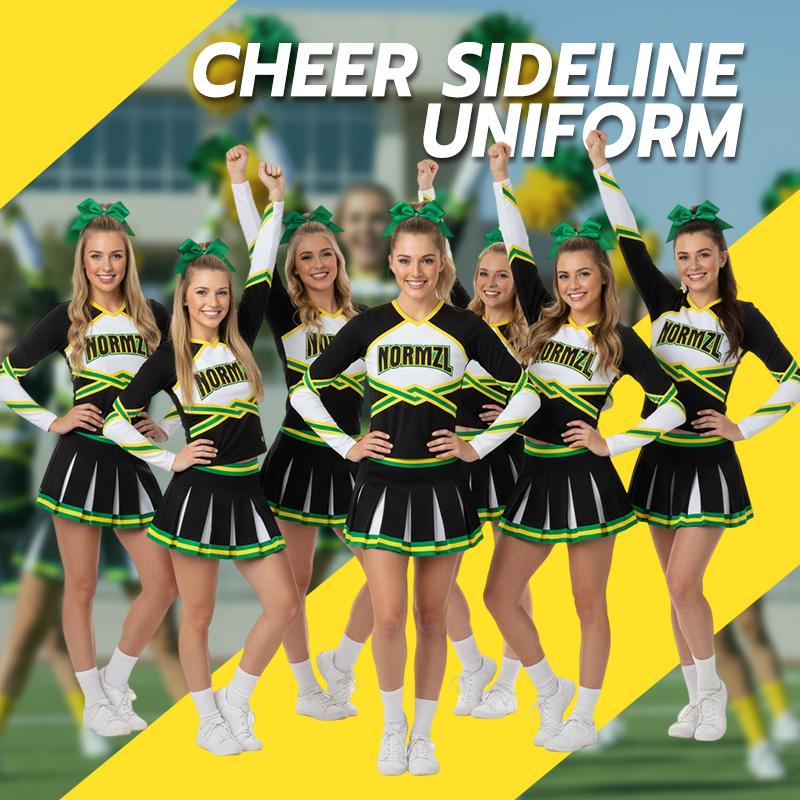

Male majorette uniforms need to solve two problems at once: fit the male body and its movement patterns, and maintain visual unity with the rest of the team. Majorette — built on high kicks, marching choreography, baton work, and dance combinations — asks different things of a uniform than cheer or general dance. The range of motion at the hip, the demands on the crotch and thigh during kicks, and the need for clean lines during marching all shape how these garments should be cut.
Unlike cheer stunting, where the primary concerns are overhead pressing and tumbling, majorette choreography centres on leg height, stride length, and rotational control. This guide covers the style options, 측정, movement demands, and coordination decisions that go into ordering men’s majorette uniforms.
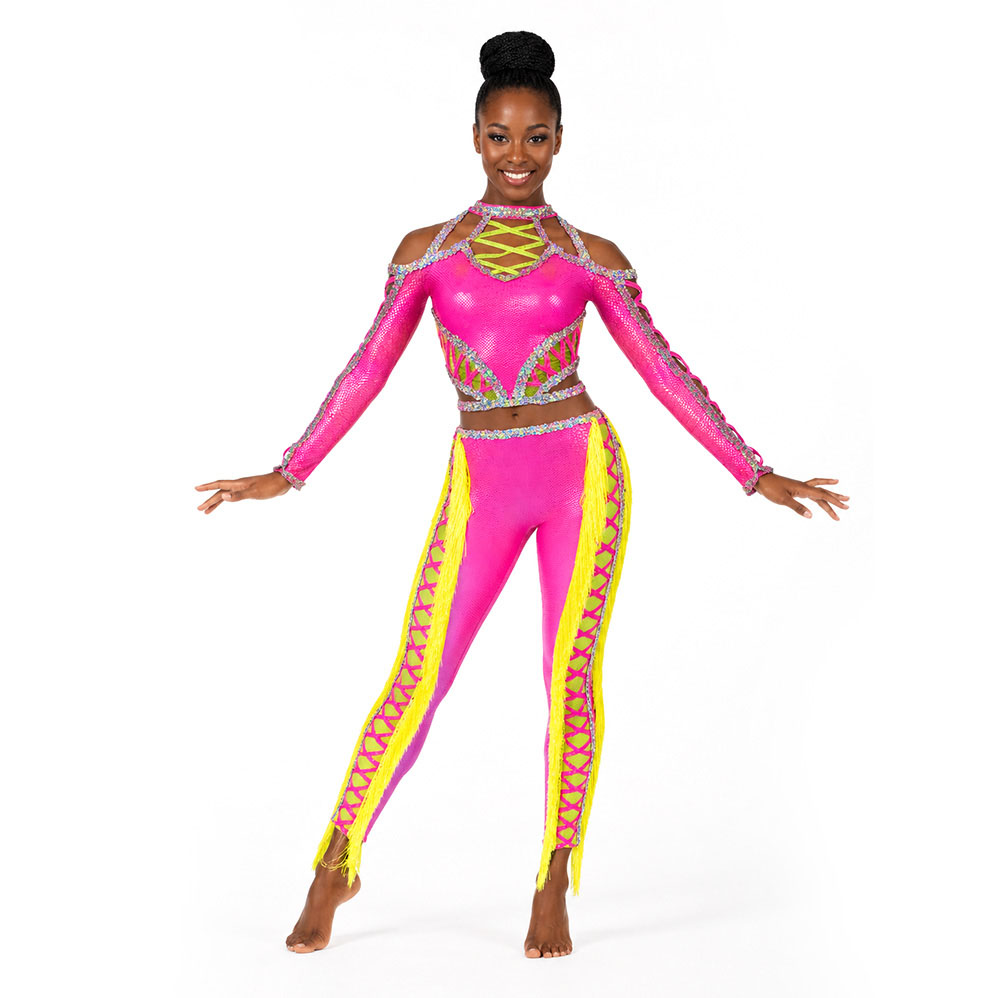
Male Majorette Uniform Style Options
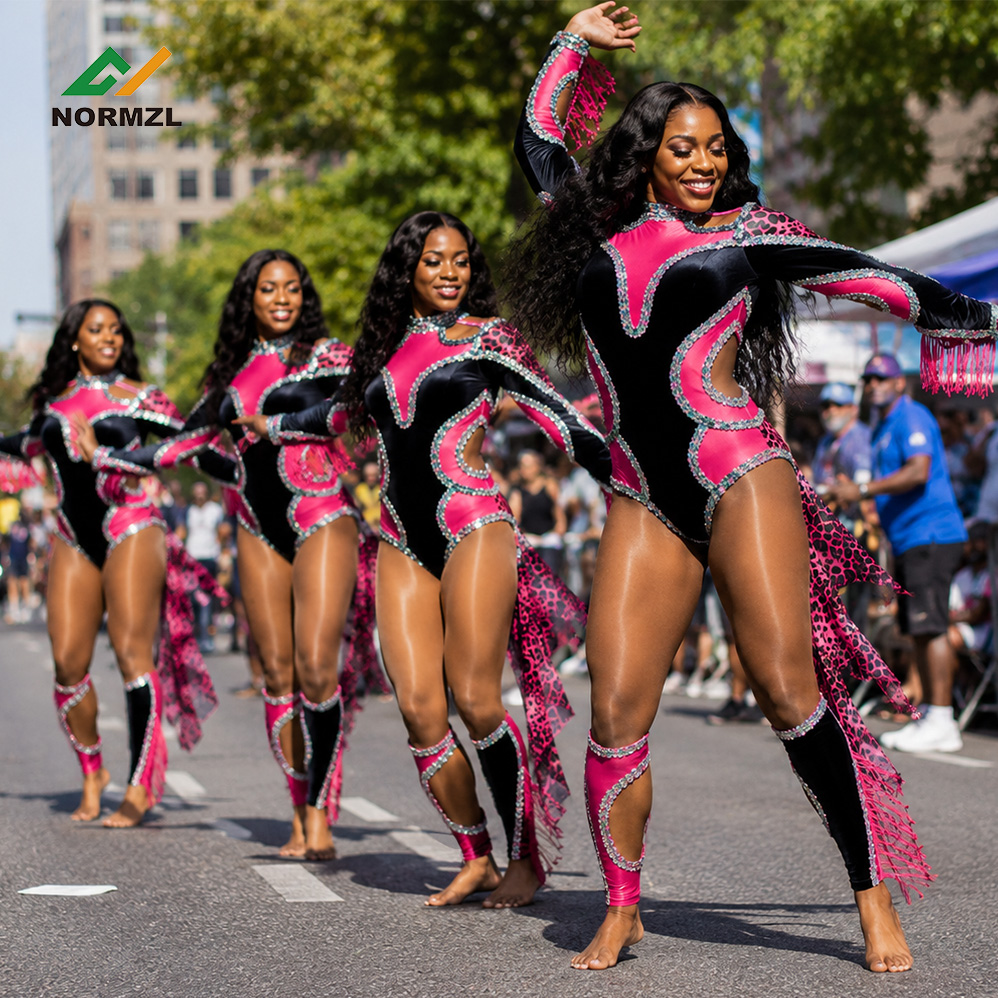
Teams choosing male majorette outfits generally work from six style directions. Each has trade-offs in coverage, 유동성, and visual formality.
Fitted top and pants. The most traditional combination. A fitted top with straight-leg or tapered pants creates a clean vertical line for marching formations. The pant sits at the natural waist with enough thigh room for high kicks. Works for formal performances, 대회, and parades.
Sleeveless top and pants. Removes fabric at the shoulder while keeping the leg covered. Useful for complex arm choreography or baton work where sleeve friction interferes. Also helps in warm rehearsal spaces or outdoor summer performances.
Top and shorts. Shorts free the knee for high-temperature outdoor events. They need enough hip ease that they do not ride up during kicks. Hem length is typically above mid-thigh, often with a contrasting side stripe.
Jumpsuit. Eliminates the waist seam for an unbroken line from shoulder to ankle. Striking in performance but presents practical challenges — bathroom breaks require full-body unzipping, and the torso measurement must be precise.
Marching-inspired uniform. Draws on traditional marching band aesthetics: jacket-style top with brass-button closures, epaulettes, and braided trim, paired with matching trousers. Suits teams wanting a formal, military-band look.
Coordinated unisex design. A single base design for all members, adjusted for male and female proportions. The male version shares the same colour panels, neckline shape, and decoration layout as the female version, scaled to a male block. Browse our 춤 & 마조렛 팀 category for examples of coordinated squad looks.
Measurements That Matter Most
Accurate measurements are the foundation of a correct order. For male majorette uniforms, these eight measurement points carry the most weight. If you are new to specifying a squad-wide order, our complete guide to custom majorette and dance uniforms walks through the rest of the workflow around these numbers.
Shoulder width. Measured from acromion bone to acromion bone across the back. This anchors how the entire top hangs — too narrow and the arms feel constrained during overhead reaches; too wide and the armhole shifts.
Chest. Wrapped around the fullest part of the chest. The top needs enough room to expand during movement without excess fabric bunching when the arms come forward.
허리. Measured at the natural waist near the navel. A clean waist fit keeps the top anchored during spins and bends.
Hip. Wrapped around the fullest part of the hip and seat. In majorette, where the hip is the primary joint for kicks and turns, this measurement must allow full rotational movement.
Rise. From the centre-back waist, through the legs, to the centre-front waist. Particularly important for majorette pants — a rise too short pulls the waistband down during high kicks; too long creates excess fabric at the front.
Thigh circumference. Around the fullest part of the upper leg. Too tight restricts kick height; too loose, and the pant loses its line. The pattern must follow the male leg’s shape while allowing full upward extension.
안쪽 아래. From the crotch seam to the ankle bone. Determines where the pant lands during marches and kicks — too long and the performer steps on fabric; too short, the visual line breaks.
Arm circumference. Around the fullest part of the upper arm. For sleeved tops, the sleeve should move with the arm without riding up.
These measurements interact: shoulder width influences how the chest distributes across the upper body; rise and inseam together determine how the pant moves through the hip and knee. A static measurement is only the starting point — the real test comes when the performer moves.
Designing for Majorette Movement
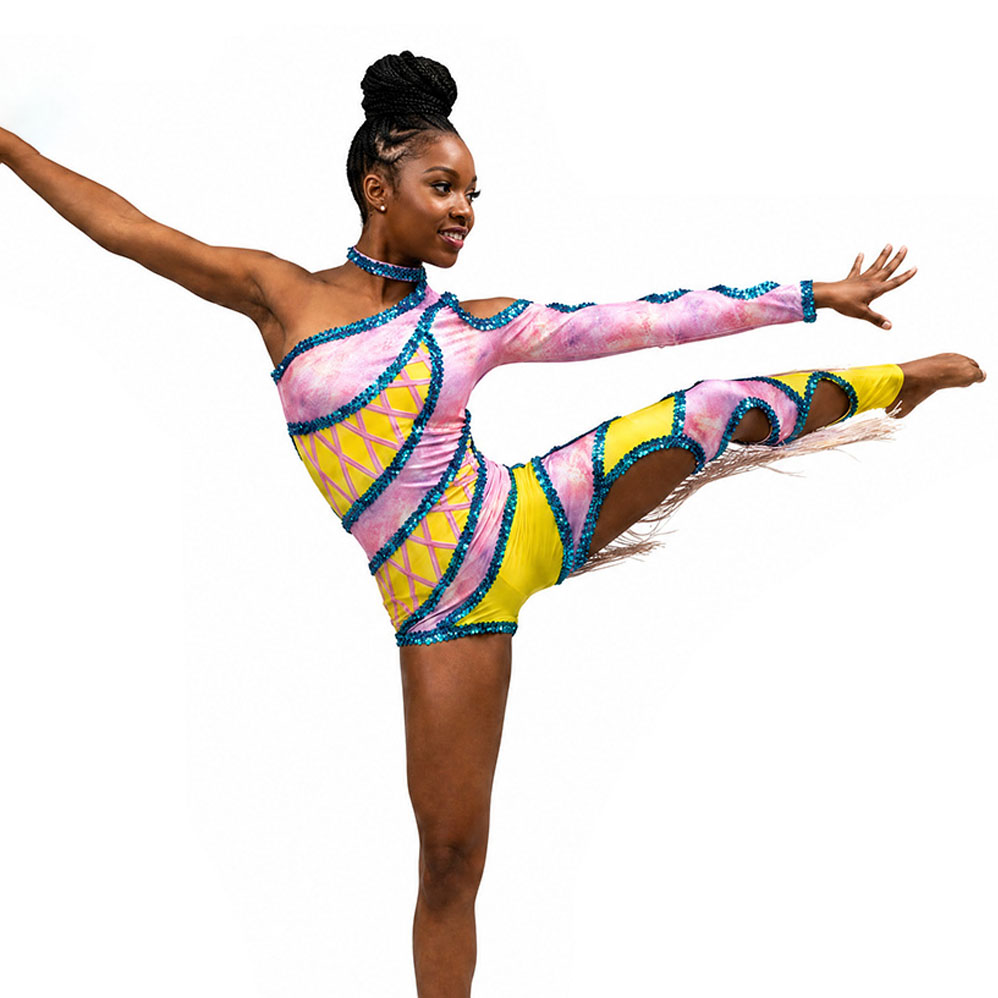
Every movement in a majorette routine places specific demands on the uniform’s construction.
High kicks. The leg extends to waist height or above, demanding enough rise to prevent the waistband pulling at the back and enough thigh ease that the fabric does not stretch beyond recovery. The crotch point must sit correctly — too low, and the kick meets resistance; too high, the pant feels uncomfortable at rest.
Splits. This opens the hip to its maximum range. The inner-thigh seam and crotch length are critical. Many male majorette pants include a crotch gusset — a diamond-shaped fabric insert — to add length and stretch at this junction. Without it, the centre seam bears the full force of the split. Managing extreme hip range of motion is a well-documented concern in dance medicine; the International Association of Dance Medicine & Science publishes research and guidance on hip mobility and injury prevention for dancers and movement artists.
Marching. The stride extends well beyond a normal walking step. The pant needs enough room through the hip and knee that a wide stride does not pull the waistband. A leg too narrow through the knee can also limit the step.
Turns. Pirouettes and chain turns depend on the top sitting cleanly through the shoulder and waist. Too loose, and the fabric flares during rotation; too tight at the shoulder, the arm position shifts.
점프. Take-off requires hip and knee extension; landing demands the waistband stay put. The pant needs four-way stretch or sufficient ease at the hip and knee.
Arm choreography. Reaching overhead, crossing in front, extending to the side — the shoulder seam and sleeve must allow these positions without the top shifting. For sleeveless tops, the armhole shape is key: cut too low, the top shifts during lateral movements; too tight, it digs into the underarm.
In most cases, a crotch gusset and appropriate ease in the thigh and hip address the majority of movement-related fit issues in male majorette pants. How those seams, gussets, and stretch panels are built and maintained is covered in our craftsmanship and care guide.
Pants, Shorts or a Jumpsuit?
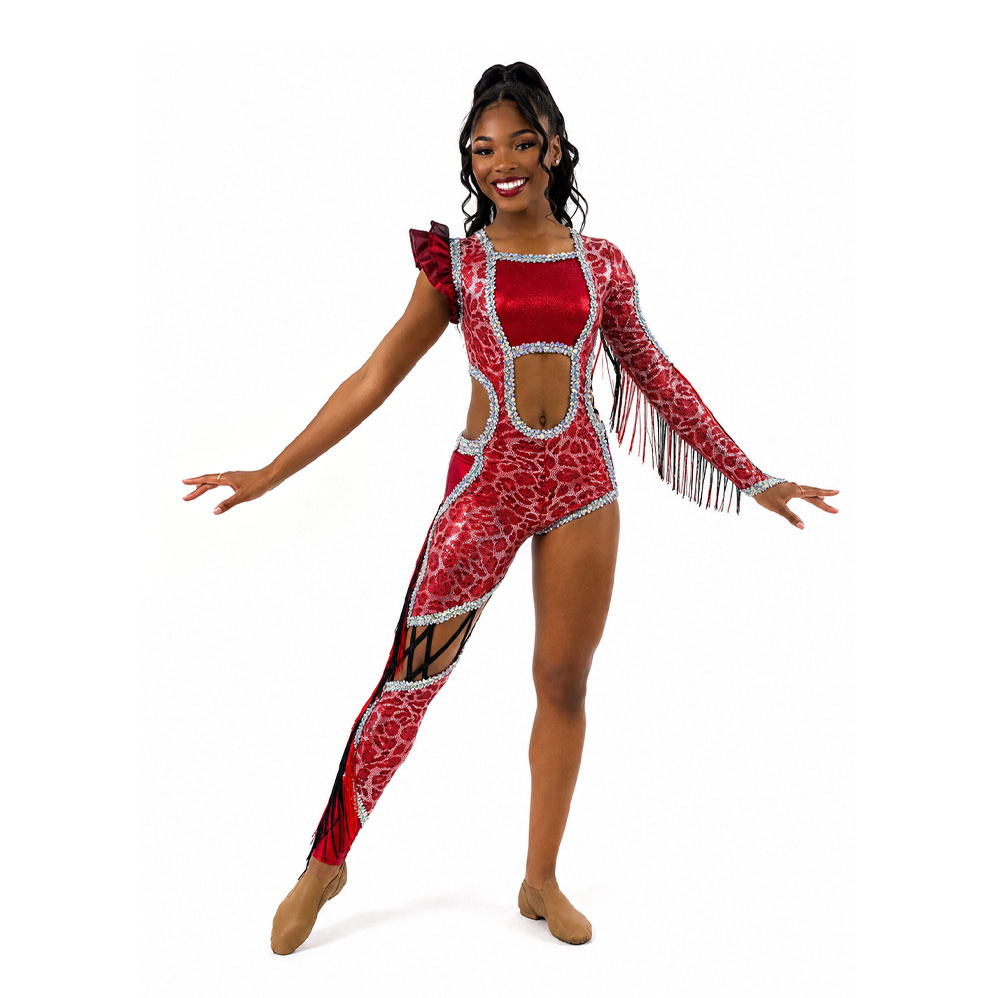
The choice between pants, 반바지, and a jumpsuit affects both performance and appearance. Here is how the three options compare.
| Factor | Pants | 반바지 | Jumpsuit |
|---|---|---|---|
| Range of motion | Full coverage; depends on thigh ease and gusset | Frees the knee; less fabric resistance at lower leg | Depends on torso fit; no waistband to restrict hip |
| 적용 범위 | Full leg; consistent visual line across team | Exposes lower leg; may show varying leg builds | Full body; unbroken line from shoulder to foot |
| Visual effect | Formal, traditional; suits marching and competition | Casual, 운동의; suits outdoor and summer performances | Striking, 현대의; reads as one continuous silhouette |
| Ease of changing | Straightforward; separate top and bottom | Straightforward; separate top and bottom | Requires full unzip; slower between rotations |
| Coordination with female uniforms | Pant line can echo skirt line through colour panels or seams | Less visual connection to female skirt lines | Jumpsuit line differs from female top-and-skirt; requires careful colour coordination |
The right choice depends on the team’s choreography, performance environment, and visual goals. Teams performing outdoor parades in warm climates may lean toward shorts; teams competing indoors often prefer the formal line of pants. Ordering a sample set in each option and testing during a full rehearsal before committing to bulk is a practical approach.
Coordinate Male and Female Uniforms
A majorette team should read as one visual unit. Coordinating the male and female uniforms is a design task that goes beyond ordering the same fabric.
Same colour blocks. Identical colour placements across male and female uniforms create immediate cohesion. If the female top has a navy bodice with white shoulders, the male top can carry the same distribution, even if panel shapes differ.
Same logos and emblems. Team logos and emblems should appear in similar positions on all members. A chest emblem at the left breast on the female top should sit at the same relative position on the male top.
Same metallic or sequin elements. If the female uniform features gold braiding or silver sequin stripes, the male uniform can carry the same metallic element at a matching scale. The material and colour should match so the team reads as one group under stage lighting.
Use pant lines to echo skirt lines. The male pant can pick up the visual direction of the female skirt — vertical panels echoed by seam lines, or a diagonal wrap effect picked up by a diagonal colour block at the side leg. This creates harmony without copying the skirt shape.
Do not copy the same neckline and decoration placement. Male and female torsos have different proportions. Decoration density on a broader male chest often needs adjustment — the same rhinestone count that fills a female top may look sparse on a male torso. The design concept carries across, but placement depends on each body type.
The goal is that the team performs as one group from a distance. Up close, the male and female uniforms can differ in cut and decoration. From the audience, the shared colour story and design language should create a unified impression. If you need a starting point for that shared visual language, browse these majorette uniform design ideas for school and dance teams.
Decoration Without Restricting Movement
Decoration adds visual impact, but every element interacts with how the fabric moves. Thoughtful placement keeps the uniform sharp without compromising performance.
Shoulder decoration. Epaulettes, sequin clusters, or braided tabs should be lightweight and lie flat. Heavy or raised decoration can dig into the skin during overhead arm movements.
Chest designs. Logos and decorative panels should not stiffen the fabric. A heavily bonded or embroidered chest panel can restrict the material’s natural give across the sternum.
Belt lines. A printed or heat-pressed belt line adds definition without bulk. If a real belt is used, it should be elastic or soft fabric — a stiff belt digs in when the performer bends.
Side-leg colour blocks. Vertical panels or contrasting stripes along the outer leg add visual interest and create a lengthening effect during marches and kicks. These are typically sewn into the side seam, adding no stiffness.
Light fringe. Short fringe at the shoulder cap or outer pant seam adds movement during turns. It should be lightweight enough not to tangle during arm choreography.
Avoid hard decoration at crotch and knee areas. Rhinestone clusters, stiff embroidery, or metal elements at these points will press into the body during splits, high kicks, and kneeling. These areas should remain in plain, stretch-compatible fabric.
Sample Fitting Checklist
Before finalising a bulk order, fit-test a sample set with performers of representative build. Have each tester run through these seven movements while wearing the complete uniform, and note any pulling, gaping, slipping, or discomfort. Once the sample passes, our sample approval checklist helps you sign it off cleanly before production begins.
- High kick. Raise one leg to waist height or above. 확인하다: does the waistband stay in place? Does the thigh seam strain?
- Lunge. Step forward into a deep lunge. 확인하다: does the crotch have enough length? Does the pant knee align with the performer’s knee?
- Squat. Lower to thighs parallel with the floor. 확인하다: does the back waistband rise? Is there enough room through the hip and thigh?
- Turn. Three consecutive pirouettes. 확인하다: does the top stay clean through the shoulder and waist?
- March. Ten exaggerated marching steps with full knee lift. 확인하다: does the waistband slip? Does the pant leg restrict the stride?
- Jump. Straight jump with full extension. 확인하다: fabric strain at thigh or shoulder? Waistband secure on landing?
- Full dance combination. Run 30 seconds of choreography at performance intensity. 확인하다: does any part require adjustment?
Small pattern adjustments at this stage — adding a centimetre of rise, widening the thigh slightly — prevent significant fit issues across a full bulk order.
자주 묻는 질문
What do male majorettes wear?
Male majorettes typically wear a fitted or semi-fitted top paired with matching pants, 반바지, or a jumpsuit. The style depends on the team’s performance context — marching bands often prefer traditional jacket-style tops with trousers, while dance-focused majorette squads may choose sleeveless tops with tapered pants. The uniform shares the team’s colour scheme, 로고, and decorative elements with the female members’ outfits, though the cut and styling are built on a male pattern block.
Can male and female majorettes wear matching uniforms?
They can wear coordinated uniforms, though “matching” usually means shared design elements rather than identical garments. Same colour blocks, same metallic accents, same logos, and complementary pant and skirt lines create visual unity across the squad. The male and female cuts differ in shoulder width, chest shape, waist position, and hip proportion, so the same design is adapted to each body type rather than copied directly.
Should male majorette uniforms be tight?
The fit should be close enough to show clean lines during choreography but not so tight that it restricts movement. A compression-level fit is unusual in majorette — the discipline requires sustained mobility over long performances, and excessive tightness can fatigue the muscles and limit kick height. In most cases, 에이 “fitted but not compressive” cut works best: the garment follows the body’s shape at rest and moves with it during performance.
What measurements are needed for male majorette pants?
The essential measurements are waist, hip, 증가, thigh circumference, and inseam. Rise and thigh circumference are particularly important for majorette, because the choreography places unusual demands on the hip and upper leg. Shoulder width, 가슴, and arm circumference are needed for the top. A complete measurement set reduces the need for post-delivery alterations and helps the factory produce consistent fit across the roster.
최종 생각
Our factory produces custom male majorette uniforms built to your team’s measurements, colour scheme, and choreography requirements. From initial design proof to sample fitting through bulk production, we work with coaches and team purchasers to make sure every uniform supports the way your team actually moves.
Create Your Team’s Championship Look